
Which is tastier, “Yumegokochi” or “Koshihikari”? A Yamagata resident compares them thoroughly!

Which is your favorite, “Yumegokochi” or “Koshihikari”? We’ll compare the flavors and thoroughly explain the differences in texture and aroma. If you’re having trouble choosing delicious rice, this is a must-read! You’re sure to find the perfect rice for you.
1. Introduction | Which rice is best for you? Why compare “Yumegokochi” and “Koshihikari”
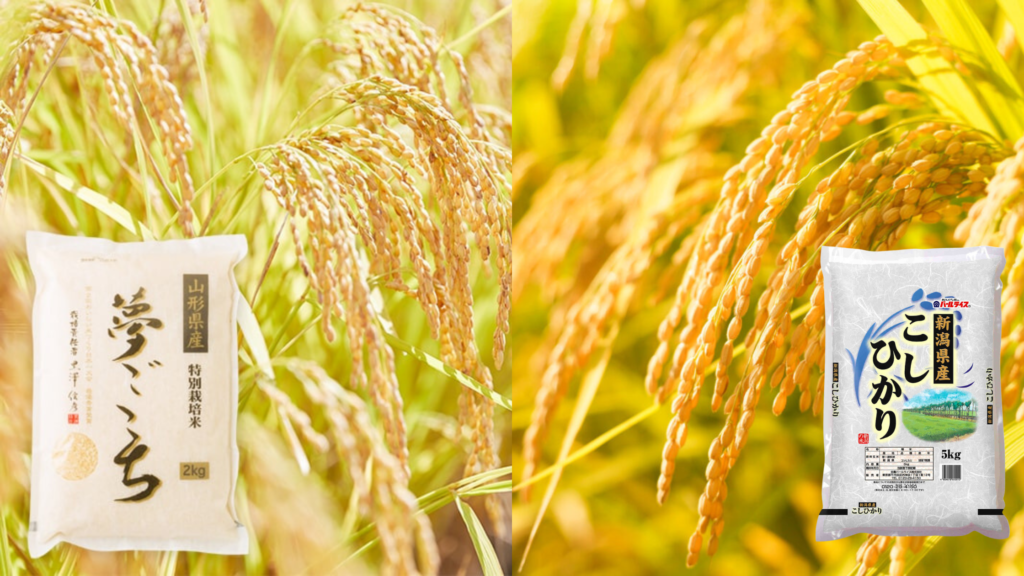
参考:https://www.zpr.co.jp/product/01regular/1042
参考:https://www.umaies.net/SHOP/038-00101.html
When it comes to rice, everyone has heard of “Koshihikari.” For many years, this brand has enjoyed overwhelming popularity in Japan, beloved by many for its balance of stickiness, sweetness, and richness. It is enjoyed in a wide range of settings, from home dinner tables to high-end restaurants, and can truly be called the “king of rice.”
However, through repeated breeding improvements based on Koshihikari, a new rice with even more specialized characteristics has been born. This new rice is a little-known hidden gem called “Yumegokochi.”。
1.1 Why should you compare “Yumegokochi” and “Koshihikari”?
To cut straight to the point, while Yumegokochi and Koshihikari share the same roots, there are clear differences in taste, texture, and aroma. Both are high-quality rice, but by comparing them you can discover the rice that’s right for you.
Yumegokochi is actually a rice that was created by selectively breeding Koshihikari. While inheriting the good qualities of Koshihikari, it has an even fluffier texture and refined sweetness. In particular, its softness after cooking and the rich flavor that spreads the moment you put it in your mouth are features that are hard to find in other rice.
Koshihikari, on the other hand, is known for its consistent quality and firm stickiness. You can fully enjoy its rich flavor and elasticity by combining it with richly seasoned dishes like rice bowls or curry rice.
1.2 Why Yumegochi Hasn’t Spread to the Market: Cost
Despite all these appealing features, Yumegokochi rice is not widely available on the market. One of the main reasons for this is its high cost.
Yumegokochi rice seeds are more expensive than regular rice, and its production is very costly. Furthermore, the yield is relatively low, making it poor value for money, and many farmers consider it unprofitable. As a result, distribution is limited, and it is considered a rare rice even nationwide.
However, this rarity is precisely what makes Yumegokochi so appealing. Because it is grown with such care and effort, its quality is extremely high, making for a special eating experience.
1.3 Find the perfect rice for you by tasting and comparing different varieties
For example, if you’re looking for the perfect rice for simple Japanese dishes or onigiri (rice balls), we recommend “Yumegokochi,” which cooks to a fluffy texture and has a distinct sweetness. On the other hand, if you want to enjoy a firm stickiness and rich flavor, the consistently popular “Koshihikari” would be perfect.
Rice is an important factor that greatly affects the satisfaction of your daily meals. Finding the right rice for you can make mealtimes even more fulfilling and enjoyable.
1.4 Why not try “Yumegokochi”, a special product known only to those in the know?
In this article, we’ll take a closer look at the differences between Yumegokochi and Koshihikari, providing information to help you choose the rice that’s best for you. Koshihikari is already a well-known brand, but the appeal of Yumegokochi, its evolved form, is not yet widely known.
Yumegokochi is highly prized due to its cost and difficulty of production, but it’s well worth trying. It may be the rice that brings new surprises and excitement to your dinner table.
To find the rice that’s perfect for you, we encourage you to try a comparison of Yumegokochi and Koshihikari.
2.What are “Yumegokochi” and “Koshihikari”? A thorough explanation of their respective characteristics

参考:https://www.ogatabeikoku.com/okome_tabekurabe/yumegokochi/
2.1 Features and appeal of Yumegokochi

reference:https://www.umai-mon.com/user/product/45766
・”Yumegokochi” has a fluffy texture and elegant sweetness
When talking about its “dream-like texture and characteristics,” it is essential to mention its fluffy cooked texture and the refined sweetness that spreads the more you chew it. It is particularly characterized by its soft and moist texture, making it ideal for those who want to fully enjoy the deliciousness of white rice itself.
・Characterized by excellent stickiness and melt-in-your-mouth texture
“Yumegokochi” is a variety of rice that has a low content of starch called amylose. This low content of amylose makes the cooked rice grains plump and sticky. This gives the rice a soft texture that melts in your mouth and prevents it from hardening even when it cools.
・Perfect with Japanese food
For example, in a Japanese-style dining table, its moist texture and gentle sweetness go perfectly with simple dishes such as miso soup and grilled fish.It can also be used in rice balls and bento boxes, and is delicious even when cold, making it a useful addition to busy daily lives.
・Rice perfect for simple meals
Overall, Yumegokochi is perfect for those who prefer soft, sticky rice and those looking for rice that complements Japanese cuisine. Its characteristics are particularly evident in simple meals.
2.2 Characteristics of Koshihikari and reasons for its popularity

reference:https://store.shopping.yahoo.co.jp/blessyou/niigata-koshi-h-05.html
・Koshihikari rice has an excellent balance of stickiness and sweetness
The greatest appeal of “Koshihikari To Toshiki” is its exquisite balance of strong stickiness and deep sweetness. It boasts top-class production volume and popularity in Japan, and is a favorite on many dinner tables.
・Why it’s called the king of rice
Koshihikari has an excellent balance of amylose and amylopectin, which gives it its unique stickiness and elasticity. Furthermore, it has a rich luster and aroma when cooked, and is highly rated for its beautiful appearance. This high quality is the reason why it is known as the “king of rice” throughout the country.
・All-purpose rice perfect for rice bowls and curries
For example, even in dishes with a lot of liquid, such as oyakodon (chicken and egg rice bowl), gyudon (beef bowl), or curry rice, the stickiness of Koshihikari rice holds the rice together firmly and harmonizes with the food in your mouth. What’s more, it doesn’t harden even when it cools, and its deliciousness lasts even when used in bento lunch boxes or onigiri (rice balls), making it useful in a variety of everyday situations.
・Versatile rice that goes well with any dish
Koshihikari is characterized by its stickiness and rich flavor, and its versatility makes it easy to pair with any dish, whether Japanese or Western. It is especially perfect for those looking for a satisfying rice.
3.Tasting report: A thorough comparison of taste, aroma, and texture!

reference:https://www.tabechoku.com/products/69497
3.1 My impressions after actually trying Yumegochi
・The fluffy texture and elegant sweetness make for an addictive taste.
My first impression of “Yumegokochi” was its soft texture and the refined sweetness that increased the more I chewed it. The appeal of this rice is that you can really taste its deliciousness even with a simple cooking method. I personally didn’t think there was much difference between rice varieties, so I’ll never forget the shock I felt when I took my first bite.
・The perfect balance of stickiness and softness
“Yumegokochi” rice has a low amylose content, giving it a sticky, soft texture. Amylose is a type of starch found in rice, and the less amylose there is, the fluffier the rice will be. The rice was shiny after cooking, and its appearance gave it a high-quality feel.
・Perfect for simple Japanese dishes
For example, just tasting freshly cooked white rice is delicious enough. It is particularly compatible with Japanese dishes such as grilled fish and miso soup, bringing out the natural flavor of the ingredients. Even when cooled, it retains its stickiness and sweetness, so it is still delicious when used to make onigiri.
・A timeless taste that’s perfect for everyday meals
Overall, I felt that Yumegokochi was a rice suitable for everyday meals. Its fluffy texture and gentle sweetness make it a flavor you’ll want to eat again and again. Personally, I was convinced that its quality was satisfying enough to be used as the main dish.
3.2 My impressions after actually tasting Koshihikari
・Rice with outstanding stickiness and rich flavor
When I tried Koshihikari, I was impressed by its strong stickiness and rich, deep flavor. As you would expect from a rice that is loved all over Japan, its firm elasticity and rich flavor were appealing.
・The power of amylopectin, with its excellent viscosity and elasticity
Koshihikari rice contains a lot of amylopectin, a type of starch that gives it stickiness and elasticity. This gives it a chewy texture and a rich aroma when cooked.
・Perfect with rice bowls and curry
When I tried it with curry rice, the firm consistency of the soup mixed well with the curry roux, making for a satisfying meal. It also soaks up the sauce well in rice bowls like oyakodon and gyudon, making for a satisfying meal.
If you value stickiness and richness, we recommend Koshihikari.
Overall, Koshihikari is perfect for those seeking a rich, satisfying flavor. Its appeal is particularly enhanced when paired with strongly seasoned dishes.
3.3 The results are in! Which is your favorite?

reference:https://www.ogatabeikoku.com/okome_tabekurabe/yumegokochi/
・In my personal opinion, the fluffy texture and elegant sweetness of “Yumegokochi” wins!
After actually comparing the two, I found that “Yumegokochi” was to my liking. I was particularly impressed by the fluffy texture of the cooked rice and the sweetness that spread the more I chewed it. Another appealing feature is that its deliciousness is maximized when paired with simple dishes.
・A gentle taste that you won’t get tired of eating every day
Yumegokochi remains delicious even when cooled, making it perfect for everyday meals and bento boxes.
・”Yumegokochi”: White rice, rice balls, and Japanese cuisine
・”Koshihikari”: When paired with curry rice, rice bowls, and Western dishes
・It’s best to choose one that suits your dining situation.
Both are excellent rice varieties. For simple everyday meals, choose “Yumegokochi,” while for special dishes or when you want something more substantial, choose “Koshihikari.”
4. Nutritional Value and Cost Performance Comparison | A Must-See for Health-Conscious and Cost-Efficient People
4.1 Nutritional Value Comparison: Which is Recommended for Health-Conscious People?
・When it comes to nutritional balance, “Yumegokochi” wins.
When comparing the nutritional value of rice, it is important to focus primarily on energy (calories), carbohydrates, protein, B vitamins, and minerals (especially magnesium and zinc).
・Yumegokochi has low amylose content and is easy to digest and absorb
“Yumegokochi” is characterized by its low content of amylose, a type of starch. Rice with low amylose content is said to be sticky and easy to digest. This makes it easy for small children and the elderly to eat, and it is gentle on the body.
・Differences in nutrient content (per 100g)
| Nutritional Information | Yumegokochi(Polished rice) | Kothihikari(Polished rice) |
|---|---|---|
| calorie | 356 kcal | 358 kcal |
| protein | 6.1 g | 6.2 g |
| carbohydrates | 77.0 g | 77.6 g |
| lipids | 0.9 g | 0.9 g |
| Vitamin B1 | 0.08 mg | 0.07 mg |
| magnesium | 24 mg | 23 mg |
As can be seen from this comparison, “Yumegokochi” has slightly higher vitamin B1 and mineral content. Vitamin B1 in particular promotes fatigue recovery and carbohydrate metabolism, which is a welcome point for health-conscious people.
If you’re health-conscious, choose “Yumegokochi”
Yumegokochi rice is easy on the body and has excellent nutritional balance, making it the perfect rice for health-conscious people. It is especially recommended for families who place importance on nutritional value and for families with elderly people.
4.2 Cost-effectiveness comparison: How to choose delicious rice at a good price?
・If cost-effectiveness is important, we recommend Koshihikari
Since rice is a food that is consumed daily, price is also an important factor. Koshihikari is widely distributed nationwide and has a stable price, making it a cost-effective option.
・Differences between production and distribution volumes affect prices
“Koshihikari” is the most widely produced variety in Japan, with a stable supply nationwide. As a result, price competition is common and it tends to be relatively affordable. On the other hand, “Yumegokochi” is produced in a limited area, so it is priced a little higher.
・Market price comparison (latest as of 2025)
| variety | Average price (per 5kg) |
|---|---|
| Yumegokoti | Approximately 3,500 yen |
| Koshihikari | Approximately 3,000 yen |
※Prices are based on market research and the latest data from online sales sites (Rakuten Ichiba, Amazon, etc.)
・If cost-effectiveness is important, choose “Koshihikari”
For households that consume a lot of rice on a daily basis or those looking to keep costs down, Koshihikari, which is in stable supply, is the best choice.
4.3 How to Choose the Best: Which is More Important: Nutritional Value or Value for Money?
・If you’re health-conscious, choose “Yumegokochi”; if you’re cost-conscious, choose “Koshihikari”
Ultimately, which one you should choose will depend on your lifestyle and values. Yumegokochi is well-balanced in nutrition and features a plump texture and elegant sweetness, making it ideal for health-conscious people. On the other hand, Koshihikari has a stable price and is sticky and rich in flavor, making it suitable for people who prioritize cost-effectiveness.
5. Buying Guide | Recommended places to buy Yumegokochi and Koshihikari
When choosing rice, not only quality but also where you buy it is an important point. In particular, popular brand rice varieties like “Yumegokochi” and “Koshihikari” can have different prices and perks depending on where you purchase them.
In conclusion, the freshest and safest way to purchase “Yumegokochi” is from an online shop that ships directly from the producer. On the other hand, “Koshihikari” is widely distributed nationwide, so you can easily purchase it from supermarkets and major online shopping sites.
Here, we will introduce recommended purchasing locations and shops that are suitable for each brand.
5.1 Yumegokochi Recommended Shops Where You Can Buy Online

reference:https://tabiiro.jp/otoriyose/s/314500-nanyo-kurosawa-farm/
・If you value freshness and quality, the official online shop is the best choice
If you want to buy Yumegokochi rice, it is best to use a trusted online shop. In particular, if you purchase it directly from the producer’s official website, you can be sure to get the freshest rice in the best condition.
・Freshness and peace of mind that only comes from direct delivery from the source
“Yumegokochi” is high-quality rice grown in the rich nature and fertile soil of Yamagata Prefecture. The official online store delivers freshly harvested rice, guaranteeing freshness and quality. Furthermore, purchasing directly from the producer gives you peace of mind.
・Trusted and recommended shops

reference:https://kurosawa-farm.com/company.html
・Kurosawa Farm Online Shop
If you want to purchase Yumegokochi, the Kurosawa Farm official online shop is the best place to go.
When choosing rice, the most important thing is where to buy it. If quality and freshness are your top priorities, Kurosawa Farm’s official online shop is the perfect choice. Kurosawa Farm is highly regarded for producing Yumegokochi rice, providing reliable quality and peace of mind.
Located in Takahata Town, Higashiokitama District, Yamagata Prefecture, Kurosawa Farm is renowned for its rice production, taking advantage of the rich natural environment and fertile soil. Furthermore, as a testament to its reliability, the farm supplies rice to the popular local restaurant Yamagata Za Takinami, and its high quality is highly regarded by professional chefs.
The official online shop’s greatest appeal is that it ships directly from the producer, ensuring fresh, just-harvested rice delivered in optimal condition. Another advantage is that, because there are no intermediaries involved, you can purchase high-quality rice at reasonable prices.
Official online shop here:
黒澤ファーム公式サイト
・Hometown tax donation portal site
Special features: Yumegokochi rice produced in Yamagata Prefecture is available as a return gift, and can be purchased at a great price as a tax-saving measure.
Yamagata Prefecture Hometown Tax:https://item.rakuten.co.jp/f062022-yonezawa/063r6-003/
5.2 Popular Koshihikari retailers
If you prioritize convenience and cost-effectiveness, major online shopping sites and supermarkets are convenient.
「Koshihikari is a popular brand of rice widely distributed nationwide, offering a wide range of purchasing options. It’s easy to purchase, especially from major online retailers and supermarkets, and offers excellent value for money.
It’s widely distributed and easy to purchase at a stable price.
Koshihikari is known as one of Japan’s top-producing brand rice varieties, and its stable supply is a major advantage. Online retailers and major retailers frequently offer promotions and discounts, making it ideal for those looking for value for money.
Recommended popular retailers
・Amazon
Features: Fast delivery service and a wide selection of products. Subscription service offers even better value.
・Rakuten Market
There are plenty of shop reviews, so you can choose based on customer ratings. There are also many regular campaigns, and points can be earned.
・Nationwide supermarkets such as AEON and Ito-Yokado
They are easy to purchase, and you can get them at a good price if you take advantage of sale days or point days.
・Costco
It is mainly sold in large packs, so it is recommended for large families or households with high consumption.
If you’re looking for value for money and convenience, major online shopping sites are the best
Koshihikari is widely distributed throughout the country, and its ease of purchase is a major attraction. Price competition is particularly fierce online, and there are many opportunities to purchase it at a low price, making it ideal for those who value value.
6. Summary: Which rice is right for you?
Choose the rice that’s best for you based on your lifestyle and preferences
The important thing when choosing rice is to choose one that suits your lifestyle and preferences, rather than simply relying on brand or popularity. In conclusion, “Yumegokochi” and “Koshihikari” each have different characteristics and appeal, and which one is best for you will depend on your food preferences and uses.
Yumegokochi and Koshihikari each have their own unique charms
“Yumegokochi” rice is characterized by its fluffy texture and gentle sweetness, making it ideal for simple dishes. Its sticky yet soft texture is particularly appealing when made into rice balls or enjoyed as plain white rice. It also retains its deliciousness even when cooled, making it perfect for bento boxes and breakfast.
“Koshihikari,” on the other hand, is a rice with a distinctive stickiness and rich flavor that pairs well with strongly seasoned dishes. Its springiness and flavor are particularly enhanced when combined with strongly seasoned dishes such as rice bowls and curry rice.
Recommended rice for each occasion
| scene | Recommended rice | reason |
|---|---|---|
| I want to enjoy simple Japanese food | Yumegokochi | The plump texture and elegant sweetness are outstanding. |
| Ideal for rice balls and bento lunches | Yumegokochi | It remains soft and tasty even when cooled. |
| Perfect with rice bowls and curry | Koshihikari | It has a strong, rich flavor and pairs perfectly with rich seasonings. |
| I want to use it everyday with a focus on cost-effectiveness | Koshihikari | It has a large distribution volume and is easy to purchase at a stable price. |
| Health-conscious people who want to prioritize nutritional value | Yumegokochi | It has a relatively high content of vitamin B1 and minerals, and is easy to digest. |
For example, “Yumegokochi” is particularly suited to simple Japanese dishes and onigiri (rice balls), maintaining its fluffy texture even after cooling. It’s ideal for those who appreciate the full flavor of white rice in their everyday meals.
On the other hand, “Koshihikari” has a strong stickiness and elasticity, which stands out when paired with strong-flavored dishes. Its excellent cost-performance makes it extremely convenient for everyday use.
Choosing the right rice for your lifestyle is key.
Ultimately, the best rice for you will depend on your daily eating habits and preferences.
- If you’re health-conscious and looking for rice that’s delicious even when cold and has a fluffy texture, we recommend “Yumegokochi.”
- If you’re cost-conscious and looking for rice with a firm stickiness and elasticity, “Koshihikari” is the perfect choice.
Both are excellent examples of Japan’s representative rice, and choosing the right one for your needs will enrich and enhance your daily meals.
7. [Frequently Asked Questions] How to Choose Yumegokochi and Koshihikari Rice Q&A

reference:https://stock.adobe.com/jp/search/images?k=%E7%96%91%E5%95%8F
Q1. What is the difference in taste and texture between “Yumegokochi” and “Koshihikari”?
Yumegokochi is characterized by its fluffy texture and elegant sweetness, while Koshihikari is characterized by its stickiness and richness.
・The key differences are amylose content and texture.
The texture and flavor of rice are primarily determined by its starch composition. Yumegokochi rice has a low amylose content, giving it a soft, fluffy texture and a sticky consistency. The more you chew it, the more its gentle sweetness spreads, making it an excellent match for Japanese cuisine.
On the other hand, Koshihikari rice has a good balance of amylose and amylopectin, resulting in a sticky, rich flavor. Its chewy texture makes it especially recommended for pairing with richly flavored dishes and rice bowls.
When to Use It
- Yumegokochi: Onigiri, Japanese cuisine, simple white rice dishes
- Koshihikari: Curry rice, rice bowls, Western cuisine
Yumegokochi is perfect for simple meals, while Koshihikari is perfect for robust flavors.
Q2.Which rice is still delicious when cold?
“Yumegokochi” is a dish that remains delicious even when it cools down.
・The low amylose content helps it maintain its fluffy texture even when cooled.
“Yumegokochi” rice retains its fluffy texture even when cooled, making it ideal for onigiri and bento lunches. It retains its softness and gentle sweetness after cooking, even when cooled, and remains moist for a long time.
“Koshihikari” rice is also said to be delicious even when cooled, but because it is very sticky, it may feel a little hard when cooled. Its texture changes easily over time, making it particularly suitable for dishes that are eaten warm.
Usability for bento and rice balls
・Yumegokochi: Perfect for bento boxes, retaining its fluffy texture even when cooled.
・Koshihikari: Recommended for dishes that retain the deliciousness of freshly cooked rice.
“Yumegokochi” is perfect for rice balls and bento lunches.
Q3. Which one would you recommend for health-conscious people?
We recommend “Yumegokochi,” which is highly nutritious and easy to digest.
Its relatively high vitamin and mineral content and low amylose content make it easy to digest.
“Yumegokochi” is rich in vitamin B1 and minerals (magnesium and zinc), and is particularly rich in nutrients that are expected to be effective in carbohydrate metabolism and fatigue recovery. Its low amylose content also makes it easy to digest and considered a healthy rice.
“Koshihikari” is also a nutritious and well-balanced rice, but it lacks some of the special nutritional benefits of “Yumegokochi.”
Situations Suitable for Health Management
- Yumegokochi: Ideal for dieting and meals that take digestion into consideration
- Koshihikari: Recommended for those prioritizing daily nutritional balance
If you’re health-conscious, “Yumegokochi” is the perfect choice.
Q4. If price is a major consideration, which rice offers the best value for money?
Koshihikari offers excellent cost performance.
With a large nationwide production volume and stable supply, prices remain stable.
Koshihikari is one of the most widely cultivated rice varieties in Japan. As a result, production volumes are high and prices are stable. It also offers many sales and point-back campaigns, making it excellent value for money.
On the other hand, Yumegokochi is produced in limited areas and is less widely distributed, resulting in slightly higher prices.
Market Price Comparison (per 5kg)
Koshihikari: Approximately ¥3,000
Yumegokochi: Approximately ¥3,500
If value for money is important, Koshihikari is recommended.
Tips for Choosing the Right Rice
When choosing rice, it’s important to consider not just flavor and price, but also your lifestyle, health, and eating habits. Use the characteristics and uses of Yumegokochi and Koshihikari explained in this article to find the perfect rice for you.
References

Ministry of Education, Culture, Sports, Science and Technology Food Composition Database
https://fooddb.mext.go.jp/

Ministry of Agriculture, Forestry and Fisheries Statistical Data on Rice
https://www.maff.go.jp/j/seisan/kikaku/kome_siryou.html