
[Recommended for couples in their 60s] A quiet and fulfilling journey—A taste of history and healing at Jionji Temple in Yamagata
- ADDRESS:〒990-0511 山形県寒河江市慈恩寺31
- OPEN:09:00
- CLOSE:16:00
- OTHER:開業: 西暦724年
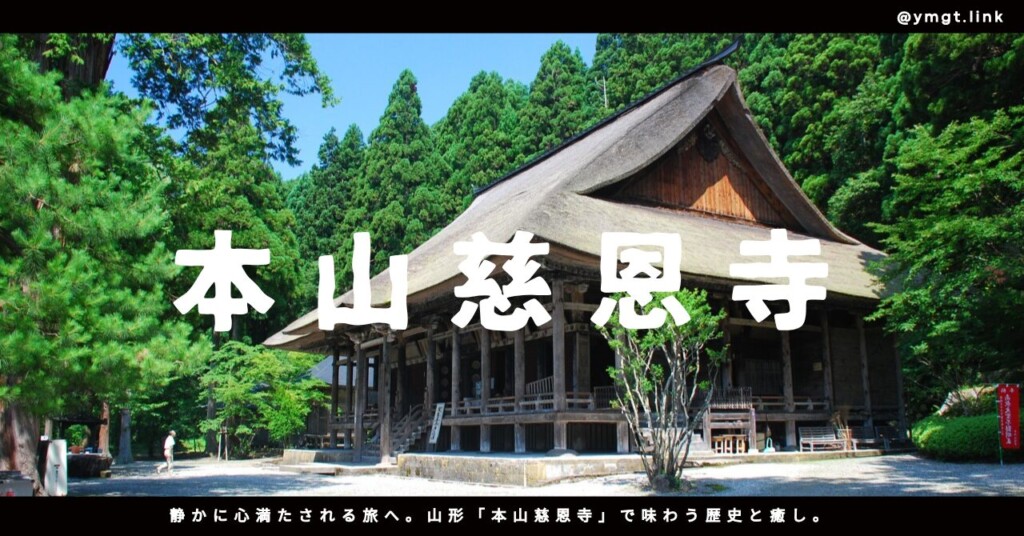
Jionji Temple, head temple of the Tendai sect in Sagae City, Yamagata Prefecture, is an ancient temple with a history of 1,300 years. The tranquility and majesty of the main hall, a nationally designated Important Cultural Property, the three-story pagoda, and the moss-covered approach to the temple make this a perfect relaxing trip for a retired couple in their 60s. Visitors can get a red seal stamp and view the Yakushi Nyorai statue, and there are also tours with local guides. There is also plenty of information on Sagae hot springs and gourmet food. Accessible by car and public transportation, and barrier-free facilities make this a safe and enjoyable environment.
1.What is Jionji Temple? A famous temple in Tohoku, steeped in history and culture
1-1. The origins and background of Jionji Temple, woven through 1,300 years of history
参考:https://x.gd/DRCj0
Jionji Temple, the head temple of the Tendai sect, boasts a history spanning more than 1,300 years. It serves as a spiritual center that has supported Buddhist culture in the Tohoku region, leaving a deep impression on all who visit.
It is said to have been founded in 746 (Tenpyo 18) during the Nara period by the renowned monk Gyoki, who was also involved in the construction of the Great Buddha at Todaiji Temple. The influence of Tendai Buddhism spread during the Heian period, and the temple became a focal point for Shugendo (mountaineering asceticism) and mountain worship in the Tohoku region. During the Edo period, it received patronage from the shogunate and flourished as a major temple with vast lands and adherents.
For example, Jionji Temple, which played a key role in the “Dewa Sanzan” (Three Mountains of Dewa), was once known as “Mount Hiei of Dewa.” Similar to Enryaku-ji Temple on Mount Hiei, the temple’s cultural property records show that monks’ training quarters (sobo: training grounds) were scattered throughout the mountains, where rigorous mountain ascetic practices were practiced. Remnants of this tradition remain today, with over 30 large and small temples and stone Buddha statues scattered throughout the temple grounds, evoking the deep devotion of the time.
In addition, during the Middle Ages, the temple also functioned as an educational institution, embodying the three pillars of scholarship, missionary work, and training, known as “Jion-ji Temple One Mountain and Twelve Temples.” The temple grounds house a library of Buddhist studies books, garnering attention from scholars of Buddhist history.
Jion-ji Temple, with its close ties to Buddhist architecture, folk beliefs, Shugendo, and local life, is more than just a religious facility; it is a symbol of the region’s spiritual culture, supported by many.
Jion-ji Temple, the main temple, has been a cherished presence for many years, walking alongside the faith of countless people. As a “space of prayer” connecting the past and present, it is a tourist spot with profound historical and spiritual significance. For those interested in history and Buddhism, this is truly a place where you can learn and find healing just by visiting.
1-2. The main hall, three-story pagoda, and Niomon gate… An extraordinary experience surrounded by nationally designated cultural properties
Stepping into the temple grounds of Jionji Temple, you’ll find yourself enveloped in an extraordinary space surrounded by nationally designated Important Cultural Properties, creating a sense of time standing still.
The temple is home to numerous buildings constructed between the Kamakura and Edo periods, many of which are protected as nationally designated Important Cultural Properties. The majestic main hall, elegant three-story pagoda, and powerful Niomon gate—each convey the architectural styles of a different era, captivating visitors both visually and spiritually.
[Main Hall (Nationally Designated Important Cultural Property)]
Constructed in the late Kamakura period, the main hall features a prestigious hipped roof with a large, thatched roof. Enshrined within are a group of Buddhist statues, including the principal image of the temple, a seated Yakushi Nyorai (done in the Kamakura period), as well as the Nikko and Gakko Bodhisattvas and the Twelve Heavenly Generals, creating a solemn atmosphere. These statues, also designated as Nationally Designated Important Cultural Properties, are highly regarded in the history of Japanese art.
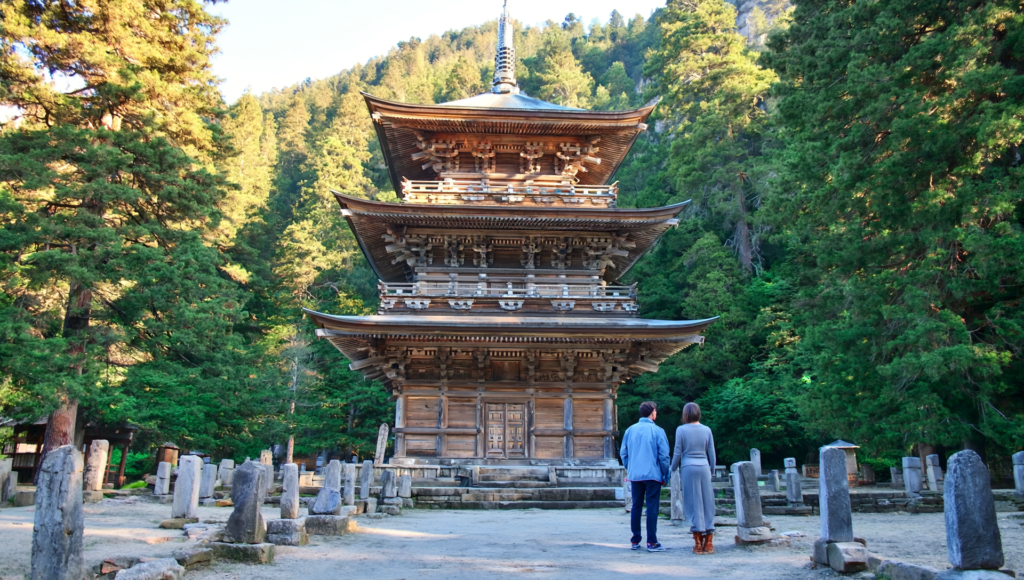
[Three-Story Pagoda (Nationally Designated Important Cultural Property)]
Erected in the mid-Edo period (18th century), the tower stands approximately 21 meters tall. Its intricate wooden construction and well-balanced proportions make it a striking presence even from afar. Particularly during the snowy and autumn foliage seasons, the tower’s outline blends seamlessly with the surrounding scenery, creating a painting-like beauty.
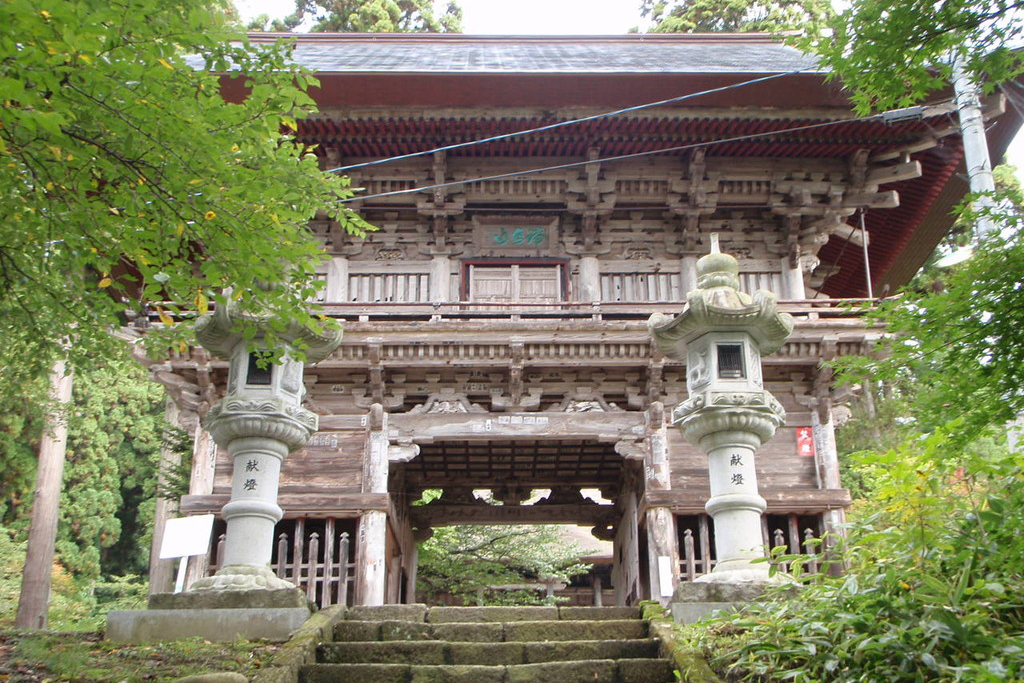
[Niomon Gate (Nationally Designated Important Cultural Property)]
This two-story main gate, the main entrance to the temple, is notable for its impressive statues of Kongorikishi (Nio guardians) on both sides. These statues date back to the late Edo period, and their muscular forms are instantly captivating. Passing through the gate, visitors are greeted by a path lined with giant cedar trees and moss-covered stone steps, truly giving the feeling of “transitioning from the mundane world to a sacred place.”
In recent years, the Jionji Terrace, adjacent to the main temple, has been developed. It is an interactive facility where visitors can learn more about the charm of this cultural asset through architectural commentary and digital exhibits of Buddhist statues.
Jionji Temple, the main temple, is a “treasure trove of cultural assets” where you can actually experience architecture and sculptures of great historical value. It’s not just a sightseeing spot, but a place where you can learn deeply about Buddhist art and architecture, creating an “extraordinary” experience that quietly resonates in the hearts of all who visit.
2.Why is it recommended for couples in their 60s?
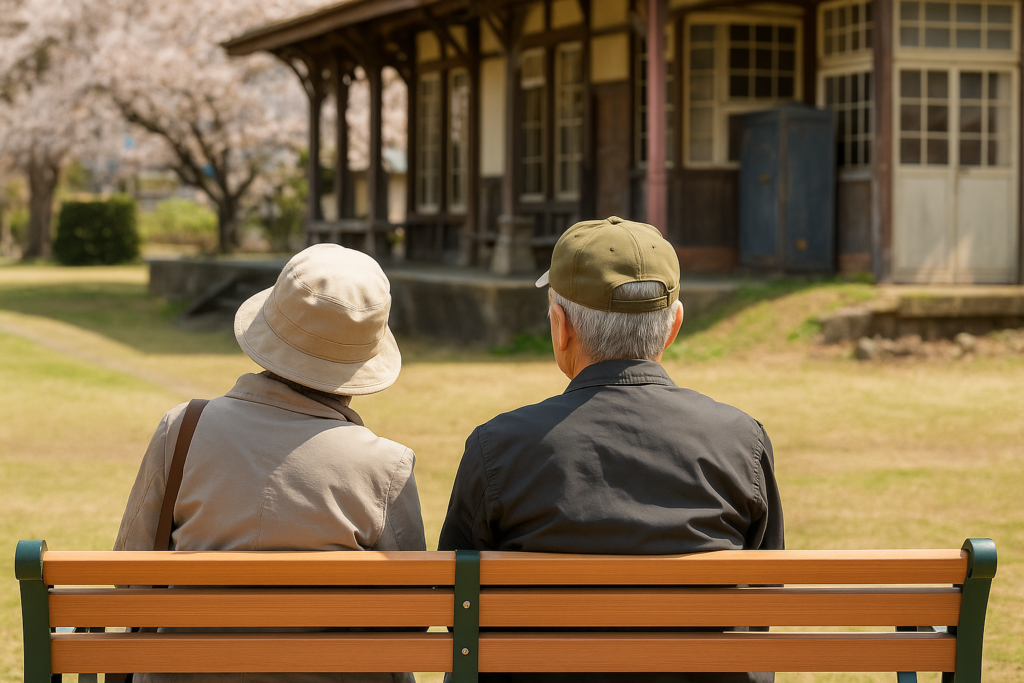
Honzan Jionji Temple is a highly recommended tourist destination for a couple in their 60s who have reached a turning point in their lives, as it is a place where they can find both peace of mind and a sense of cultural fulfillment.
Its environment allows for leisurely strolls away from the crowds, a pilgrimage route that puts less strain on the body, and a tranquil atmosphere where nature and history blend in harmony – all of these elements will enrich your retirement travels.
Honzan Jionji Temple is the place to fulfill all your travel dreams: “I want to spend time in peace,” “I want to walk without straining myself,” and “I want to experience culture.” Away from the crowds and noise that are common in tourist destinations, it is truly the perfect place for a “healing trip for adults.”
For a couple in their 60s who want to relax both body and mind, Honzan Jionji Temple is the perfect place, not just as a tourist destination, but as a place to savor “life’s reward time.”
2-1. A space where you can cherish quiet time without being crowded

参考:https://yamagatakanko.com/attractions/detail_731.html
Jionji Temple, the main temple, is one of the few tourist spots where you can relax in tranquility and enjoy scenic views year-round.
Unlike typical temples and shrines, it has not become too touristy. Because of this, it is rarely a popular destination for school trips or group tours, and weekdays are especially quiet. Furthermore, the approach and grounds are spacious, and small groups of worshippers can often be seen strolling quietly. This perfectly meets the travel needs of older generations who want to avoid crowds and enjoy a more relaxed atmosphere.
According to data collected by the Sagae City Tourism Division in the fall of 2024, the average number of visitors at Jionji Temple is around 5-10 per hour on weekdays (excluding autumn foliage and New Year’s holidays), maintaining a very quiet and comfortable atmosphere compared to other tourist attractions. Additionally, at the adjacent “Jionji Terrace,” visitors can listen to audio guides explaining the Buddhist statues and architecture, creating a unique learning experience without having to speak out loud.
For those over 60 who tire of the hustle and bustle of tourist destinations, the tranquility of Jionji Temple is a rare gift. The greatest attraction of this temple is the environment where couples can escape from their daily lives and walk together quietly while chatting.
2-2. Gentle on your feet! Easy-to-walk approach to the shrine and barrier-free information

参考:https://thelocality.net/honzanjionji-bunkazainohouko/
Jionji Temple, head temple, has well-maintained approach paths, parking lots, and grounds to ensure safe and comfortable visits even for those with mobility issues, making it a tourist spot friendly even for a couple in their 60s.
The main part of the temple grounds has relatively little elevation change, with only a limited number of gravel roads and steep stone steps. The main buildings can be approached via paved paths, and several ramps and benches have been installed for those requiring assistance. Another attractive feature is the location, within a five-minute walk from the parking lot to the main hall.
Jionji Temple has a free parking lot that can accommodate over 20 standard-sized cars, and a step-free ramp into the temple grounds. The gentle approach path from the Niomon Gate to the main hall is easy to navigate, even for those using wheelchairs or canes. Benches and shady rest areas are provided throughout the temple grounds, allowing visitors to enjoy their time while taking a break.
Furthermore, the Jionji Temple Terrace, which was renovated in 2022, is fully equipped with an elevator, allowing even those with mobility issues to experience Buddhist art and the temple’s history. The museum’s exhibits also feature enlarged text explanations and multilingual panels for seniors, making it convenient for those with poor eyesight.
For those who want to travel but are concerned about their physical strength or inability to walk long distances, Honzan Jionji Temple offers great value as a tourist destination where you can walk safely. The temple’s design is extensive, allowing a couple in their 60s to walk together at a leisurely pace without straining themselves.
2-3. A beautiful cedar forest and moss-lined path… a luxurious time to walk slowly
参考:https://www.youtube.com/watch?v=m89QplBaybM
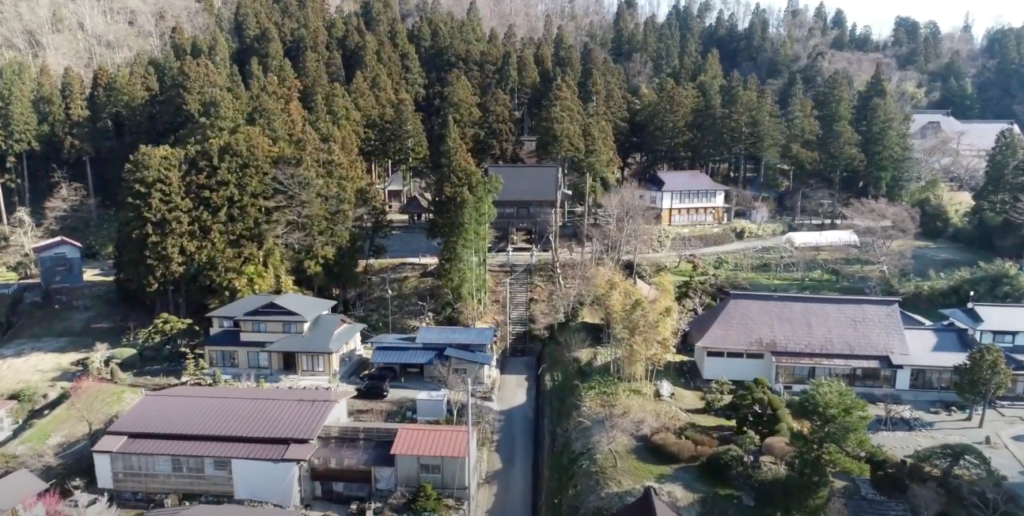
The grounds of Honzan Jionji Temple are a soothing space where well-maintained cedar forests and moss-covered cobblestones blend beautifully, offering a luxurious time for a couple in their 60s to stroll leisurely and immerse themselves in nature and history.
The temple grounds are surrounded by giant cedar trees over 100 years old. The moss-covered approach path that weaves between them changes color with humidity and temperature, revealing a different look with each visit. This space, where only the sounds of nature resonate, is the polar opposite of the hustle and bustle of the city, offering a “Japanese landscape” where mind and body are in harmony.
For example, in early spring, the sunlight filtering through the cedar forest intersects with the youthful greenery, enveloping the entire approach path in a softly glowing atmosphere. In summer, the moss turns deep green, providing a soothing cool shade for worshippers. In autumn, fallen leaves turn red and yellow, decorating the approach path, while in winter, a blanket of snow and silence descends. The seasonal scenery allows for a moment of “communication with nature,” soothing the mind just by walking.
Additionally, the approach to the temple is dotted with information boards and haiku monuments, allowing you to come into contact with haiku and historical anecdotes as you stroll around Honzan Jionji Temple. The more you walk, the more you learn, and the temple is highly regarded as a place where you can spend quiet and enriching time.
Honzan Jionji Temple is a place where “the very act of walking is healing and educational.” Spending time together as a couple, sitting side by side and chatting while feeling the seasonal breeze, will be an irreplaceable experience you won’t find at other tourist destinations.
3.Local experiences and attractions

参考:https://co-trip.jp/spot/12532
本山慈恩寺では、観て終わりの観光ではなく「体験」を通して学び、癒される時間が味わえます。
現地では文化財解説のガイドツアーやご朱印授与、仏像拝観といった伝統的な体験ができるほか、周辺には寒河江温泉や地元グルメを楽しめるスポットも充実しており、「知的好奇心」と「旅の癒し」を一度に満たすことが可能です。
静かで荘厳な空間の中で、仏像に手を合わせ、ガイドの話に耳を傾け、温泉で心身を整える──そんな“旅の理想形”を実現できる場所が、本山慈恩寺周辺には広がっています。
本山慈恩寺は「ただ行く」だけの場所ではありません。五感で歴史を感じ、地域の味と温もりに触れられる体験型観光地として、60代夫婦にとって心からおすすめできるスポットです。
3-1. 文化財をガイド付きで学ぶツアー参加

参考:https://x.gd/mpCBow
At Honzan Jionji Temple, you can gain a deeper understanding of the background and architectural beauty of its cultural assets by joining a tour led by a professional guide.
The main hall, three-story pagoda, and Buddhist statues at Honzan Jionji Temple are all Important Cultural Properties with high historical value, but understanding their origins and characteristics requires specialized knowledge. By joining a guided tour, you can transform a simple “viewing” into an “experiment” as you receive explanations about the history, faith, architectural style, and more.
Honzan Jionji Temple is currently offering cultural asset guided tours (reservations required) organized by Jionji Terrace. The tour lasts approximately 60 minutes and takes you around the main buildings on the temple grounds, providing detailed explanations of the Buddhist statues and architectural features.
Some of the topics you’ll learn on the tour include:
How to distinguish between Buddhist statues (Nyorai/Bodhisattva/Myo-o/Tenbu)
The architectural style of the main hall and its religious significance
The Buddhist cosmology embodied in the three-story pagoda
The historical relationship between Shugendo and mountain worship
Guides are certified cultural property specialists and local volunteer guides, well-versed in Buddhist art and architecture. Their thorough explanations, easy to understand even for a couple in their 60s, are highly acclaimed.
Tablets and audio guides are also available for rental, allowing you to enjoy the temple at your own pace (audio guide fee: around 500 yen as of 2024).
Deepening your knowledge will significantly increase your trip satisfaction. Learning with a guide makes Jionji Temple a cultural experience that combines the three elements of “knowing,” “seeing,” and “feeling.”。
3-2. Goshuin and Yakushi Nyorai statue viewing experience

参考:https://yakushiji.or.jp/tokyo/yakushi/
At Jionji Temple, the main temple, you can receive a goshuin stamp in a solemn atmosphere and view the Yakushi Nyorai statue, allowing you to find peace of mind and time for prayer.
Goshuin stamps are stamps or ink inscriptions given as proof of visiting a temple or shrine. They serve not only as a record of your travels, but also as a “trace of prayer” to calm your mind. Jionji Temple’s principal image, Yakushi Nyorai, is revered as a Buddha who heals illnesses and protects physical and mental health, making him particularly familiar to middle-aged and elderly people.
The main hall is usually open to the public from 9:00 AM to 4:00 PM, and inside you can view the seated Yakushi Nyorai statue (Kamakura period, designated an Important Cultural Property by the National Government). The principal image is usually enshrined in a small altar, but during special viewing periods, you can enter the hall and admire it up close.
In addition, original stamp books are sold at the gift shop on the temple grounds. The stamps are stamped with the words “Honzan Jionji” in ink and the Sanskrit character for Yakushi Nyorai.
What’s particularly noteworthy is that the stamps aren’t treated as a mere stamp rally, but as a way to express prayer. The staff at the reception desk carefully write each stamp, and sometimes even offer words of encouragement like, “I hope you stay healthy,” which is very comforting.
Experiencing the culture of prayer and spending time quietly reflecting on oneself was the greatest gift for a couple in their sixties. At Honzan Jionji, collecting stamps and visiting the temple allows them to reset their minds and find the energy to return to their daily lives.
3-3. A relaxing trip that ends with local cuisine and Sagae Onsen

参考:https://nikko-soba.org/introduce/teuchisobakatsura/
After visiting Jionji Temple, we recommend relieving your travel fatigue by enjoying gourmet food made with local ingredients and soaking in Sagae Onsen.
Sagae City is not only known for its cherries, but is also popular for its local cuisine made with Sagae beef and local vegetables, and its hot springs. Combining sightseeing, gourmet food, and a soak will complete a day that will satisfy both body and mind.
The following gourmet and hot spring spots are located within a 10-minute drive from Jionji Temple.
[Restaurants]
Soba Restaurant Katsura: Popular for its hand-made Sagae soba noodles. The local mountain vegetable tempura set is also well-received.
[Restaurant Cherry]: A restaurant serving Sagae beef steaks and hamburgers. Local wine pairings are available.
[Cafes & Sweets]
Sagaeya: A rice cracker cafe. The restaurant also offers a rice cracker baking experience, making it the perfect place for a break.
[Frutia]: A fruit parlor. The highlight from June to July is the “Fresh Cherry Parfait.”
[Hot Springs]
Sagae Onsen Yunosato: This alkaline, simple spring water flows directly from the source, making it gentle on the skin and long-lasting. It also offers rooms with open-air baths, and day trips are available (500 yen per adult).
Hotel Symphony Annex: A popular tourist destination, this hotel offers a blend of Japanese and Western cuisine and a panoramic bath.
Ending your trip with local flavors and a famous hot spring, you can soothe your body as well as your mind at Jionji Temple. Whether you stay for a day trip or an overnight stay, it’s sure to be a satisfying experience.
4.Access, parking, and tourist information
Jionji Temple, head temple of the temple, is easily accessible by car or public transportation, making it a tourist destination that even first-time visitors can plan their trip with peace of mind.
With clear access routes, a relatively short distance from major cities, and ample parking, restrooms, and barrier-free facilities, it’s a comfortable destination for visitors of all ages. The surrounding area is also dotted with tourist attractions and accommodations, making it an appealing choice for a wide range of trips, from day trips to overnight stays.
If using public transportation, it’s easily accessible by taxi or bus from Sagae Station on the JR Aterazawa Line, and by car it’s conveniently located about 10 minutes from Sagae Interchange on the Yamagata Expressway. Free private parking is available on the temple grounds, and the facilities are also considerate of seniors and families.
Jionji Temple, head temple of the temple, offers excellent conditions for a safe and enjoyable destination, even for a couple in their 60s visiting Yamagata for the first time.
4-1. Both car and public transportation are OK! Access details

Jionji Temple is accessible by car, train, and bus, allowing you to choose the perfect way to suit your travel style.
Yamagata Prefecture has a well-developed public transportation network connecting major cities, and Sagae City benefits from this. Tourists travelling by car can also rest assured that the journey is quick and easy from the expressway interchange, with well-maintained roads. Travel time is also short, at around 10 minutes by taxi from the station.
▼[By Car]
From Yamagata City: Approximately 30 minutes (via National Route 112)
From Yamagata Airport: Approximately 40 minutes
From Sagae IC on the Yamagata Expressway: Approximately 10 minutes (heading north on Prefectural Route 23)
▼[By Public Transportation and Taxi]
JR Yamagata Station → JR Ataezawa Line Sagae Station (approximately 30 minutes) → Approximately 10 minutes by taxi
*There is a taxi stand in front of Sagae Station
*Bicycle rentals are also available from the station
▼[By Bus] (Please check availability as routes are infrequent)
JR Sagae Station → Approximately 20 minutes by Jionji Line City Bus
Easily visit by train and taxi, or stop by on a road trip. With a variety of access options, Jionji Temple, the main temple of the temple, is a popular destination for a seasoned couple in their 60s.にもストレスの少ない移動環境を提供してくれます。
4-2. Parking, toilets, and other facility information (safety points)

参考:https://wheelchair.travelogues.jp/temple/jionji/
Jionji Temple, the main temple, offers free parking, clean restrooms, and rest areas, providing a safe and secure environment for travelers over 60.
As people get older, they often worry about the facilities at their travel destinations, such as whether they can walk from the parking lot to the main hall, whether they can take a break along the way, and whether restrooms are nearby. To address these concerns, Jionji Temple is working to improve its facilities by incorporating barrier-free access.
[Free Parking]
There is free parking space for 30 standard cars on the south side of the main hall, and large buses are also available. The gravel surface is flat, making boarding and disembarking easy. The approach to the temple is approximately a 3-5 minute walk away.
[Toilets]
Well-maintained restrooms are located both within the temple grounds and on Jionji Terrace. The restrooms on Jionji Terrace are barrier-free and equipped with multi-purpose toilets, diaper changing areas, and Western-style toilet seats with handrails.
[Rest Area]
Enjoy a refreshing break while enjoying the seasonal breeze on the benches on Jionji Terrace or in front of the Niomon Gate. Drink vending machines are also available on the premises.
[Other Facilities]
● Jionji Terrace features an exhibition and commentary section, a cafe corner, and a souvenir shop.
● Free walking sticks are available for rent at the main hall admission desk (limited availability).
● An AED is also installed on the temple grounds, and emergency response is fully prepared.
Jionji Temple, the main temple, offers the comfort, safety, and consideration needed for a safe and enjoyable visit. The comfortable environment, which allows visitors to worship in peace and ease their travel anxieties, makes it the ideal destination for a couple in their 60s.です。
4-3. 最寄のおすすめ宿&観光地との組み合わせ方
When visiting Jionji Temple, it’s best to combine it with Sagae Onsen and Yamagata’s famous sightseeing spots for a two-day, one-night “healing and cultural trip.”
Jionji Temple is located almost in the center of Yamagata Prefecture, offering easy access to popular tourist destinations such as Sagae Onsen, Yamadera, Ginzan Onsen, and Zao. Combining your stay with a stay allows you to soothe your travel fatigue while also creating a fulfilling itinerary.
▼[Recommended Accommodations in Sagae Onsen]
Hotel Symphony Main Building/Annex
→ A hot spring inn near Sagae Station. It features a large public bath, an open-air bath, Japanese-Western style rooms, and a local food motto.
Yunosato Kitahara
→ A warm, family-run inn. The open-air bath overlooking the Sagae River and Yamagata beef kaiseki cuisine are popular. Rates start from around 10,000 yen per person for one night and two meals.
▼ [Nearby Tourist Spots]
Sagae Cherry Land: Roadside station and tourist orchard. Seasonal cherry picking experiences available.
Yamadera (Risshakuji Temple): A sacred site associated with Matsuo Basho. Approximately a 40-minute drive from Jionji Temple.
Yamagata City: Abundant sightseeing and culinary attractions, including the Yamagata Prefectural Museum “Bunshokan,” Kajo Park, and the imoni (sweet potato stew) culture.
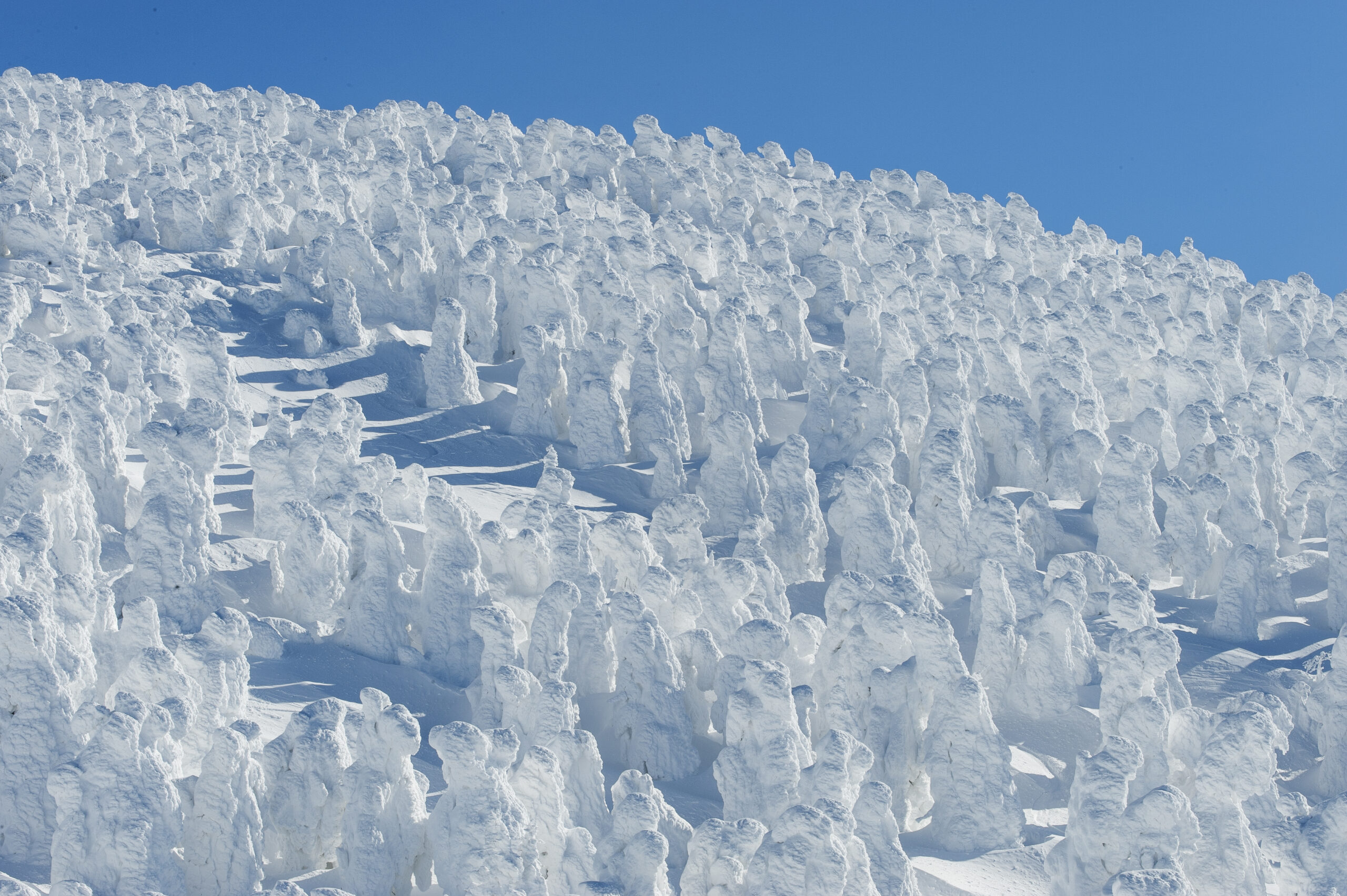
Zao Onsen: Enjoy frost-covered trees in winter and sulfurous springs year-round. Approximately a 60-minute drive.
By planning a 2-day to 3-day Yamagata trip centered around Jionji Temple, you can easily enjoy a variety of elements, including culture, hot springs, nature, and cuisine.心と体の“両方を満たす旅”として、60代夫婦に強くおすすめできるモデルコースです。
5.Local voices and interviews with area residents

Honzan Jionji Temple is beloved by local residents as a “temple that accompanies people through life,” and is more than just a tourist attraction.
The temple’s deep ties to the community and religious practices, often invisible to tourists, further enrich its appeal. By listening to the voices of the local community, visitors can gain a deeper understanding of the area and experience it as a “journey of the heart” rather than a tourist attraction.
A local woman in her 70s describes Honzan Jionji Temple as “a place to visit for family milestones,” while a man in his 60s describes it as “a place that gives me time once a year to reflect on myself.” These honest opinions from the local community will be a great encouragement for readers struggling to decide on a travel destination.
Testimonies rooted in the local community convey the “essence” of a tourist destination, rather than just its “surface.” Honzan Jionji Temple is a “spiritual refuge” not only for visitors but also for residents, and this is what makes it so special.
5-1. “I brought my children to worship here” – A woman in her 70s from Sagae said,声
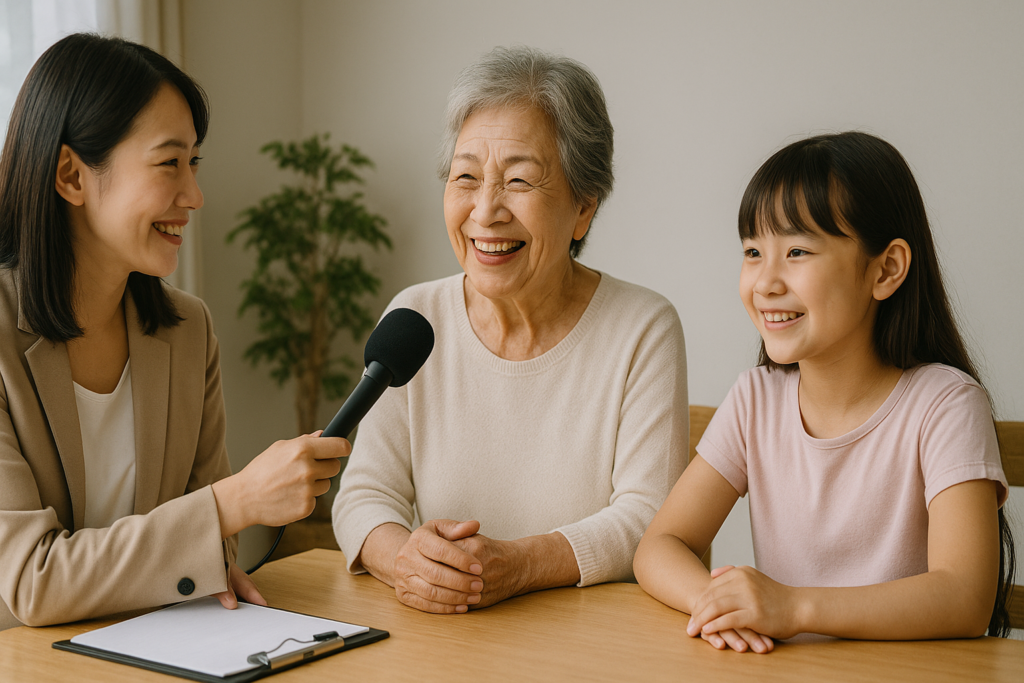
Jionji Temple, the main temple, is a place of worship for the local community, visited by families across generations, and is a part of daily life for local residents.
Jionji Temple is a popular place of prayer and family milestones for tourists and local Sagae residents alike. It’s especially treasured by older generations as a place where they can feel a sense of family connection.
A former nursery school teacher in her 70s who lives in Sagae City said the following:
“Three generations of my family have been visiting Jionji Temple. We visit every year, from when our children are born, to New Year’s visits, Obon, equinoxes, and Shichi-Go-San celebrations. Walking hand in hand with my grandchildren along the cedar-lined approach to the temple is truly wonderful, and coming here really makes me feel connected as a family.”
This person has cherished Jionji Temple not just as a temple, but as a place that accompanies them at important milestones in life.
She also said she enjoys lining up and comparing photos of her grandchildren taken in front of the Niomon Gate every year.
Even more noteworthy is the fact that the temple grounds are designed to be safe for families with children and the elderly. The approach to the temple has a gentle slope, making it suitable for strollers and walking sticks. Jionji Terrace is also equipped with a nursing room and multi-purpose toilets, providing all the necessary considerations for a family visit.
Jionji is a temple that locals visit again and again with their families. It is this aspect of it being a place of faith integrated into everyday life that gives it value beyond its appeal as a tourist spot. It is precisely because of this connection to the local community that, despite being a travel destination, you can experience a sense of security, as if you’re back home.
5-2.”I visit once a year to find healing,” says a man in his 60s from Yamagata City
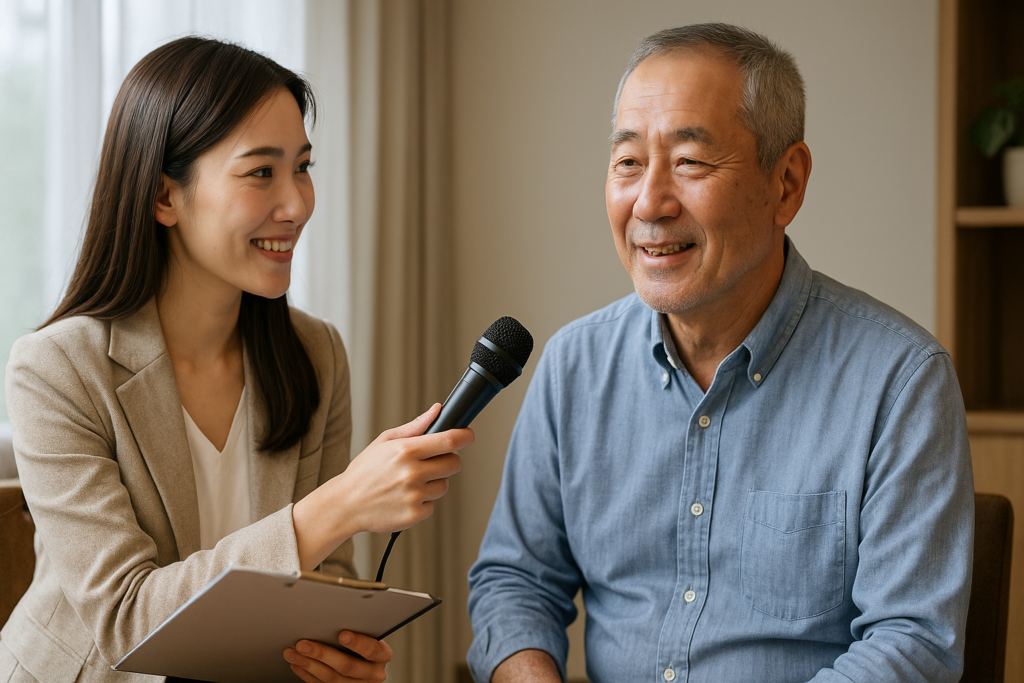
Jionji Temple, the main temple, attracts many repeat visitors as a place that offers a chance to escape from the busyness of everyday life and “time to calm the mind.”
In a stressful society, time to calm the mind while surrounded by tranquil nature and cultural assets is invaluable for middle-aged and older people. Jionji Temple is located just far enough away from the hustle and bustle of the city to be easily accessible, making it the perfect place for “annual mental maintenance.”
A former prefectural government employee in his 60s living in Yamagata City shared his story:
“Since I retired, I’ve designated one spring day as ‘Jionji Temple Day,’ and come here alone every year. Walking through the sunlight filtering through the cedar trees, I somehow manage to reset my mind. Just praying in front of the main hall makes me feel motivated to work hard again this year.”
This person also said, “Whenever I want to change something, I come here and the answer comes to me,” suggesting that he uses Jionji Temple as a “compass for the heart.”
Furthermore, after visiting Jionji Temple, he always stops by Sagae Onsen, saying calmly, “I soak in the hot springs, eat some soba noodles, and head home as the sun sets. That’s my favorite day of the year.”
It’s precisely because of this “standard way of spending the day” that it becomes a “journey of healing and ritual” that goes beyond the mere concept of sightseeing.
For repeat visitors, Jionji Temple is like a “fixed point in life.” Rather than “touring” tourist spots, it’s a place where they “return home.”る場所」として選ぶ人々の声は、この地が持つ本質的な癒しの力と信頼性の高さを証明しています。
6.Frequently Asked Questions (FAQ) | Jionji Temple Tourist Information

参考:https://stock.adobe.com/jp/search?k=q
Q1. What are the visiting hours at Honzan Jionji Temple?
A. Honzan Jionji Temple’s visiting hours are 9:00 AM to 4:00 PM. Hours may change during the winter or inclement weather, so please check the official website or Jionji Terrace for the latest information before visiting.
Q2. Is there parking at Honzan Jionji Temple? Is there a fee?
A. There is a free private parking lot on the south side of the temple grounds. It can accommodate approximately 30 standard cars and large buses, and it is free of charge. It is a 3-5 minute walk from the approach to the temple.
Q3. How do I get there? Can I get there by public transportation?
A. It is about a 10-minute taxi ride from Sagae Station on the JR Aterazawa Line. There is also a city bus (Jionji Line), but due to infrequent service, we recommend public transportation plus a taxi or rental car.
Q4. Can I get a goshuin (stamp)? How much does it cost?
A. Yes, you can get a goshuin (stamp) at the gift shop. It costs around 300 yen, and original goshuin notebooks are also available for purchase. Please apply during viewing hours.
Q5. Can I view the principal image of Yakushi Nyorai at any time?
A. It is usually enshrined in a shrine (a container for housing Buddhist statues) and can only be viewed directly during special viewing periods. However, it is possible to view and pray inside the main hall.
Q6. Is the temple accessible? I have concerns about my legs and back.
A. Yes, there is a gentle slope along the approach to the temple, and Jionji Terrace is equipped with accessible toilets and an elevator. Seniors and wheelchair users can also visit the temple with peace of mind.
Q7. How is the temple accessed from Sagae Onsen?
A. It is about a 10-minute drive from Sagae Onsen Town to Jionji Temple, the main temple. It is easy to coordinate your itinerary with accommodation, allowing you to enjoy both sightseeing and relaxation.
Q8. Are there any restaurants or cafes nearby?
A. There are few restaurants around Jionji Temple, but downtown Sagae, a 5-10 minute drive away, has a wide selection of local cuisine, including soba shops, restaurants, and fruit cafes.
Q9. How much time should I plan to spend?
A. If you just want to worship and stroll around, it will take about an hour. If you want to visit the Jionji Terrace or join a guided tour, it will take about 1.5 to 2 hours. If you want to take your time, we recommend the half-day course.
Q10. When is the best season to visit? Can I see the autumn leaves and snow scenery?
A. Spring (fresh greenery) and autumn (fall leaves) are particularly popular, but the winter snow scenery is also majestic. The peak of the autumn leaves is early to mid-November, and the approach to the temple is particularly photogenic.や三重塔が見どころです。
7.Summary | Head to Jionji Temple for a “soul-filling trip” after retirement
Jionji Temple, head temple of the temple, is an ideal place for a journey into the second half of your life, allowing you to fill your retirement time with learning, healing, and prayer.
Surrounded by historic buildings, you can immerse yourself in the tranquil nature and take time to reflect through receiving red seals and viewing Buddhist statues. With easy access, barrier-free facilities, and warm relationships with local residents, it’s also an attractive spot that even elderly couples can visit with peace of mind.
Within the temple grounds, you’ll be surrounded by a sacred atmosphere created by a cedar forest over 100 years old and moss-covered cobblestones. You can spend a nurturing time learning as you listen to explanations of Buddhist architecture and cultural assets. On the way back, you can stop by Sagae Onsen, sample local ingredients, and spend the night exploring Yamadera and Zao the next day. Such an itinerary is easily planned, making it the perfect place to reset your mind and body and deepen your bond as a couple.
Jionji Temple, head temple of the temple, is more than just a tourist destination; it’s a spiritually enriching place worthy of life’s milestones. We hope that couples who have entered a new stage in their lives after retirement will visit this place as a “quiet and profound” destination to cherish their time together.す。
7-1. A quiet and deep space perfect for couples to talk
Jionji Temple, the main temple, is a space of quiet and profound depth where couples can converse quietly and share their innermost thoughts.
Jionji Temple offers a relaxed atmosphere rarely found in urban areas or crowded tourist destinations. A space where comfortable silence is permitted, even when conversation dies down. It’s an opportunity to reaffirm the bond that only long-time couples can enjoy.
Beyond the Niomon Gate, a cedar-lined path unfolds. Walking side by side along the moss-covered cobblestones, they exchange casual conversations. At that moment, the distant sound of a bell punctuates the conversation. Such scenery symbolizes the quality of travel unique to a couple in their sixties, rarely experienced on younger travelers seeking social media-worthy posts.
Another luxury is simply sitting on the stone steps in front of the main hall, closing your eyes, and feeling the breeze. Benches and rest areas are scattered throughout the temple grounds, allowing for immediate rest when fatigue sets in. This sense of ease is directly linked to the important value of “not getting tired on the road” for people in their sixties.
Jionji Temple, the main temple of the temple, is an ideal travel destination to reaffirm the non-verbal connections and spend quiet time with those who have walked the path of life together.
7-2. Your next trip to Yamagata: a place of history and healing

参考:https://map-it.azurewebsites.net/Map/%E5%B1%B1%E5%BD%A2%E7%9C%8C/citrus
For a couple in their 60s looking for their next travel destination, we wholeheartedly recommend Yamagata, where you can enjoy a balanced experience of culture, nature, hot springs, and cuisine.
Yamagata Prefecture is dotted with temples, shrines, and townscapes that offer a sense of rich history and culture while avoiding the crowds, as well as soothing hot springs. The Sagae City area in particular offers a compact location for sightseeing and relaxation, making a two-day, one-night trip a satisfying experience.
At Honzan Jionji Temple, you can pray for good health and longevity by placing your hands together in front of the Yakushi Nyorai statue, and experience Buddhist culture through stamps and Buddhist culture. Afterwards, soak in the alkaline simple springs of Sagae Onsen and savor a dinner featuring local mountain vegetables and Sagae beef. The next day, follow in the footsteps of Matsuo Basho as you climb the stone steps of Yamadera (Risshakuji Temple), then have lunch in Yamagata City, famous for its imoni (simmered sweet potato stew). This balanced itinerary, featuring culture, nature, and cuisine, is so popular that it’s actually recommended as a model itinerary by the tourist association.
Furthermore, in recent years, tourist-friendly infrastructure has been improved, with free parking, information signs, and multilingual support. It’s an environment that even couples unfamiliar with traveling can enjoy with peace of mind.
If you’ve put aside your busy working lives and now want to cherish some time for yourself, a trip to Yamagata is the answer. Why not start the next chapter of your life in a relaxed manner, immersed in the deep history and soothing warmth of the area?
References and Sources
- Yamagata Prefecture Tourism Association: https://www.yamagatakanko.com/
- Sagae City Tourism and Products Association: https://www.sagae-kanko.com/
- Jionji Terrace: https://jionji-terasu.jp/
- Yamagata Prefecture Hot Springs Association: https://www.yamagata-onsen.com/
- Jionji Temple and Cultural Assets (Yamagata Prefecture Cultural Assets Division)
- https://www.pref.yamagata.jp/020072/bunkazai/bunkazaiichiran.html
- Hotel Symphony: https://www.hotel-symphony.jp/
- Sagae City Transportation Division (Bus Information): https://www.city.sagae.yamagata.jp/
- Official websites of restaurants and hot spring facilities (check directly when visiting; latest information required)
- Yamagata Prefecture Cultural Assets Division (Barrier-Free Cultural Asset Maintenance Information)
- https://www.pref.yamagata.jp/020072/bunkazai/