


A haiku moment walking along “The Narrow Road to the Deep North” – A journey to Yamagata’s famous haiku sites and tranquility, reflecting on the scenery Basho saw
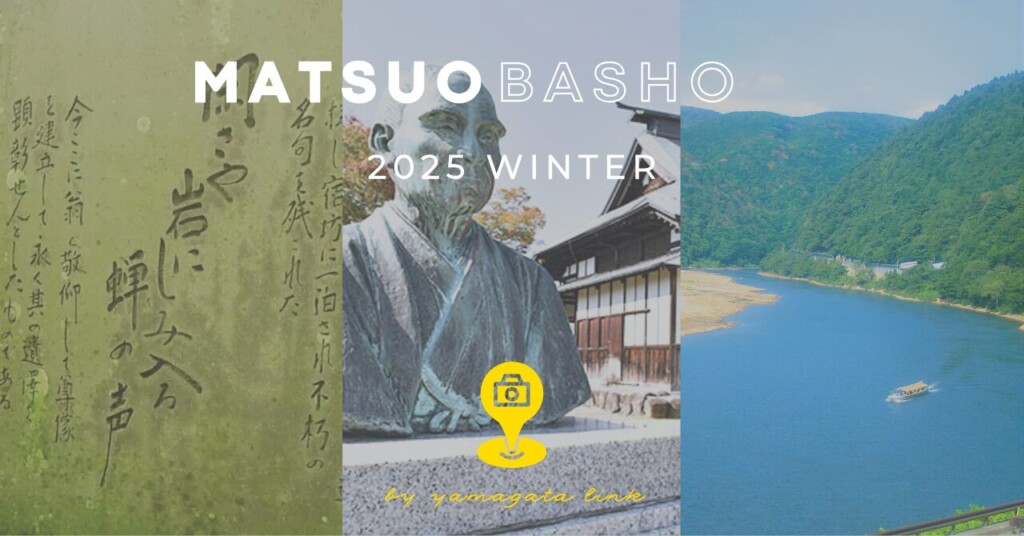
A journey along the Oku no Hosomichi road, visiting Yamagata and the famous haiku sites of Matsuo Basho. Why not enjoy a spiritually enriching journey, composing a haiku while savoring Basho’s perspective in the tranquil surroundings of Yamadera Temple and the Mogami River?
1. Introduction – A luxurious journey into the world of “Oku no Hosomichi”

reference:https://www.nippon.com/ja/japan-topics/g02067/
Travel is a source of inspiration for haiku poets
For haiku poets, travel is not a short journey, but a series of experiences that touch the heartstrings. This is because the sights, sounds, and scents experienced with the five senses bring about momentary inspiration that is then woven into words. For example, Matsuo Basho wrote the poem “The silence, the sound of the cicadas penetrating the rocks” during his journey on “Oku no Hosomichi,” which is known for its ability to fully capture the scene woven by the silence of mountain temples and the sounds of the cicadas. In this way, travel and haiku are inextricably linked.
Among the “Hosomichi of the Deep North” that Matsuo Basho walked, Yamagata is particularly dotted with pilgrimage sites.
reference:https://www.yamagata-art-museum.or.jp/
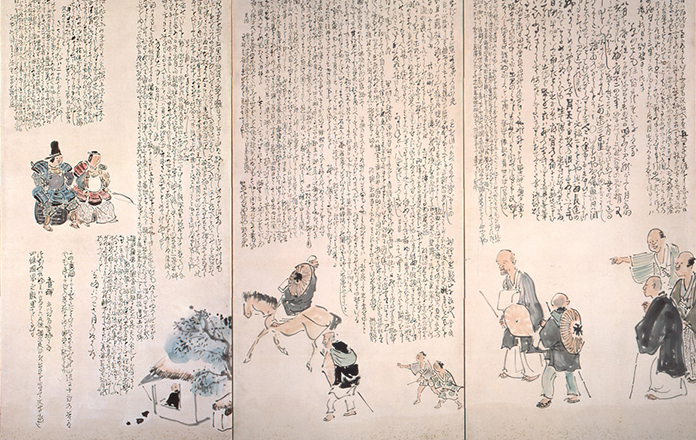
“Oku no Hosomichi” is a travelogue that records the approximately 2,400 km journey that Matsuo Basho walked with his disciple Sora. Yamagata is an important location in the book, where many famous poems were born, particularly famous ones such as “The silence of the cicadas’ voices penetrating the rocks,” written at Yamadera (Risshakuji Temple), and “The early Mogami River, gathering the May rains,” written in front of the Mogami River. For example, the poem about the Mogami River describes a river swollen with water and flowing vigorously after a long period of rain, but it is also interpreted as conveying a view of the impermanence of life.
This time, rather than just sightseeing, we will be taking a trip to enjoy the scenery from Basho’s perspective and spend the luxurious time composing a haiku of our own.
The purpose of this trip is not to visit forbidden tourist spots. By walking the same path Basho walked and experiencing the scenery from his perspective, you will be able to fully appreciate the profound depth of haiku. Furthermore, Yamagata is home to many haiku monuments, and by learning the background behind each haiku, you will be able to gain a deeper understanding of the relationship between haiku and travel.
The purpose of this trip is to actually visit the same path Basho walked and compose your own haiku. By not only viewing the scenery, but also feeling the atmosphere of the place and sharpening your five senses, you will be able to experience the power of haiku to capture a moment.ひ、芭蕉の足跡をたどりながら、あなただけの一句を詠んでみてください。
2.A travel route to visit famous haiku sites in Yamagata along “The Narrow Road to the Deep North”

reference:https://topics.tbs.co.jp/article/detail/?id=10154
Among the haiku travel routes of “Oku no Hosomichi,” Yamagata is a place where haiku culture remains strong. Traveling along the path that Matsuo Basho actually walked, you will find many precious spots where you can relive the scenery and emotions he felt. The goal is to compose a haiku of your own while immersed in history. The journey begins at Yamadera (Risshakuji Temple), where Basho wrote “The silence and the sound of cicadas penetrating the rocks.”
Start of the journey: Risshakuji Temple (Yamadera) – “The silence and the sound of cicadas permeating the rocks”
Yamadera (Risshakuji Temple) is widely known as the place where Basho wrote, “The silence, the song of the cicadas penetrating the rocks.” In this tranquil setting, you can relive the emotional experiences Basho felt.
Risshakuji Temple is a renowned Tendai Buddhist temple, characterized by its breathtaking views and solemn atmosphere at the top of over a thousand stone steps. Not only can you enjoy the scenery throughout the seasons, but in the summer, the sound of the cicadas echoes, providing a deeper insight into Basho’s haiku worldview.
Passing through the mountain gate and climbing the moss-covered stone steps, step by step, you’ll be drawn into a world of silence, a world void of the surrounding strife and conversation. From the Godaido Hall at the top, you can enjoy a panoramic view of Yamagata’s beautiful scenery, creating a feeling that time has stopped.
Yamadera Temple is a must-see for travelers who love to compose haiku. Why not try to write a new haiku using your own sensibilities while thinking about some of Basho’s famous haiku?
A monument telling history: The Mogami River and Basho’s famous haiku, “The Mogami River, gathering the May showers, flows quickly”

reference:https://ja.wikipedia.org/wiki/%E6%9C%80%E4%B8%8A%E5%B7%9D
The Mogami River is where Basho wrote the poem “The Mogami River flows swiftly, gathering the May rain” during his travels. Understanding the background to this poem will give you a deeper appreciation for the river’s considerable flow.
The Mogami River has flourished as a key logistics hub since ancient times, and many travelers have crossed it.
If you actually visit the Mogami River, you will understand why Basho wrote this poem. Especially during the rainy season and after typhoons, the river widens, its water volume increases, and you can see it flowing.
The Mogami River is not an unconscious beauty spot; it is a place where history and culture intersect. Viewing the river from Basho’s perspective and composing a new poem will help you think more positively about your travel memories.
A poem written in silence: Obanazawa and “I’ll sleep in the coolness of my home”
Obanazawa is where Basho stayed for around 10 days and where he wrote the poem “I sleep in the coolness of my lodging.” This town, which retains the atmosphere of the Edo period, is the perfect place to quietly compose haiku.
Obanazawa’s unique basin climate keeps it cool even in summer, creating the refreshing air described in his haiku.
Even today, Basho’s footsteps remain vivid in Obanazawa, with places like Basho-an and Suzuki Seifu’s House, allowing you to get a feel for the culture of that time.
In the tranquil air of Obanazawa, you’ll be able to experience the same coolness Basho felt and write a poem inspired by your own sensibilities, making this a truly special trip.
The Journey’s End: Mogami Tokunai Memorial Museum – A Deeper Look into the Haikai Culture that Supported the Journey

reference:https://x.gd/hajhx
The Mogami Tokunai Memorial Museum is the perfect place to gain a deeper understanding of Yamagata’s haiku culture. Learning about the cultural background that moved Basho during his travels will broaden your understanding of haiku.
During the Edo period, haiku was both a form of entertainment and a place for intellectuals to interact. At the Mogami Tokunai Memorial Museum, you can learn about its historical background and the people Basho encountered while composing his haiku.
The museum exhibits materials that shed light on the haiku culture of the time, as well as works by haiku poets with whom Basho interacted.
By visiting here at the end of your trip, you’ll be able to appreciate the profound depth of Basho’s haiku.
3. How to Enjoy Traveling to Write Haiku

reference:https://www.nippon.com/ja/japan-topics/b07224/
When traveling to compose haiku, it is important not only to look at the scenery, but also to feel the time and atmosphere that flows there. By putting into words the emotions that you feel on your travels, like Matsuo Basho, you can feel the charm of the place more deeply.
The “time” and “place” that are conducive to creating haiku
Choosing the best time and place to compose a haiku naturally sharpens your mind, allowing you to write more impressive poems.
In the mornings and evenings, or in quiet places, unnecessary distractions are eliminated, sharpening your senses. As a result, it becomes easier to pick up on subtle changes that are usually difficult to detect, such as the smell of the wind, birdsong, or the sound of a distant bell.
For example, at Yamadera (Risshakuji Temple), arriving early in the morning allows you to compose a haiku in the silence with few tourists, as if meditating. Similarly, along the Mogami River, the water’s surface shines golden at dusk, a beautiful sight, evoking the image of Basho’s poem, “The Mogami River, gathering the May rain, flows quickly.”
When composing haiku while traveling, keeping in mind the best time of day and quiet place will help you to create a more modest haiku.
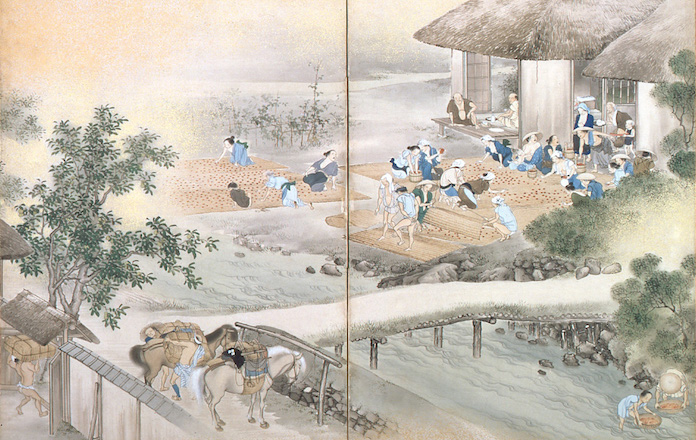
I walk while thinking, “What would Basho have written?”
reference:https://www.yamagata-art-museum.or.jp/
Rather than simply admiring the scenery of your travels, your approach to haiku will change if you consider, “How would Basho have written it?”
Basho’s haiku are characterized by their delicate expression of the atmosphere and emotions of a place, rather than short descriptions of the landscape.
For example, in Obanazawa he wrote the poem, “I sleep in the coolness of my lodging.” The “shisa” here expresses not just the coolness of the weather, but also the calmness of the mind that comes from soothing the fatigue of travel. Also, while climbing the stone steps of Yamadera Temple, you might notice the “quietness and the chirping of the cicadas permeating the rocks,” and you’ll feel the contrast between the chirping of the cicadas and the silence even more strongly.
If you think, “How would Basho have written it?” while traveling, the way you see the scenery will change, and you’ll be able to write haiku that are more memorable.
Enjoy recording your travels through haiku
Preserving your travel memories in haiku allows you to etch them into your memory in a way that is different from photographs or diaries.
Haiku is an expression that captures a momentary scene. Therefore, by putting the emotions you felt during your trip to a 5-7-5 rhythm, the scenery and feelings of that time can be vividly recalled when you return to the journey.
For example, on the last day of your trip, while watching the sunset along the Mogami River, you can compose a poem that poetically captures the scenery and emotions of that moment. Furthermore, by creating a haiku notebook and thinking up haiku about your trip, you can complete your own collection of haiku.
Recording your travels in haiku is not just about creating fleeting memories, but also about honing your own sensibilities. It’s a good idea to compose a part of your trip that is unique to you at the end of your trip.
Gazing at the scenery in the quiet hours of the morning and evening, walking while thinking from Basho’s perspective, you will find moments in your journey that you should write about. And by composing a haiku at the end of your trip, you can preserve your memories in a way that is different from photographs or diaries. Why not enjoy haiku and the excitement of your journey more fully and create your own version of “The Narrow Road to the Deep North” in one go?
4. Summary: Following in Basho’s footsteps, a journey immersed in tranquility

reference:https://travelist.jp/column/cat_01/one-person-traveling-man-sa08.html
Basho’s journey along the “Hosomichi of the Deep North” is not a conceptual tour of tourist spots, but a special journey that allows you to relive the atmosphere and scenery he felt. By simply paying attention to the haiku monuments and composing your own haiku, you can get in touch with the essence of Basho’s journey. This journey is a valuable time to face yourself in silence and develop new sensibilities.
Rather than just enjoying the sights, you can experience the atmosphere that Basho felt, making this a memorable trip.
A trip along “Oku-no-Hosomichi” is not just sightseeing; by experiencing the atmosphere Basho felt, it will be a truly enjoyable journey that will leave a deep impression on your heart.
Haiku is the art of putting the scenery before you into words. Therefore, it is important to actually visit the places Basho wrote about and experience the scenery he saw and the silence he felt with all your senses.
For example, when you visit Yamadera (Risshaku-ji Temple), try climbing the stone steps while imagining the moment Basho wrote, “The silence, the sound of cicadas seeping into the rocks.” You will naturally come to understand what he felt here. Similarly, while gazing at the rapids of the Mogami River, recall his poem, “The Mogami River gathers the May rain and is quick,” and the fullness of the scene will become even more real.
By tracing Basho’s footsteps on his journey, you can experience with your own senses the feelings he conveyed in his haiku.
Not only can you visit the stone monuments, but you can also compose your own haiku and record your journey, allowing you to “relive Basho’s journey.”
You can relive Basho’s journey not only by admiring the haiku monuments, but also by composing your own haiku.
Haiku is a technique of expression that encapsulates a momentary scene in five-seven syllables. Expressing the scenery and events you encountered during your travels in your own way will etch the memories of your trip more deeply in your memory. The value of a haiku is not just in composing it, but also in preserving it.
While watching the sunset over the Mogami River, you can compose a poem like “The May rain flows, dyed gold,” to create a unique work that captures a moment from your journey. Soaking in the silence of Obanazawa, you can write, “The coolness of the shadows of the cedars swaying in the summer inn,” to capture the atmosphere Basho felt in your own way.
By not only visiting the haiku monuments but also by composing your own haiku, you can relive Basho’s journey and create even richer travel memories.
Immerse yourself in the world of haiku from “Oku no Hosomichi” and embark on a journey to carve out your own haiku.
You can enjoy your journey along “The Hosomichi of the Deep North” even more by not only savoring Basho’s haiku, but also by carving your own haiku.
The appeal of traveling lies not just in viewing the scenery, but also in turning the atmosphere of a place into words. Haiku is the art of capturing the atmosphere of a place and expressing it in five-seven-five syllables.
For example, when you visit the Mogami Tokunai Memorial Museum at the end of your trip, you could compose the following poem: “At the end of the journey, a shadow falls on Basho’s haiku monument,” which would become a poem symbolizing the end of your own journey. Furthermore, by capturing the small details you felt along the way in haiku, those moments will be etched deeply in your memory.
A journey to compose Basho’s haiku becomes an even more memorable experience when you compose your own haiku. Why not capture the emotions of your journey in five-seven-five syllables and carve your own personal version of “The Hosomichi of the Deep North”?
A journey along “Oku-no-Hosomichi” not only allows you to experience the atmosphere Basho felt and visit the haiku monuments, but also allows you to compose your own haiku, making it even more fascinating. Your memories will be more vivid, and your journey following in Basho’s footsteps will become a special experience of your own. See the scenery from Basho’s perspective, compose your own haiku, and complete your one-of-a-kind journey.
Related Links
Information on places associated with Basho:芭蕉の山形旅
Yamadera (Risshakuji Temple):公式サイト
Mogami River Boat Ride:山形観光情報
Risshakuji Temple Official Website:https://www.yamaderakankou.com
Yamagata Prefecture Tourism Information Portal:https://yamagatakanko.com
Mogami River Boat Tour Official Website:https://www.blf.co.jp
Yamagata Prefecture History and Culture Database:https://www.pref.yamagata.jp
Obanazawa City Tourism Site:https://www.city.ohanawari.yamagata.jp
Mogami Tokunai Memorial Museum Official Website:https://www.mogami-tokunai.com
Yamagata Prefecture Tourism Information Portal:https://yamagatakanko.com
Earthquake (sunrise and sunset times in Yamagata):https://www.jma.go.jp/jma/index.html
Obanazawa City Tourism Site:https://www.city.ohanawari.yamagata.jp
Japan Haiku Association (Haiku commentary):https://www.haiku.jp
Japan Travel Writers Association (Travel Recording Methods):https://www.jnta.or.jp
How to Post Haiku on Instagram (Official Guide):https://help.instagram.com
Yamagata Prefecture Tourism Information Portal:https://yamagatakanko.com
Risshakuji (Yamadera) Official Website:https://www.yamaderakankou.com
Japan Haiku Association:https://www.haiku.jp
Museum of Japanese Literature (Basho’s haiku archive):https://www.nihonbunrakukan.com
Yamagata Prefectural Board of Education (Cultural Heritage Information):https://www.pref.yamagata.jp
このカテゴリの新着記事