


A hidden spring landscape born from the melting snow in Yamagata: A mystical view of the submerged forest at Shirakawa Dam
Come experience the spectacular spring scenery and extraordinary atmosphere of Yamagata and the submerged forest. The tranquility and excitement you can’t find in the city awaits you.
1. Introduction | As a Yamagata resident, I want to tell you about this spectacular spring view

The “submerged forest,” found only in Yamagata in the spring, is a special landscape that synchronizes your heart with nature.
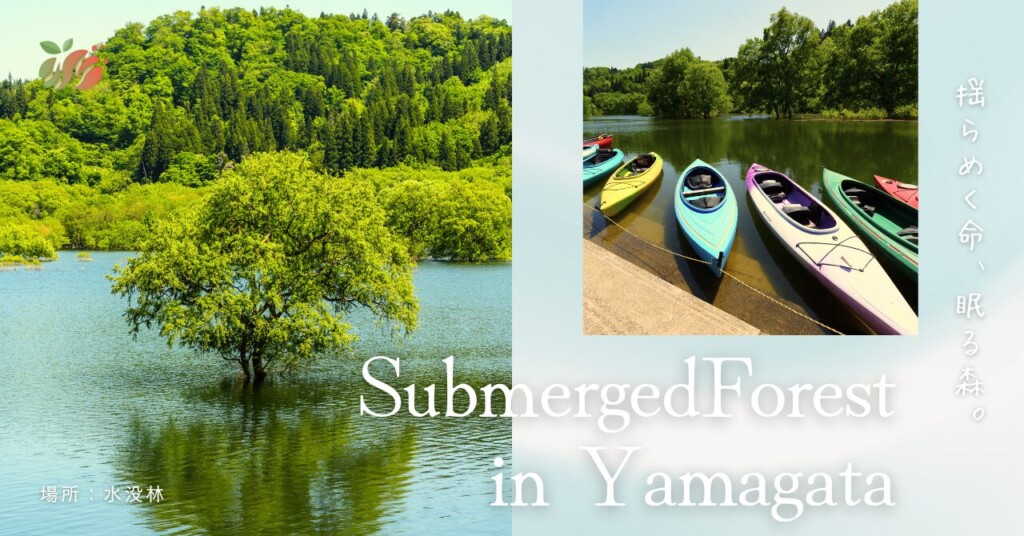
This phenomenon occurs when the spring snowmelt causes the water level of Shirakawa Dam to rise, submerging the willow forest into the lake. It’s a magical landscape created temporarily by nature, lasting only about a month. Even we locals find ourselves returning every year to see this view again.
For example, around Lake Shirakawa, you can enjoy two completely different landscapes: the “white submerged forest” (late March to mid-April) and the “green submerged forest” (mid-April to mid-May). The silhouettes of the trees reflected on the water’s surface, the color of the sky, and the silence… all of these aspects give you a sense of “oneness with nature,” and the warmth of the air and the absence of sound resonate deeply in your heart, something that can’t be conveyed in photographs alone.
As a resident of Yamagata, I want you to experience this “miraculous, breathtaking view” that’s only available this spring.
1-1. A place that isn’t too touristy, but still moves the soul
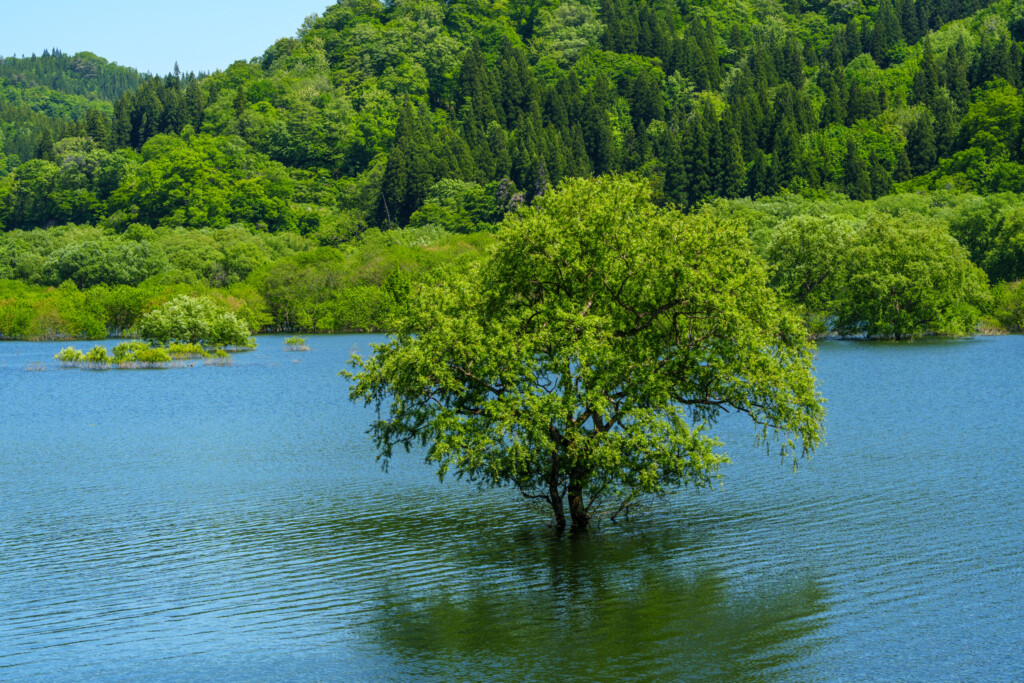
Although the submerged forest of Lake Shirakawa is a tourist destination, it doesn’t feel like a tourist spot at all, and is a place where you’re very close to nature.
Although it has been gaining attention on social media in recent years, unlike overly developed tourist spots, it is free from commercial facilities and hustle and bustle. Visitors all come to experience nature for itself.
The route takes you along a country road surrounded by rice fields and mountains. There is only a minimal promenade and space for photography along the shore of the dam lake, and you won’t see any shops or tourist buses. However, if you listen carefully, you can hear the sound of the wind and the birds singing, allowing you to immerse yourself in the scenery and your own time.
If you’re looking for a moment that moves you personally, rather than looking good for others, this is definitely the place to go.
1-2. A unique landscape where the “extraordinary” quietly unfolds
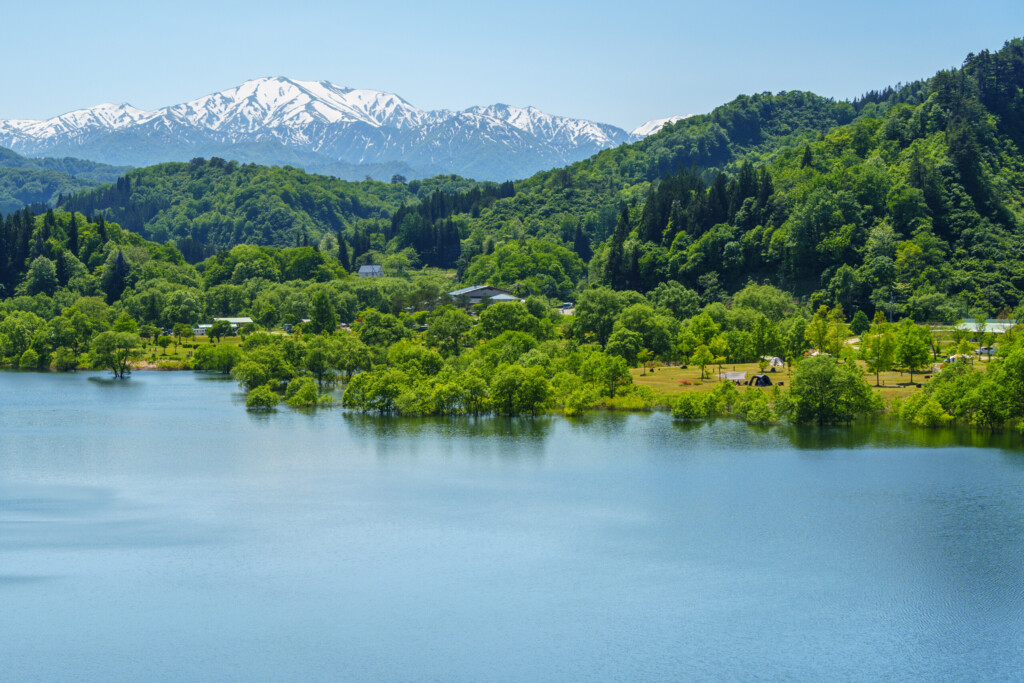
The submerged forest at Shirakawa Dam is a rare sight in Japan, where the extraordinary exists in a natural way.
Unlike man-made theme parks or scenic spots, this is a dramatic experience born of the coincidence of nature. And what’s more, its ephemerality, which only appears for a few weeks each year, adds to its allure.
The cluster of willows standing in the lake resembles a forest floating on the water. The term “submerged forest” literally means “forest submerged in water.” This is rare even nationwide, and Shirakawa Lake in particular is home to orderly rows of trees, and on windless mornings, the water’s surface becomes like a mirror. The lack of human presence makes this extraordinary feeling all the more striking.
*Terminology explanation: A “submerged forest” refers to a forest temporarily submerged by rising water levels due to a dam or other source. Because it occurs by chance as a natural phenomenon, timing is important to see it.
If you’re looking for a brief escape from everyday life and some quiet time to reflect, the scenery at Shirakawa Lake is sure to resonate with you.
2. What is a submerged forest? | “Natural art” that can only be seen at Shirakawa Dam
2-1. A miracle created by melting snow that only lasts for a few weeks a year

reference:https://note.com/tabiico_supo1/n/n5a47f563fa67
The submerged forest at Lake Shirakawa is a limited-time natural phenomenon that only appears when the snow melts in spring.
When the snow that accumulated over the winter suddenly melts, the water level of Shirakawa Dam rises. As a result, the white willow forest, which would normally stand above ground, submerges into the lake, creating a fantastical sight with only the trunks emerging above the water.
The best time to see it is usually from late March to mid-May. Early to mid-April is a particularly rare opportunity to see the “border between white and green” where lingering snow and new buds intersect. At sunrise and sunset, the lake surface is dyed pink and gold, creating a breathtaking view.
This submerged forest is a “once-in-a-lifetime art” created by nature every year. It can only be seen for a few weeks, so now is the time to visit.
2-2. A silent experience that can’t be conveyed through photos alone

reference:https://www.yamagata-np.jp/news/202404/25/kj_2024042500630.php
The submerged forest of Lake Shirakawa is not just a photogenic spot; it’s a special place with a tranquility and depth that you can feel in your heart.
It certainly looks beautiful in the photos you see on social media. But when you’re actually there, the cool air, the rippling water’s surface, and even the chirping of the birds stimulate your senses, making you think, “I’m so glad I came.”
For example, early in the morning. With almost no sign of people around, mist flows slowly over the water’s surface, and as you gaze upon the view of silent rows of willow trees, you’ll feel a strange sense of emotion fill your heart. It’s not that there’s no sound, but rather that there’s not a single sound that disturbs your soul—that’s the feeling.
The appeal of the submerged forest lies not just in its visual appeal, but in the experience of “experiencing the air as it is.” Here you’ll find an emotion that can’t be conveyed through photos alone.
3. When is the best time to see them? | Two worlds: the white submerged forest and the green submerged forest

reference:https://book.iide3.net/products/d9100b64-63c1-5914-a16b-bbe56a1b644c?lng=en-US
3-1. White Flooded Forest (Late March to Mid-April) | The silence of lingering snow and dead trees
The “White Submerged Forest” is a “superb view of tranquility” that lets you feel the lingering echoes of winter.
From late March to mid-April, there is still snow around the area and the white willows have not yet budded. The inorganic beauty of the combination of “dead trees, snow, and water” that can only be seen at this time creates a unique worldview.
For example, at Lake Shirakawa in the early morning, the fog and cold air create a still, monotone world without sound. You will feel as if you are inside a sumi-e painting. Not only does it look great in photos, but it also gives you a sense of sharpening your mind.
If you want to experience “colorless beauty,” visiting during this time is definitely recommended.すめです。
3-2. Green Submerged Forest (Mid-April to Mid-May) | Fresh greenery and colorful water surfaces

reference:https://book.iide3.net/products/d9100b64-63c1-5914-a16b-bbe56a1b644c?lng=en-US
The “Green Submerged Forest” is a soothing, breathtaking sight that makes you feel the breath of life.
After mid-April, white willows begin to sprout all at once, covering the entire lake area in a soft yellow-green. The new green leaves are reflected on the water’s surface, giving the entire landscape a bright, soft atmosphere.
Especially on sunny, windless days, the water’s surface reflects the trees like a mirror, creating a fantastical world where the sky and green blend together. Canoeing and SUP experiences, weaving through the trees, are also most enjoyable at this time of year.
If you want to be enveloped in the soft sunlight and fresh greenery of spring, the “Green Submerged Forest” is the best time to visit.
3-3. Which season should you visit? Locals’ realistic advice
If you’re looking for tranquility, early spring is the place to be, while if you’re looking for color, fresh greenery. While each has its own unique charm, both are worth a visit.
The submerged forest at Lake Shirakawa is a spot that displays completely different expressions depending on the time of year. We recommend choosing based on how you want to feel and what kind of photos you want to take.
・Photography lovers and those who prefer silence: Late March to mid-April (fog, dead trees, snow)
・Sensation of nature and relaxation: Mid-April to early May (fresh greenery, water surface, blue skies)
Both are so captivating that even locals want to return every year, making them incomparable.
It’s not a question of which is the right answer, but rather that both are great. If your schedule allows, it’s worth splitting your visit into two visits.
4. How to get there from Tokyo? | A two-day, one-night itinerary (using a rental car)
4-1. The shortest and most comfortable route is the Shinkansen + rental car
If you’re traveling from Tokyo to the submerged forests of Shirakawa Dam, the smoothest and most comfortable option is to combine the Shinkansen and a rental car.
This area is difficult to access by public transportation alone, but taking the Shinkansen to Akayu Station in southern Yamagata Prefecture and then renting a car from there will greatly increase your accessibility and travel efficiency.
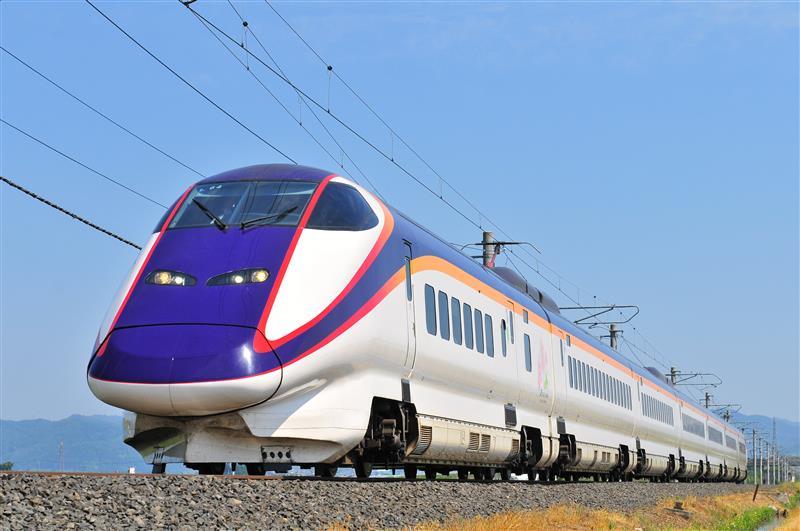
Take the Yamagata Shinkansen “Tsubasa” from Tokyo Station to Akayu Station in about two hours. You can rent a car directly at the station or in the surrounding area, and it’s about a 40-45-minute drive to Lake Shirakawa. Along the way, you’ll pass the Iide Roadside Station and mountain villages, making for a scenic drive.
A rental car is essential for a stress-free tour of the area. Combining it with the Shinkansen will allow you to smoothly transition from the everyday to the extraordinary.
4-2. A route recommended by locals, with detour spots

reference:http://office.yamagata-hanakairou.jp/log/?l=273201
Along the way to Lake Shirakawa, there are several spots where you can enjoy the unique flavors and scenery of Yamagata. Traveling is a great opportunity to discover authentic local flavors.
Iide Town and Kawanishi Town may not be flashy tourist destinations, but they are places where the quality of ingredients and warm people remain. Even a short stop will give you a deep sense of Yamagata’s atmosphere.
Mezamino Sato Tourist and Product Center at Roadside Station Iide
→ A wide selection of Yamagata-style snacks, including local vegetables, Yonezawa beef croquettes, Yamagata gelato, and konjac balls, makes this the perfect stop during your drive.
Shirakawa Dam Lakeside Park
→ This park, which also serves as the entrance to the submerged forest, offers benches from which to take a breather and enjoy views of the lake and mountains. Depending on the season, wildflowers can be in full bloom.
“Source Forest” Forest Learning Exhibition Hall and Walking Trail
→ A relaxing spot not featured on official guide maps, frequented by locals. Just a 10-20 minute walk through the quiet forest will make you feel like your city fatigue is melting away.
The “entrance to the extraordinary” begins on the journey from Tokyo. Even if you’re not familiar with the area, be sure to enjoy this detour route where you’ll discover “true recommendations” from locals.
4-3. A two-day, one-night itinerary from Tokyo | Specific suggestions for rental cars and accommodation
reference:https://www.tetsudo.com/news/2572/
When visiting Lake Shirakawa’s submerged forest from Tokyo, planning your transportation and accommodations will ensure a smooth and fulfilling trip.
By combining public transportation with a rental car and staying at charming local lodgings, you can maximize your travel efficiency and your local experience.
Model Case
▶Day 1 (First Day)
7:00 AM | Depart Tokyo Station: Board the Yamagata Shinkansen “Tsubasa” (approx. 2 hours)
⇩
9:20 AM | Arrive Akayu Station → Pick up your rental car at the JR Akayu Station Rental Car Office
⇒ A 1-minute walk from the station ensures a smooth departure
⇩
10:30 AM | Take a break and enjoy a snack at the “Mezami no Sato Tourist and Product Center” at Roadside Station Ii
⇒ Enjoy local vegetables, Yonezawa beef croquettes, and tama-konnyaku (round konjac)
⇩
12:00 PM | Arrive at Shirakawa Dam Lakeside Park → Stroll through the submerged forest and take photos
⇒ A mystical sight as the water sparkles in the afternoon sun
⇩
3:00 PM | Check in at Shirakawaso, Shirakawa Onsen (Official website: https://shirakawasou.com)
⇒ A quiet hot spring inn surrounded by nature. Dinner features local wild vegetables and trout.
⇩
6:00 PM | Hot Springs & Dinner → Relax and Rest Under the Stars
▶Day 2 (Mainly Canoeing & Pottery Experience)
7:00 AM | Breakfast at Shirakawaso → Check-out
⇩
8:00 AM | Participate in Lake Shirakawa SUP and Canoeing Experience (Reservation Required)
Location: Shirakawa Dam Lakeside Park / Organized by: Submerged Forest Adventure
Official: https://www.iikanjini.info/suibotsurin
⇒ Gliding through the trees is an extraordinary experience. The fresh greenery and sky reflected on the water’s surface are breathtaking.
⇒ Beginners welcome, instructor included, approximately 90 minutes
⇩
10:00 AM | Proceed to Genryu no Mori Center (approximately 3 minutes by car)
Official website: https://ymidori.or.jp/genryu/
⇒ *Opens April 29th (Winter closed from December to April 28th)
⇩
10:30 AM | Pottery and Woodworking Craft Experience (90-120 minutes)
⇒ Choose from activities like making teacups and other vessels using Yamagata clay, or creating a natural wreath.
⇒ Finished products can be shipped later.
⇩
1:00 PM | Lunch and shopping at Iide Roadside Station (returns welcome)
⇒ A wide variety of rice dishes are available, and seasonal fruits and local sake are also available for purchase.
⇩
2:30 PM | Akayu Onsen: Walk around town and take a foot bath or day trip to the hot springs.
⇒ There is a foot bath near the station. There are plenty of hot springs to stop by (we also recommend the ramen at Ryushanghai Akayu Main Branch).
⇩
4:00 PM | Return the rental car at Akayu Station → Board the Yamagata Shinkansen
⇩
6:30 PM | Arrive at Tokyo Station. Thank you for your hard work!
5. Recommended ways to enjoy Lake Shirakawa | Top 3 experiences only locals know about
5-1. Walking in the Silence of Early Morning: Photo Time in Light and Fog

The true beauty of Lake Shirakawa’s submerged forest is revealed during the quiet hours of the early morning.
In the early morning, when temperatures are cooler than during the day, morning mist is likely to form over the water, turning the lake a golden hue as the sun rises. There’s also little wind at this time, making it the best time to see the trees and sky clearly reflected in the lake’s mirror-like surface.
Many locals arrive just before 5 a.m. to ready their cameras. For a few minutes, the sun peeks out from behind the mountains, and the silhouettes of the trees blend into the water’s surface. This moment is enveloped in a stillness and mysticism that can’t be fully conveyed in a photograph.
Many of the photos that go viral on social media are taken during this time, making it a crucial time for photography-minded tourists.
This time, with its perfect combination of stillness, mist, and sunrise, is the golden hour when Lake Shirakawa looks its most beautiful.
5-2. Experience it from the water: A fantastic experience of gliding on a SUP or canoe
reference:https://gazoo.com/drive/mura/22/03/25/
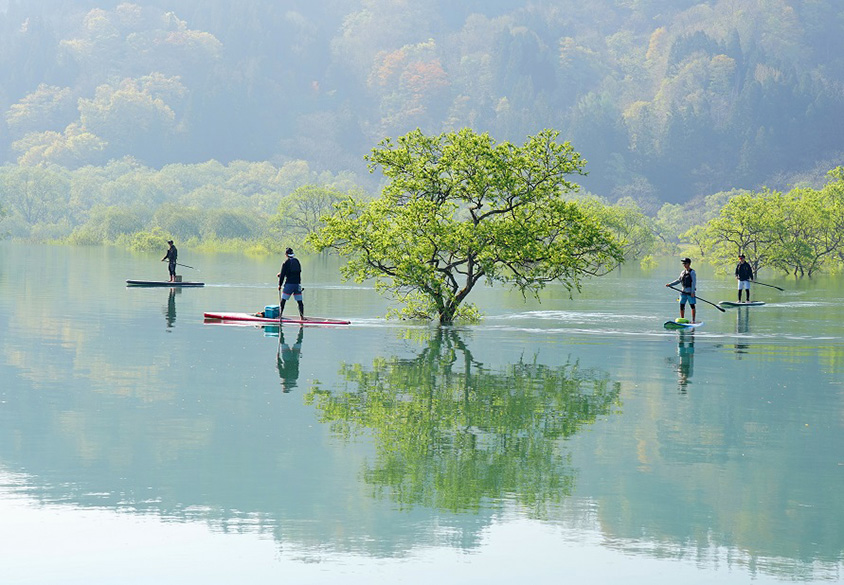
If you want to experience the fantastical space of the submerged forest on a physical level, we highly recommend water activities like SUP or canoeing.
The experience of weaving through the trees from a perspective you can’t see on foot is an experience you can only have on the lake. The silence of the space, with only the sound of your paddle echoing, is an extraordinary experience.
Lake Shirakawa offers a Submerged Forest Adventure Tour, available only in spring (reservations required). Even beginners can participate with ease, as an instructor is accompanied, and you can choose between SUP (Stand Up Paddleboard) or canoeing. The experience of feeling nature with your whole body as you slowly make your way through the willows is something you can’t get anywhere else.
Don’t just take photos of Lake Shirakawa’s submerged forest, but experience it with your body, making it a trip that will stay in your memory forever.ります。
5-3. Looking down from the sky: A different world seen from a hot air balloon flight
reference:https://book.iide3.net/products/d9100b64-63c1-5914-a16b-bbe56a1b644c?lng=ja-JP
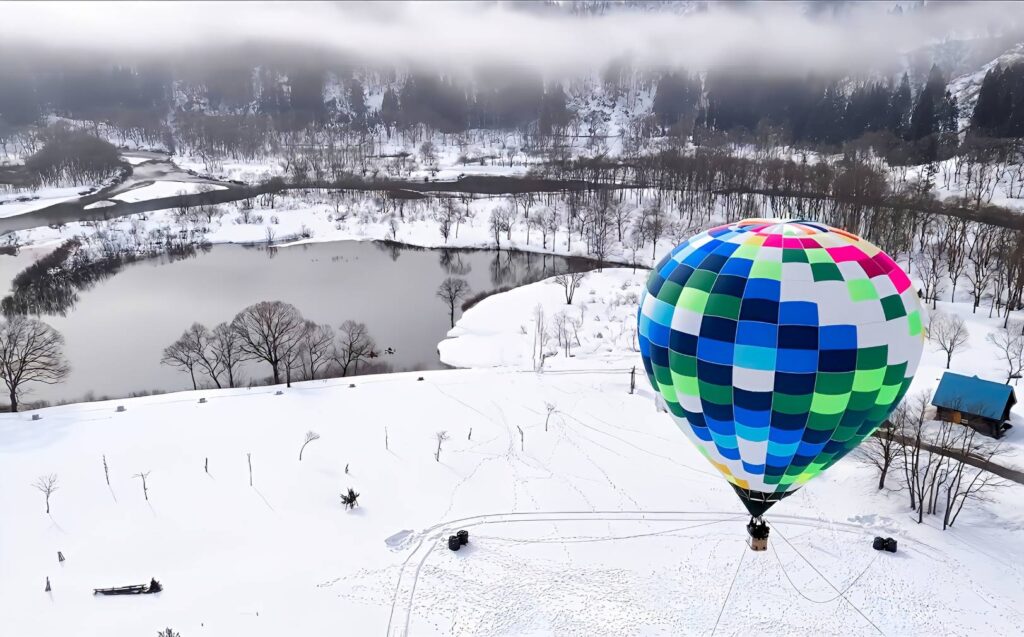
For an even more special experience, a hot air balloon flight over the submerged forest will create unforgettable memories.
The perspective from a balloon is completely different from that of land or water. Not only can you get a panoramic view of Lake Shirakawa, but the trees appear as if they were floating on the lake, and the sheer scale of the experience is truly staggering.
The “Hot Air Balloon Flight over Lake Shirakawa’s Submerged Forest” is a new activity launched in 2023, available only early in the morning and by reservation. As the balloon gains altitude, the outline of the lake, the snow-melting mountains, and the patterns of the submerged forest emerge like art. Due to weather conditions, this activity may not be available, so if you’re lucky, you’ll only be able to enjoy this premium, spectacular view.
For those looking for an experience worthy of a “once-in-a-lifetime trip,” a balloon flight is sure to create special memories.
6. The surrounding area is also amazing! A quiet and moving spot that you should explore.
In addition to Lake Shirakawa’s submerged forest, the surrounding area is dotted with other tranquil, moving spots. Why not escape the hustle and bustle of the city and enjoy a journey that connects you to nature and history?
These spots are not overly touristy, and the lifestyles and culture of the local people remain vividly present. By visiting, you can experience the true charm of Yamagata.
6-1. Source Forest Center | Learn about the relationship between forests and people
reference:https://www.pref.yamagata.jp/140023/kurashi/shizen/sinrin/kemminnomori/genryuunomori.html
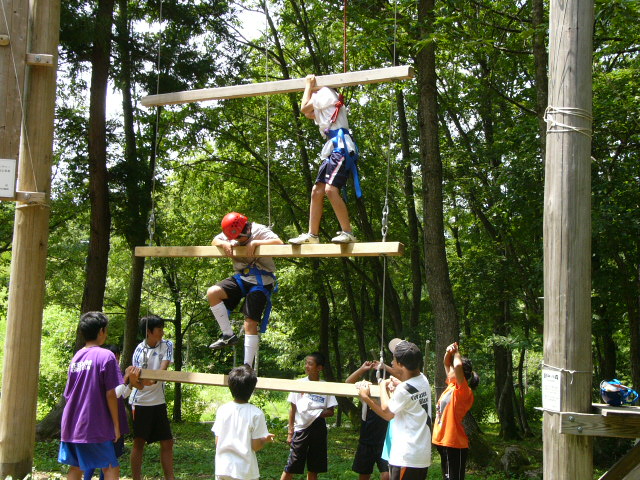
Located about a three-minute drive from Lake Shirakawa, the Headwaters Forest Center is a facility where you can learn more about the relationship between forests and humans. It offers a wide range of forest-related exhibits and hands-on programs, including the Forest Atelier, where workshops on woodworking, pottery, wreath-making, and more are held. Also located within the forest is the Adventure Forest, which offers over 40 different adventure courses made from logs, wire, and ropes, perfect for children and adults alike. However, the center is closed during the winter (December 1st to April 28th), so we recommend checking opening times before visiting.
6-2. Roadside Station “Iide” Mezaminosato Tourist and Product Center | Savor local flavors and souvenirs
Located about a 30-minute drive from Lake Shirakawa along National Route 113, the Mezaminosato Tourist and Product Center inside the roadside station “Iide” offers a wide selection of fresh local produce and specialty products. The strawberry picking experience, featuring Iide Town’s prized sweet gem, “Ruby Berry,” is particularly popular, with a 30-minute all-you-can-eat option. There’s also a restaurant on-site, serving locally sourced ingredients, allowing you to savor the flavors of Yamagata.
When visiting Lake Shirakawa’s submerged forest, be sure to stop by these other spots. You’ll be able to fully experience the unique charm of this untouched, tourist-friendly area.
7. Locals tell you about lodgings and hot springs | The charms of Shirakawaso and the surrounding hot springs
7-1. Shirakawa Onsen Shirakawaso | Local cuisine and the warmth of mountain hot springs
reference:https://tabelog.com/yamagata/A0602/A060204/6006544/dtlphotolst/smp2/
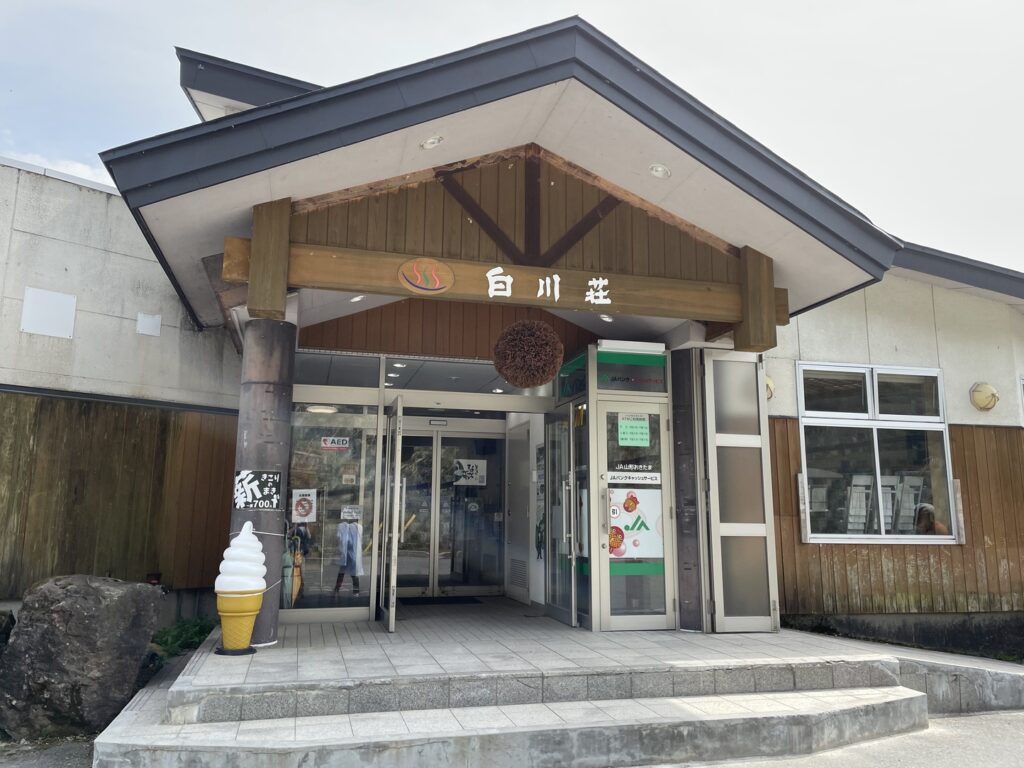
The perfect way to immerse yourself in the submerged forest is to stay at Shirakawaso in Shirakawa Onsen.
Located within walking distance, this hot spring inn offers a taste of “Yamagata’s simple luxury” in its baths, food, and atmosphere.
Shirakawaso is a single-family inn with both indoor and outdoor baths. The alkaline simple hot spring water is soft and gentle on the skin. Dinner is homemade dishes incorporating local wild vegetables, trout, and Yonezawa beef. The tranquil atmosphere inside the inn, combined with the mountain range outside, will leave you feeling liberated.
*Terminology: “alkaline simple hot spring” is a gentle hot spring with a high pH and little irritation. It is known for its skin-beautifying properties.
After enjoying the submerged forest to your heart’s content, relax in the hot spring and spend the evening surrounded by Yamagata’s nature and cuisine.
7-2. Consider Akayu and Onogawa Onsen | Take a little trip to famous hot springs
reference:https://www.visityamagata.jp/topics-nanyo-yukotto/
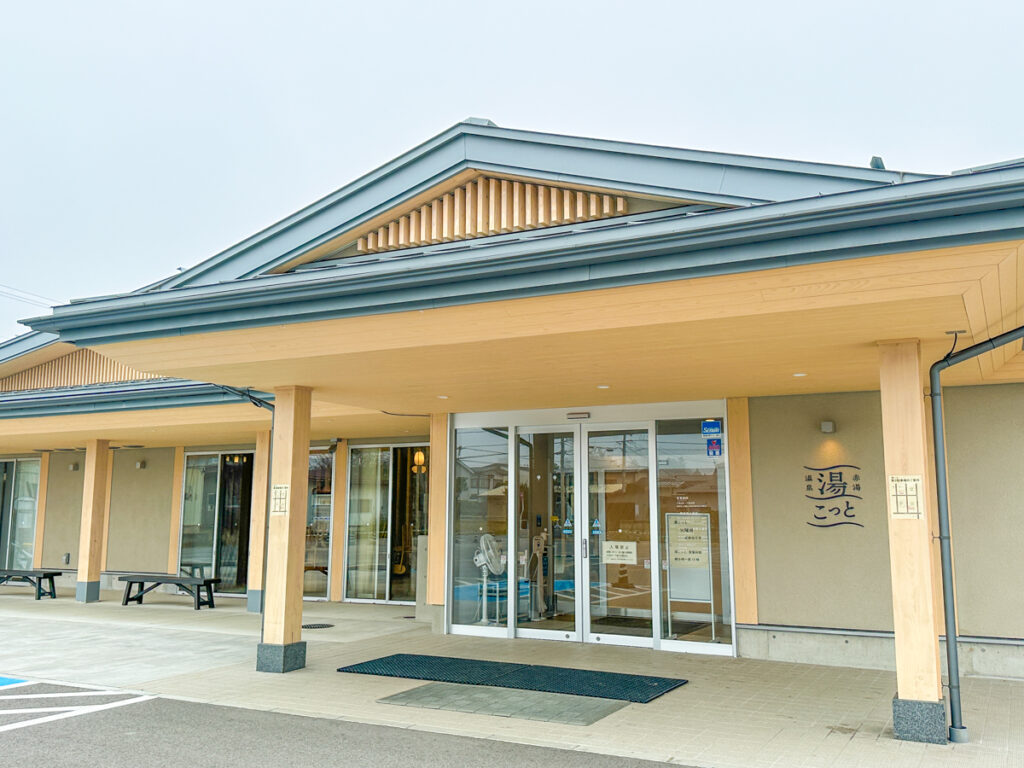
Hot spring lovers should also consider Akayu Onsen and Onogawa Onsen.
Both are within an hour of Lake Shirakawa. Furthermore, the water quality and atmosphere of each town are unique, adding depth to a trip to experience hot spring culture.
Akayu Onsen (Nanyo City): An ancient hot spring with a history dating back approximately 920 years. The water is slightly viscous and warms the body to the core. There are many inns, and the hot spring town has a great atmosphere.
Onogawa Onsen (Yonezawa City): Famous for its therapeutic springs containing radium, this hot spring is popular with women as a “beautiful skin bath.” There are also spots where you can make hot spring eggs and enjoy foot baths, which will appeal to your travelling spirit.
If you want your accommodation to be more than just a rest stop, but an experience that will truly be part of your trip, these hot springs are definitely worth considering.
7-3. Staying overnight is the best way to relax
If you want to truly enjoy Lake Shirakawa’s submerged forest, an overnight stay is best, rather than a day trip.
The submerged forest is at its most beautiful in the early morning and evening. Furthermore, if you want to fully enjoy the nature, food, and hot springs, you’ll need plenty of time.
The best time to see the submerged forest shrouded in morning mist is between 6:00 AM and 8:00 AM. Therefore, by staying the night before, you can access the forest at the best time without any hassle. Also, if you want to enjoy the lake at sunset or the starry sky at night, there are some views that you can only experience by staying overnight.
If you want to fully enjoy the combination of spectacular natural scenery and Yamagata’s hot spring culture, an overnight stay is the answer. A trip without time constraints will create a memorable experience.
8. For those who want to avoid the crowds | Best times and things to keep in mind

reference:https://camp-fire.jp/projects/513259/view
8-1. Recommended visiting times by locals (6:00 AM to 8:00 AM)
If you want to have the tranquility and spectacular views all to yourself, the best time to visit is between 6:00 and 8:00 AM.
At this time, there are few people around and the wind is calm, so the water’s surface is as still as a mirror. The light is also low, and the shadows of the willows are beautifully reflected on the lake’s surface, making it truly a “magnificent moment.”
In spring, Lake Shirakawa is prone to morning mist, and in the early morning this mist drifts through the submerged forest, creating a world like something out of a fantasy movie. The sight of the mist disappearing as the sun rises is also impressive, and local photographers often visit at this time.
If you want to “face the submerged forest without being disturbed by anyone,” an early morning visit is best recommended.めです。
8-2. Pitfalls of car navigation systems and how to choose an access route

reference:https://publicdomainq.net/woman-girl-portrait-surprised-0021289/#google_vignette
Simply following your car navigation system’s route guidance can get you into unexpected trouble. The safest and most reliable route is “via Tenoko Station.”
Some car navigation systems may direct you to “Suganuma Pass” via Kawanishi Town when you set Shirakawa Dam Lakeside Park as your destination. However, this road is narrow and has poor visibility, making it dangerous, especially for inexperienced drivers and during snowmelt.
The most recommended route is from National Route 113 to Prefectural Route 4, passing in front of Tenoko Elementary School. It’s wide, well-maintained, and safe, making it unlikely you’ll get lost.
If you’re unsure about the roads, be sure to check the route in advance. For a safe and comfortable trip, remembering to “via Tenoko” is a key point to remember.
8-3. Local advice on photography and clothing
Please be mindful of your photography and etiquette, as if you’re intruding into nature.
Spring in Yamagata can be very chilly in the mornings and evenings, and the ground can easily get muddy. Many visitors seek out the quiet surroundings, so drones and loud conversations can ruin the atmosphere.
We recommend bringing warm outerwear, waterproof boots, and gloves for photography.
If using a tripod, be careful not to block access.
Drone flights require permission and must be confirmed with the tourist association in advance.
Restrooms are located in Shirakawa Dam Lakeside Park and are in good condition.
As local residents, we want to preserve the charm of this place, where we spend time in harmony with nature. Come and share this quiet and beautiful time with us.
9. Summary | The tranquility of Yamagata, for those tired of everyday life
The submerged forest at Lake Shirakawa is more than just a photogenic spot. It’s a tranquil, breathtaking sight worth visiting to reconnect with after the hustle and bustle of the city.
Appearing only for a brief period in spring, this landscape is a miracle of nature itself. It’s precisely because there’s no artificial lighting or music that you can truly connect with your inner self. Yamagata offers a place where you can experience this.
The silhouettes of willows looming over the lake in the early morning, the morning sun shining through the mist, the silence of gliding across the water on a SUP. Here, rather than a tourist destination, you’ll find time spent alone with nature. What’s more, this region has it all—hot springs, local cuisine, and the healing power of the forest—making it the perfect weekend getaway.
If you’re feeling a little worn down by work, relationships, or your daily routine, why not take a break and visit Lake Shirakawa in Yamagata?
This tranquility is sure to help you find that space within.
📎 [Reference Links]
Iide Town Tourism Association (Lake Shirakawa and Submerged Forest): https://www.town.iide.yamagata.jp/012/suiboturinn.html
Submerged Forest Adventure (SUP and Balloon Ride): https://www.iikanjini.info/suibotsurin
Yamagata Tourism Portal “Travel to Yamagata”: https://yamagatakanko.com
Submerged Forest Overview: https://www.town.iide.yamagata.jp/012/suiboturinn.html
Activity Information: https://www.iikanjini.info/suibotsurin
Iide Town Official Tourism Information: https://www.town.iide.yamagata.jp/012/suiboturinn.html
Yamagata Prefecture Tourism Information Portal Site: Travel to Yamagata: h https://yamagatakanko.com/attractions/detail_12486.html
JR Yamagata Shinkansen Tsubasa (Tokyo to Akayu): https://www.jreast.co.jp/
Iide Town Tourism Association (Access & Map Information): https://www.town.iide.yamagata.jp/012/suiboturinn.html
Submerged Forest Adventure Details: https://www.iikanjini.info/suibotsurin
Hot Air Balloon Flight Reference: https://prtimes.jp/main/html/rd/p/000000010.000137011.html
Iide Town Tourism Page (Summary of Nearby Attractions): https://www.town.iide.yamagata.jp/gyousei/kankou/kankou
Kawanishi Town Tourism Association (noconoco Cafe, Dahlia Garden, etc.): https://kawanishi-kanko.info/
Shirakawa Onsen Shirakawaso Official Page: https://www.iikanjini.info/stay/100
Akayu Onsen Tourism Association: https://akayu-onsen.com
Onogawa Onsen Ryokan Association: https://www.onogawa.jp
Yamagata Prefecture Hot Springs Association: https://www.yamagata-onsen.com/
このカテゴリの新着記事