


A journey of a couple to mark a turning point in their lives | A time of silence and faith at Kumano Taisha Shrine in Yamagata
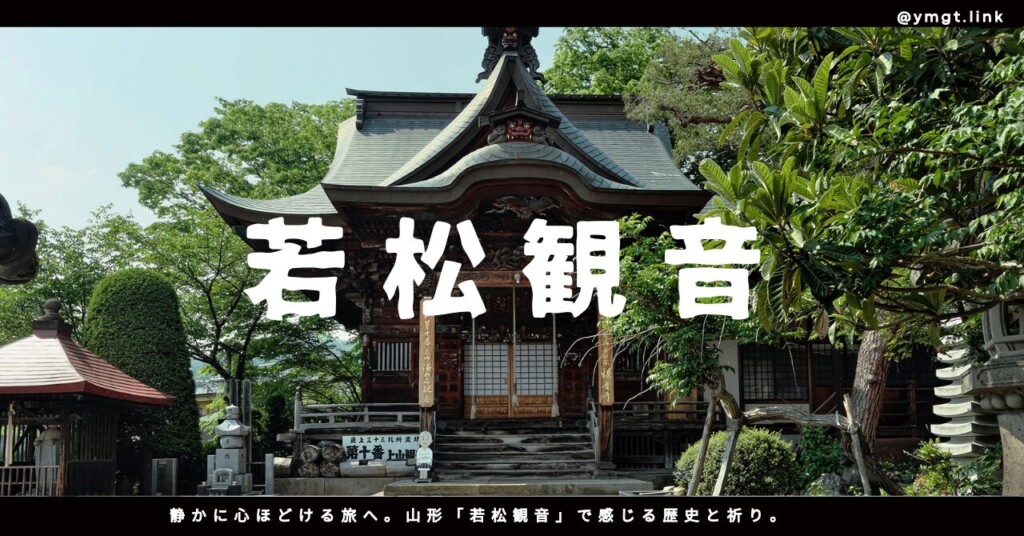
Wakamatsu Kannon (Wakamatsu-ji Temple), founded in the Nara period, is a famous temple in Tendo City, Yamagata Prefecture, known for its historic architecture and tranquil surroundings. It also offers the blessings of matchmaking and red seal stamps, making it the perfect spot for couples to spend some relaxing time together.
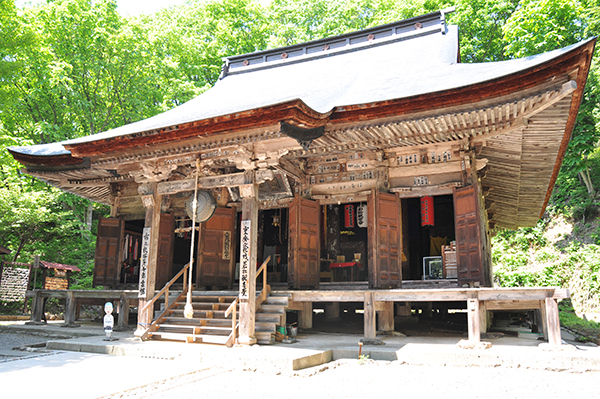
reference:https://x.gd/NnlKr
1. Why Wakamatsu Kannon? Three reasons to visit as a couple
1-1. Experience a place of prayer that has continued since the Nara period

reference:https://www.wakamatu-kannon.jp/about.html
Wakamatsu Kannon is one of the oldest temples in the Tohoku region, boasting a history spanning more than 1,300 years. It’s a rare opportunity for middle-aged and elderly couples with a deep interest in history and culture to experience a time and space of prayer.
Legendously founded in 708 by the renowned monk Gyoki during the Nara period, Wakamatsu Kannon is a central figure in Kannon worship in the Tohoku region. As the first temple of the 33 Mogami Kannon pilgrimage sites, it has long been cherished as the starting point for prayer for pilgrims.
The main Kannon Hall, a nationally designated Important Cultural Property, was built in 1509 during the Muromachi period and is still carefully preserved as an active place of prayer. The craftsmanship of the time still lives on in the details of the wooden architecture, such as the curved roof and the joinery. Praying before the principal image, the Eleven-Headed Kannon statue, from the worship hall allows you to directly experience the atmosphere of faith that has endured since ancient times.
Wakamatsu Kannon was also heavily involved in the restoration of the Mogami Thirty-three Kannon temples during the Meiji period, and has served as a spiritual pillar for the local community.
This area, where you can experience the trinity of architecture, religion, and local culture, is the perfect place for couples seeking a “deeper journey” that goes beyond superficial sightseeing.
1-2. There is a “silence” that can only be felt now that I’m older.

reference:https://www.kuromajutsu.com/witchbook/training/yamagata/5770
Tucked away in the mountains, far from the hustle and bustle, Wakamatsu Kannon is an exceptionally soothing place for those who have discovered the joy of traveling in silence.
Wakamatsu Kannon is located on a mountainside at an altitude of about 400 meters, nestled quietly in a cedar forest. Because it’s so few visitors, you can experience true silence, with only the sounds of the wind rustling the leaves, the chirping of birds, and your own footsteps echoing.
The 300 or so stone steps leading up to the main hall are dotted with moss-covered cobblestones, a stately Jizo hall, and a bell tower, offering a Zen-like experience that calms the mind. There are several benches along the way, perfect for couples to take a break and chat. The approach, especially beautiful in autumn when the leaves turn red, is a recommended spot for camera-wielding couples.
For middle-aged and older couples seeking the quiet of their travels, the silence of Wakamatsu Kannon is a rare luxury.
1-3. Enjoy some relaxing time together in a hidden spot that isn’t crowded.

reference:https://yamagatakanko.com/photos/detail_1790.html
Wakamatsu Kannon is a quiet tourist destination known only to those in the know. It’s the ideal “hidden gem” for couples seeking to escape the hustle and bustle and cherish some relaxing time alone.
Because it’s less well-known than Tendo Onsen or Yamadera, the number of visitors is lower, meaning there’s no stress caused by crowds. It’s also ideal for those who don’t like crowds or prefer a quiet stroll.
Crowds are limited, not only on weekdays but also on weekends and holidays, making parking easy to secure and the grounds spacious. If you choose the right time, you might feel like you have the grounds almost to yourself. Enjoying a tranquil conversation with the priest and locals will leave you with even more lasting memories than at a tourist spot.
There’s also virtually no waiting time for photos or temple seals, making for a relaxing, time-saving visit.
Wakamatsu Kannon is the perfect destination for a couple looking for a tranquil getaway. It’s the perfect space for couples looking to share some peaceful time away from the crowds.。
📌 Frequently Asked Questions | Basic Information about Wakamatsu Kannon
Q. What is the official name of Wakamatsu Kannon?
A. It is commonly known as “Wakamatsu Kannon” and officially known as “Jakusho-ji Temple.”
Q. When was the Kannon Hall of Wakamatsu Kannon built? →
A. It was rebuilt in 1509 and is a nationally designated Important Cultural Property.
2. Wakamatsu Kannon Temple: A must-see for history-loving couples
2-1. An ancient Tendai Buddhist temple with 1,300 years of history

reference:https://www.tendai.or.jp/journal/kiji.php?nid=270&page=
Wakamatsu Kannon is an ancient Tendai Buddhist temple with over 1,300 years of history, a place where you can truly experience the weight of time accumulated through faith and culture.
Founded in 708 by the renowned monk Gyoki, it is one of the oldest Buddhist temples still standing in Yamagata Prefecture. The Tendai sect’s distinctive “enyu shiso” (tolerance that embraces various teachings) and Kannon faith have taken root in the local community, transcending time and society. It is a place where Buddhist history and local history intersect, and for couples with a deep respect for history, it is an experience that will stimulate their intellectual curiosity.
As the first temple of the “Mogami Thirty-three Kannon Pilgrimage,” Wakamatsu Kannon is the starting point of many pilgrims’ faith. The principal image, the Sho Kannon Bodhisattva, is said to have been carved by Gyoki himself with one stroke of the chisel and three bows. It remains enshrined within the main hall today. Additionally, the influence of Shugendo and Shinbutsu Shugo remains strong, and one of the unique charms of this area is being able to experience the changes in Buddhist culture firsthand.
Wakamatsu Kannon, where you can deeply experience history and faith, is not just a tourist destination, but a “spiritual heritage site” that connects the past and present. It is a place that history-loving couples should definitely visit.
2-2. The highlights and structural beauty of the Kannon Hall, a nationally designated important cultural property

reference:https://bunka.nii.ac.jp/heritages/detail/121024
Wakamatsu Kannon Temple’s Kannon Hall, a nationally designated Important Cultural Property, showcases Muromachi period architectural techniques. It’s a must-see for anyone fascinated by wooden architecture.
Rebuilt in 1509, the Kannon Hall is a square-bay hall with five bays across and five beams. Its well-balanced structure and superb craftsmanship are noteworthy. The roof is in the irimoya-zukuri style, and Muromachi period carpentry techniques are evident even in the finest details, such as the timberwork and rafters.
The front veranda with its karahafu roof and the intricate carvings on the brackets and brackets are symbols of the aesthetic sense and religious faith of the time. Large-scale restoration work was carried out between 1966 and 1968, and in accordance with the principles of cultural heritage preservation, the hall has been preserved to the present day while maintaining as much of its original form as possible. It is also registered on the Agency for Cultural Affairs’ Cultural Heritage Online website.
The Kannon Hall of Wakamatsu Kannon is a living piece of history that couples who love architecture and cultural assets will want to examine in detail. It is a place where you can enjoy the beauty and craftsmanship of the times.
2-3. The value of the pilgrimage as the first temple of the Mogami Thirty-three Kannon Temples

reference:https://www.mogami33.com/
Wakamatsu Kannon Temple, the starting point of the Thirty-three Mogami Kannon Temples, a pilgrimage route representative of the Tohoku region, continues to convey the essence of religious culture to the present day.
The Thirty-three Mogami Kannon Temples is a part of the pilgrimage culture that dates back to the early Edo period. It is a journey to gain Buddhist merit and a spiritual path that connects regions. Wakamatsu Kannon Temple, the first of these temples, is imbued with the strong meaning of “hotsugan-in,” a prayer for a safe journey and the fulfillment of one’s wishes.
Special goshuin (stamps) called “hotsugan-in” are carefully written with ink and brush and are treasured by many as proof of their pilgrimage. Furthermore, pilgrimages to sacred sites are more than just sightseeing; by interacting with people and experiencing local culture at each location, they offer couples a meaningful opportunity to “reflect on life and look ahead.” More details are available on the official website.
The experience of pilgrimage is a journey of the heart and a journey of life. The journey of prayer that begins at Wakamatsu Kannon can also be an “investment of time” that deepens the bond between couples.
📌 Frequently Asked Questions | History, Structure, and Pilgrimage
- Q. To what sect does Wakamatsu Kannon belong?
- A. It is Tendai. It is characterized by its teachings that emphasize harmony, and its association with Kannon faith has made it popular among the common people.
- Q. Where does the pilgrimage to the 33 Mogami Kannon temples begin? →
- A. Wakamatsu Kannon is the first temple.
- Q. What is the roof style of the Kannon Hall?
- A. It is in the irimoya-zukuri style, with a karahafu veranda on the front.
3. The quiet approach to the shrine helps to harmonize the mind and conversation
3-1. A couple walking along the cedar-lined approach and stone steps

Walking the approach to Wakamatsu Kannon is a time for couples to “face each other’s hearts.” The tranquil environment naturally brings conversation and emotions closer.
Large cedar trees line the approach, creating a sacred atmosphere. Walking one step at a time in the silence naturally brings you in sync with your pace, allowing for a calmer conversation. Unrushed by no one, this time offers an opportunity for introspection, befitting a turning point in life.
The moss-covered stone steps, revealing cedar roots, feel different underfoot with each step, sharpening your senses. In the morning, the light filters in at an angle, creating a mystical atmosphere as you walk. In autumn, a carpet of fallen leaves forms, and in winter, the silence of the snow creates unforgettable scenes. Many locals visit this approach as a place to “reassess the pace of their lives as a couple.”
Wakamatsu Kannon’s cedar trees and stone steps are more than just a path; they’re a “spiritual approach” that helps to regulate the mind and conversation. Just walking together will naturally bring you and your partner closer, providing a special time.
3-2. A series of small discoveries, including the Jizo Hall, the inner sanctuary, and the bell tower

reference:https://www.wakamatu-kannon.jp/about.html
The grounds of Wakamatsu Kannon are dotted with many places where you can talk, and with each walk, you’ll discover small realizations that will deepen your journey as a couple.
In addition to the main hall, there are several other small structures dotted around the temple, each imbued with faith and history, each with its own meaning and purpose. Visiting these structures will spark natural conversation between couples and help create a story for your journey.
At the top of the approach, you’ll find the Jizo Hall, where a Jizo statue is enshrined, dedicated to praying for the safety and health of children. It’s also a great opportunity to reminisce about your past as parents. Furthermore, the Okunoin, perched close to the mountainside, is a mystical space where you can feel in harmony with nature. Anyone can ring the bell in the temple’s bell tower, and many couples make their wishes in unison with the sound. These series of quiet discoveries add depth to your visit.
Wakamatsu Kannon’s grounds are a discovery-oriented temple grounds that doesn’t end with the main hall. These small prayer spaces will add depth and lingering emotion to your conversations as a couple.。
3-3. A relaxing bench and a space to chat
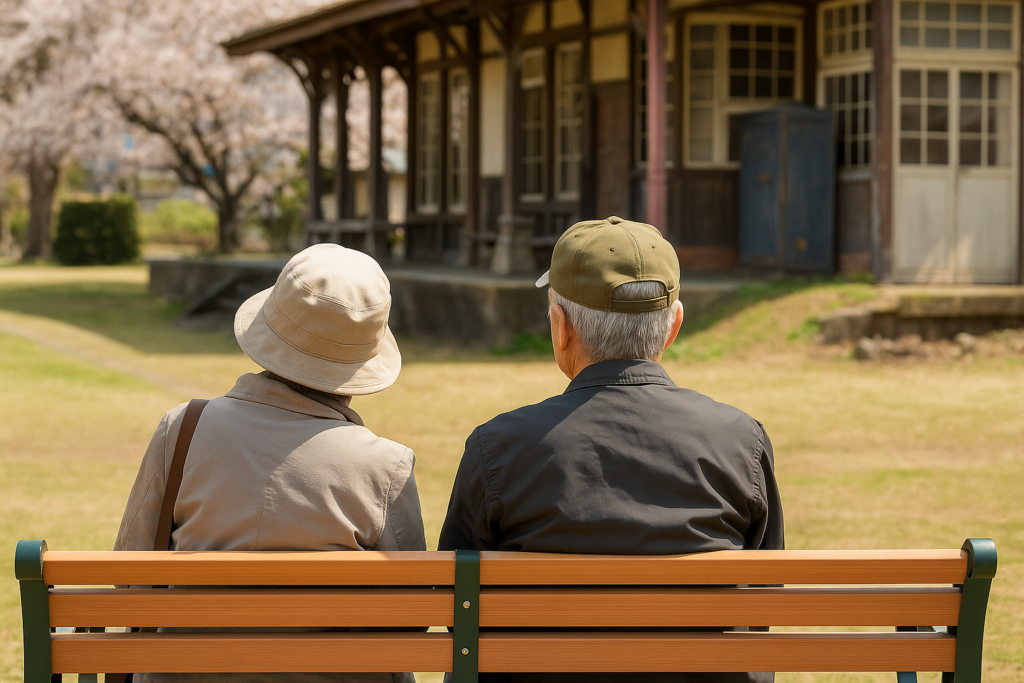
The benches scattered throughout the grounds of Wakamatsu Kannon Temple are perfect, quiet spaces for conversation.
As you walk along the long approach to the temple or through the temple grounds, the opportunity to stop is bound to come naturally. Benches are located in scenic spots and under the shade of trees, offering more than just a place to rest; they also offer a place for heartfelt conversation.
Surrounded by the fresh greenery of spring and the foliage of autumn, couples can sit on a bench and reminisce about past travels or plan their future plans—a peaceful time flows by. The gazebo-style rest area next to the main hall is particularly popular, allowing couples to linger while listening to the birdsong. Quiet conversations after learning about local legends and history will elevate a couple’s journey into a heartfelt memory.
Wakamatsu Kannon’s benches are a place for couples to sort out their emotions on their journey. A luxurious space offering a moment to escape the hustle and bustle of everyday life and quietly savor the happiness they have today.
📌 Frequently Asked Questions | About the approach and temple grounds
- Q. How many stone steps are there at Wakamatsu Kannon?
- A. Approximately 183 steps. The steps are relatively gentle, and there are benches along the way, so it’s safe to climb.
- Q. How long is the cedar avenue?
- A. The approach from the parking lot to the main hall is approximately 300 meters.
- Q. Can I ring the bell tower freely? →
- A. Yes, you can ring it once to offer your prayers.
- Q. Where are the Jizo Hall and Okunoin? →
- A. The Jizo Hall is to the right of the approach, and the Okunoin is along the rocky outcrop behind the main hall.にあります。
4. Goshuin stamps, matchmaking, and wind chimes: Cultural experiences that deepen the bond between two people
4-1. Get a glimpse of history through goshuin stamps
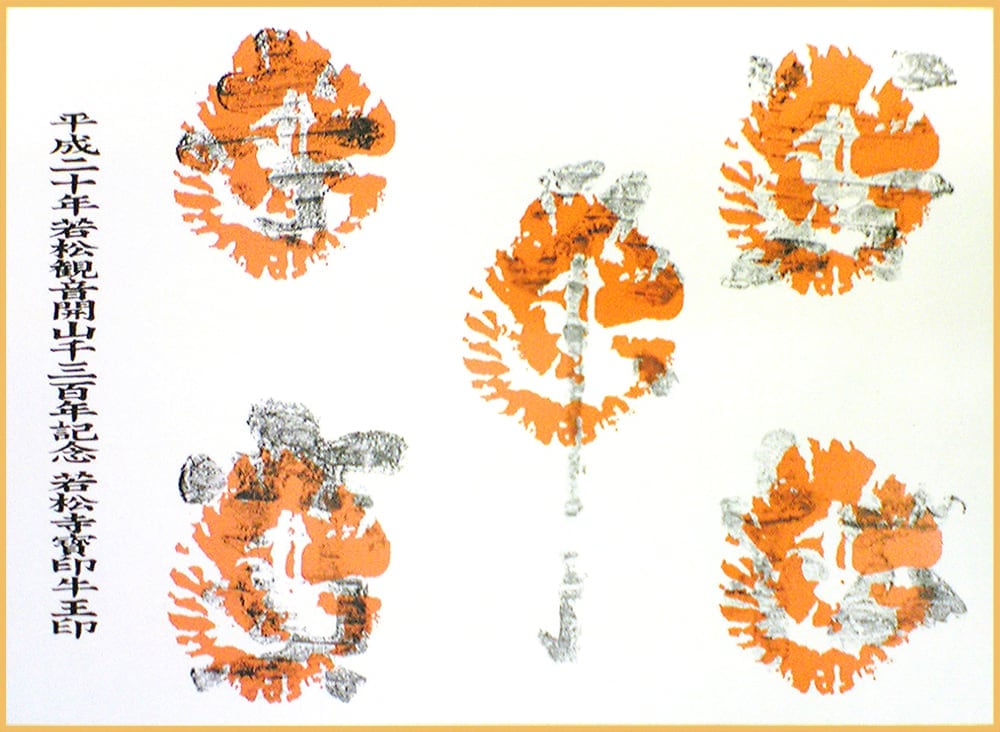
reference:https://www.wakamatu-kannon.jp/hanpu.html
Receiving a goshuin at Wakamatsu Kannon isn’t just a memento; it’s an experience that embodies an encounter with history.
A goshuin is a combination of an inscription and a red seal given as proof of worship. It originally served as proof of submitting a copy of a sutra. Nowadays, it’s popular as a travel record to keep in a goshuin book. As the first temple of the Mogami Thirty-Three Kannon Temples, Wakamatsu Kannon offers a special goshuin known as a “hotsuganin.”
The inscription features bold words such as “Mogami No. 1” and “Wakamatsu Kannon,” while the red seal features a Kannon statue’s seal superimposed on it. The quality of the paper and seal is carefully considered, resulting in a dignified finish. By recording your goshuin in your own goshuin book, each couple will have a tangible proof of their journey together. Special goshuin are sometimes awarded seasonally, such as in spring and autumn, and an increasing number of couples are making this a travel destination.
Receiving a goshuin stamp at Wakamatsu Kannon is a deeply meaningful cultural experience that records 1,300 years of history and the starting point of a couple’s prayers.
4-2. Entrust your wishes to the “Enpuku Daifurin” wind chime
reference:https://www.wakamatu-kannon.jp/about.html
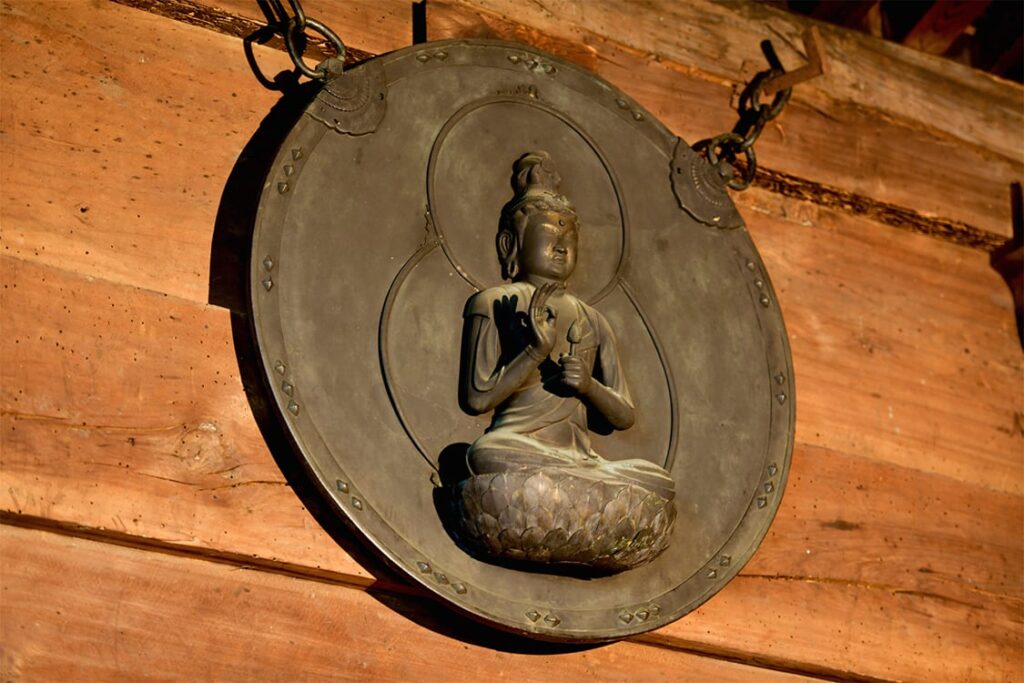
The Enpuku Daifurin Wind Chimes are a prayer spot symbolizing the delicate Japanese culture of praying through the sound of a bell.
Since ancient times, wind chimes have been believed to ward off evil spirits and bring good fortune and good fortune through their sound. Wakamatsu Kannon’s Enpuku Daifurin symbolizes this, making it a popular place to pray for marital harmony and family health.
Crafted by Yamagata casting artisans, these large wind chimes are known for their deep, soft tone. Visitors write their wishes on strips of paper, hang them on the chimes, and pray for them to be carried to heaven by the wind. In the summer, the temple hosts the Wind Chime Festival, where the grounds are decorated with hundreds of wind chimes, creating a breathtaking sight. At night, the bells are lit up, making them a popular photo spot for couples to enjoy a magical moment.
The Enpuku Daifurin Wind Chimes, where wishes are conveyed through the sound of the chimes and entrusted to the wind, are a cultural experience unique to Wakamatsu Kannon. A soothing experience that appeals to the eyes, ears, and emotions awaits.
4-3. Ema, handshakes, and prayers for love: Prayers for good relationships that reach even married couples
reference:https://www.wakamatu-kannon.jp/
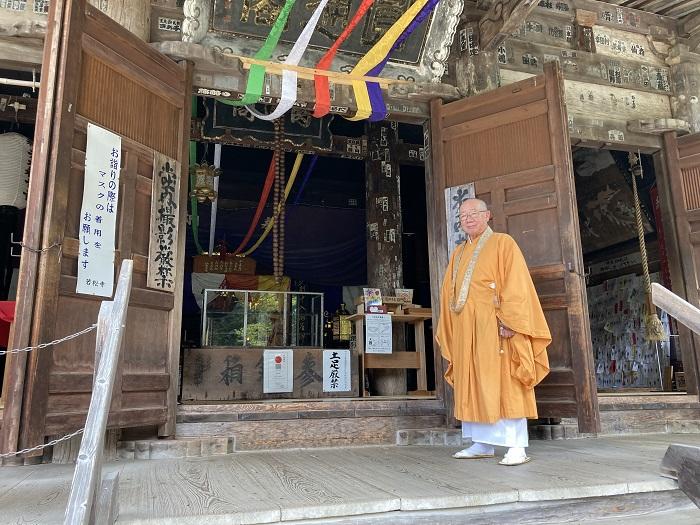
Wakamatsu Kannon is also known as the “Kannon of Matchmaking,” and offers a wide range of prayer experiences to deepen the bond between couples.
Kannon Bodhisattva is a symbol of compassion and is said to be the Buddha who reconnects people. Wakamatsu Kannon offers prayer spaces not only for romance and marriage, but also for couples who are already connected to deepen their relationships.
The temple grounds include a “Handshake Prayer Space,” where couples face each other, clasp their hands, and silently exchange their feelings, reaffirming their bond. The votive plaque display area is lined with heart-shaped votive plaques bearing words of gratitude such as “thank you” and “I look forward to your continued support.” The matchmaking charms are tied with red and white string, and when held by a couple, they symbolize the bond between two people.
Wakamatsu Kannon offers a wide range of cultural experiences to help couples renew their bond. It’s the perfect destination for anniversaries and milestones, marking emotional milestones.
📌 Frequently Asked Questions | About Goshuin, Matchmaking, and Wind Chimes
Q. What hours can I receive goshuin at Wakamatsu Kannon?
A. Generally, from 9:00 AM to 4:00 PM.
Q. Are there limited edition designs for Wakamatsu Kannon goshuincho?
A. Yes. Seasonal and matchmaking-themed goshuincho are also available.
Q. Where can I purchase matchmaking charms?
A. They are available at the gift shop near the main hall. Many people purchase them as a pair.
Q. What is a large Enpuku wind chime?
A. These are large wind chimes hung in the temple grounds, and prayers are made by letting strips of paper with wishes written on them float in the wind.
Q. Where can I offer votive plaques?
A. They are located next to the main hall.
5. Considering access, travel time, and physical strength: A safe plan for seniors
5-1. Access from JR Tendo Station and taxi route
reference:https://4travel.jp/dm_shisetsu/10022223
Access to Wakamatsu Kannon Temple is easy, even for seniors, thanks to a combination of public transportation and taxis.
Wakamatsu Kannon Temple is located approximately 15 minutes by car from the nearest JR Tendo Station. Since it doesn’t require long walks like mountain climbing, it’s a safe and accessible destination for seniors. Signs are also in place, making it easy for first-time visitors to find their way there without getting lost.
From JR Tendo Station, you can reach the temple entrance by Tendo Taxi or a regular city taxi for approximately 2,000 to 2,500 yen. While there are bus routes, they are limited in frequency, so be sure to check the Yamako Bus official website beforehand. For those arriving by car, free parking is available right next to the entrance. Setting your navigation system to “1 Wakamatsuji, Tendo City” will ensure smooth navigation.
Wakamatsu Kannon Temple is easily accessible by train and taxi, or by car, making it a safe and enjoyable first trip for middle-aged and elderly couples with mobility concerns.
5-2. Walking distance and availability of rest areas / Precautions during slippery seasons
Wakamatsu Kannon Temple is a short walk away, with rest areas scattered along the way, making it easy for even seniors to visit. However, seasonal precautions are required.
To reach the main hall, walk approximately 300 meters from the parking lot along a gentle slope and stone steps. The steps are low, with handrails installed along the way and several shady benches.
During the spring’s fresh greenery and autumn’s changing leaves, the environment is ideal for a leisurely stroll while immersing yourself in nature. However, in early spring, late autumn, and on rainy days, the stone steps can become covered in moss and become slippery, so we recommend wearing cleats or trekking shoes. In winter, access to parts of the temple grounds may be restricted due to snow and ice, so it is important to check the official website or Tendo City Tourism Site in advance.
Knowing the carefully designed approach and seasonal precautions for safe walking will allow visitors of all ages to enjoy a stroll and worship safely.
5-3. Elderly-friendly pilgrimage and worship

reference:https://tabicoffret.com/article/80564/
Wakamatsu Kannon has been designed with numerous features in mind to ensure that even elderly visitors can safely make their pilgrimage and worship.
This temple places emphasis on the tranquility and security of a place of prayer, rather than a tourist attraction. Consideration for steps and travel distances, as well as the attentive guidance and hospitality, provide great reassurance for elderly visitors.
Information boards throughout the temple grounds are written in large, easy-to-read letters, and signs indicating the direction to proceed are also installed at forks in the road. Handrails are provided on the stairs in front of the main hall, making it easy for those with unsteady feet to visit with peace of mind. The head priest and temple staff value dialogue with visitors, and their careful and heartwarming explanations of temple seals and amulets are also provided. Written communication is also sometimes available, making it a safe and enjoyable experience for those with hearing impairments.
Wakamatsu Kannon is not only a place to calm the mind, but is also packed with features that allow elderly visitors to worship at their own pace. It is a friendly, relaxed place to visit.
📌 Frequently Asked Questions | Access and Physical Conditions
Q. What is the nearest station to Wakamatsu Kannon?
A. JR Tendo Station. It’s about a 15-minute taxi ride from there.
Q. Is parking free?
A. Yes. Free parking is available.
Q. Can I access the temple by bus?
A. There are some bus routes, but they are infrequent, so we recommend checking in advance.
Q. How many stone steps are there and how steep are they?
A. There are approximately 183 steps, with a gentle slope. There are handrails and benches, so you can climb safely.
Q. What precautions should I take on rainy days and in winter?
A. Wear non-slip shoes in rainy weather and dress warmly in winter to protect against snow.
6.A stopover spot in Tendo and Yamagata that you’ll want to enjoy along with Wakamatsu Kannon Temple
6-1. Relax and stretch your legs at Tendo Onsen
reference:https://travel.rakuten.co.jp/onsen/yamagata/OK00157.html
Tendo Onsen, located just a 15-minute drive away, is a recommended stop along with Wakamatsu Kannon. It’s the perfect place to unwind after a visit.
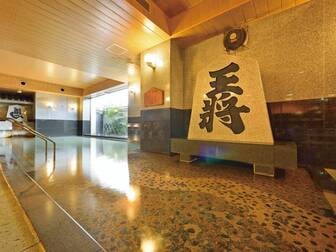
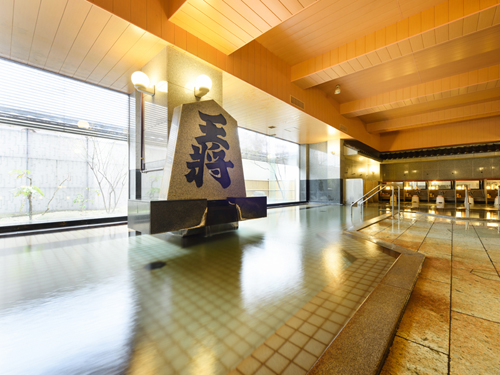
Tendo Onsen is a historic hot spring resort dating back to the Meiji era. Its sodium-calcium chloride spring waters are effective against muscle pain and nerve pain, and gently soothe the body after a long walk. Located in the center of town, it’s easily accessible.
In addition to overnight stays, there are plenty of facilities offering day-trip bathing. Sakura Momo no Hana Yubo Ichiraku boasts modern Japanese-style rooms and a beautiful garden bath. At Tendo Hotel, you can enjoy a spacious public bath and an open-air bath fed directly from the hot spring. For meals, try the kaiseki cuisine featuring Yamagata beef and seasonal mountain vegetables, which is sure to spark lively conversation between couples.
Tendo Onsen, which soothes the mind and body, is the perfect “reward” after a visit to Wakamatsu Kannon. The quiet and relaxing atmosphere makes this hot spring resort the perfect place for a trip for a middle-aged couple.
6-2. History and fun in Tendo, the town of shogi
Tendo is known as the “town of shogi.” Experience the shogi culture, which can be enjoyed both as a tourist attraction and an experience, and add a touch of intellectual color to your trip.
Tendo City, boasting the highest production of shogi pieces in Japan, is also a town of shogi culture, famous for games such as “human shogi.” For history-loving couples, this sightseeing experience will be highly educational, learning about the connection between shogi and military commanders and the industrial background of shogi since the Edo period.
At the Tendo City Shogi Museum, you can see the origins of shogi, its spread during the Edo period, and see artisans hand-carving shogi pieces. At the roadside station “Tendo Onsen,” the giant shogi piece monument is a popular photo spot. Piece sculptures, such as “Pawn,” “Bishop,” and “Hi,” are scattered around the station and downtown, making for a fun stroll around town like a stamp rally. There are also specialty shogi goods stores, so you can enjoy choosing souvenirs.
Experience shogi culture, combined with a prayer at Wakamatsu Kannon, will add depth to your trip. Here, you’ll find “another history” that will stimulate your intellectual curiosity.
I have also written articles about events and inns in Tendo City, so please take a look.
6-3. A couple’s trip to enjoy seasonal fruits and local delicacies
The Tendo and Yamagata area is rich in seasonal fruits and local delicacies, satisfying your taste buds as well.
Yamagata Prefecture is known as the “Fruit Kingdom,” and the Tendo area in particular is home to an abundance of orchards producing cherries, La France pears, peaches, and grapes. Enjoy regional specialties like imoni (simmered sweet potato stew), Yonezawa beef, soba noodles, and chilled ramen.
Cherry picking is popular in June, and places like Osho Orchards and Takahashi Fruit Land offer barrier-free access for seniors to enjoy. Recommended gourmet options include the long-time local favorite, Tori Chuka (chicken stew) at Suisha Nama Soba, the warabi mochi (warabi mochi) at Koshikakean, and the gelato made with locally sourced ingredients at Tendo Kogen Ice Cream.
Combining sightseeing and gourmet experiences elevates a trip to Wakamatsu Kannon Temple from an experience to a memory. Savoring the seasons as a couple will also build anticipation for your next trip.
📌 Frequently Asked Questions | About Stopover Spots
Q. Are there any hot springs near Wakamatsu Kannon?
A. Yes. Tendo Onsen, a 15-minute drive away, is popular and offers day-trip bathing.
Q. What are some recommended accommodations in Tendo Onsen?
A. Cherry Blossom Yubo Ichiraku and Tendo Hotel are popular choices.
Q. What are some shogi-related tourist spots?
A. There’s the Tendo City Shogi Museum and the giant shogi pieces at the roadside station.
Q. When is cherry picking season?
A. Cherry picking is usually in season from early June to early July.
Q. What’s the recommended Tendo cuisine?
A. Tori Chuka is popular. Other recommended dishes are listed in the article above.
Reference links:
Tendo Onsen Cooperative Association Official Website: https://www.tendo-spa.or.jp/
Tendo City Shogi Museum: https://www.city.tendo.yamagata.jp/tourism/midokoro/shogimuseum.html
Ohsho Orchard: https://www.ohsyo.co.jp/
Wakamatsu Kannon Official Website: https://www.wakamatu-kannon.jp/
Tendo City Tourism Website: https://www.city.tendo.yamagata.jp/
Mogami Thirty-Three Kannon Official Website: https://www.mogami33.com/
Cultural Heritage Online (Kannon Hall): https://bunka.nii.ac.jp/heritages/detail/121004
Yamako Bus Official Website (https://www.yamakobus.co.jp/)
筆者:takahashi naoya
このカテゴリの新着記事