


Surrounded by tranquility, I finally found myself again—Enjoying the luxury of visiting Tamagawa-ji Temple in Yamagata on a trip for adults in their 60s
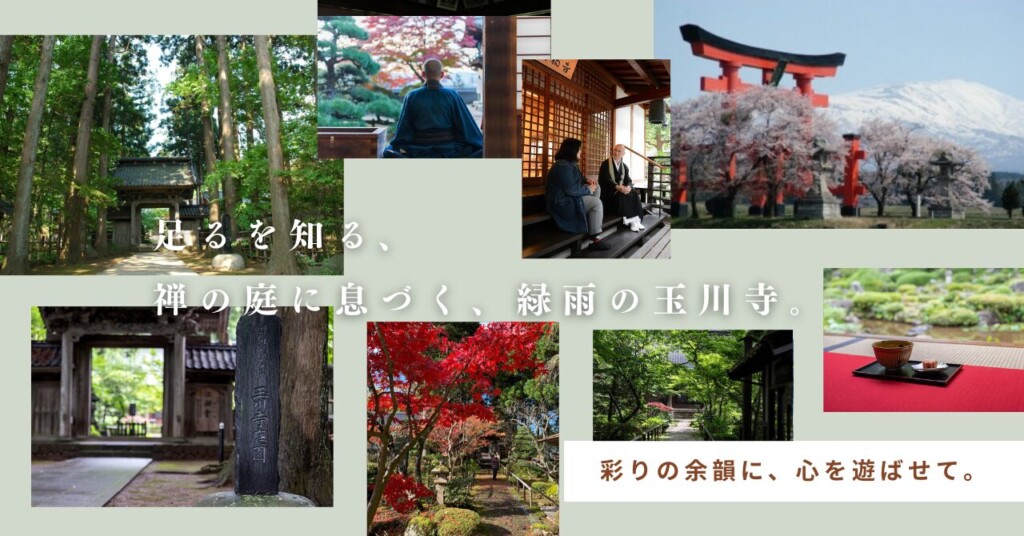
Gyokusen-ji Temple in Yamagata is the perfect place for a relaxing trip for adults in their 60s. Enjoy a moment of peace and tranquility in the tranquil garden and historic shoin study. Why not embark on a journey to rediscover yourself?
1.Why Gyokusenji Temple now? ——A new way to travel for people in their 60s and older, creating space in their hearts

reference:https://www.tsuruokakanko.com/spot/833
For people in their 60s, reaching a turning point in their lives, a quiet, intimate place reminds them of the true essence of travel. Gyokusenji Temple in Tsuruoka, Yamagata Prefecture, is currently gaining attention as a place to rediscover the inner space of modern people.
In recent years, travelers in their 60s and older are increasingly seeking quiet places where they can spend their time alone, rather than famous tourist destinations. In fact, in the Tourism and Recreation Demand Survey released by the Japan Tourism Agency in 2023, the top travel purposes for people in their 60s were “interacting with nature,” “relaxing in tranquility,” and “exploring history and culture,” demonstrating clearly different needs from younger generations.
In addition, travel styles that prioritize physical and mental health, such as “adventure tourism” and “wellness tourism,” are also expanding, especially among older people. The needs of the times are shifting from consumer-oriented travel aimed at bustling tourist destinations and creating social media posts, to travel that “restores self-confidence” and “liberates the mind.”
Tamagawa-ji Temple in Tsuruoka City is a Soto Zen temple with a long history dating back to the Kamakura period. Many cultural assets remain thanks to its ties to the Shonai domain. Its greatest attraction is its traditional Japanese garden, known as a strolling pond garden. Designated a national monument, the view from the veranda of the shoin study offers a different beauty with each season.
For example, cherry blossoms and skunk cabbage bloom serenely in spring, the moss deepens into a vibrant green in summer, the leaves turn fiery red in autumn, and the snow-covered branches and frozen pond create a mystical landscape in winter. As such, Tamagawa-ji Temple is a place where you can experience “quiet change” throughout the year, making it the ultimate “healing space” for busy city dwellers.
History, nature, tranquility, and peace of mind. Tamagawa-ji Temple is a place packed with everything you need for a trip in your 60s and beyond. In today’s information-saturated world, this is a place that anyone looking for a relaxing trip to rejuvenate themselves should visit.
1-1.Do you know the luxury of hearing only the sound of the wind?

reference:https://garden-guide.jp/spot.php?i=gyokusenji
If you close your eyes, all you can hear is the sound of the wind, the chirping of birds, and the murmuring of water—such a quiet space is the most luxurious form of relaxation for modern people.
In urban life, surrounded by noise, opportunities to experience true silence are extremely rare. The average noise level in Tokyo is said to be 60-70dB, about the same level as everyday conversation or a vacuum cleaner. In contrast, mountainous regions and temples in rural areas maintain noise levels below 40dB, making them “quieter than libraries” (Source: Ministry of the Environment, “Status of Noise in the Living Environment,” 2022).
Moreover, in recent years, the concept of “sound ecology” has been gaining attention, and global research is focusing on the healing and mentally calming effects of sound. So-called “natural sounds,” such as the sound of the wind, flowing water, and rustling trees, are said to increase alpha waves in the brain and suppress the secretion of stress hormones.
There are absolutely no artificial sounds in the gardens of Tamagawaji Temple. Birds chirp in the distance, and as the wind blows through the cedar forest, the rustling of leaves blends into the air. The occasional hopping of a frog echoes across the pond, and the faint sound of a stream surrounded by trees flows in the background. Especially in the mornings, when there are few tourists, sitting on the veranda of the Shoin study offers a mysterious sensation, as if you’re not just “enveloped” in the sound, but “watched over by the sound.”
Even the sounds of the head priest tending to the moss in the garden create a sense of immersion, making you feel like you’re part of nature—a rare experience hard to find at other famous tourist destinations.
The quiet space calms the mind and brings peace to your thoughts. The luxury of hearing only the sound of the wind allows you to forget about your daily life, overflowing with social media and information, and allows you to face the “true voice” deep within your heart.
1-2.Choosing to avoid famous places to escape the hustle and bustle

reference:https://travel.navitime.com/ja/area/jp/spot/02301-14401593/
Choosing less crowded, more off-the-beaten-path destinations rather than crowded, iconic spots allows for a truly unique and tranquil trip.
Recent changes in travel styles have led to an increase in search volume for “hidden gems” and “quiet travel destinations.” According to Google Trends, searches for “avoiding crowds” and “hidden travel destinations” are expected to grow by more than 20% between 2022 and 2024. The Japan National Tourism Organization (JNTO) is also implementing tourism policies to reduce congestion and promote regional dispersion as part of its efforts to “improve the quality of tourism.”
More and more people are no longer perceiving “uncrowded” as meaning “no value,” but rather “quiet” as meaning “my time is respected.”
For example, nationally renowned sites like Kiyomizu-dera Temple in Kyoto and Todai-ji Temple in Nara are certainly impressive, but wherever you go, there are just too many people. Taking photos and praying takes time and effort.
On the other hand, Tamagawa-ji Temple in Tsuruoka City, Yamagata Prefecture, is located on the outskirts of the Shonai Plain. Large buses rarely stop there, so the temple is practically empty on weekdays. What’s more, the cultural value is extremely high, with a sukiya-style shoin study passed down from the Edo period, a main hall where you can also experience zazen, and a nationally registered monument garden that are all well-maintained.
“The places not listed in tourist guidebooks were exactly what I needed,” said one actual visitor.
The deliberate choice to “avoid the famous sights” is a “travel aesthetic” that only adults with ample life experience can achieve. It is a journey that is free from crowds and trends that leaves you with truly valuable memories.
2.Tamagawa-ji Temple: A place where you can encounter Buddha, moss, and the wind at the famous temple in Tsuruoka, Yamagata

reference:https://garden-guide.jp/spot.php?i=gyokusenji
Gyokusenji Temple in Tsuruoka City, Yamagata Prefecture, is once again garnering attention as a spiritual retreat where Buddhist teachings, a beautiful Japanese garden, and the changing seasons blend in harmony.
Located away from the hustle and bustle, this place combines historical and cultural value with beautiful gardens, tranquility, scenic beauty, and spiritual peace, making it a popular destination for tranquil sightseeing and wellness tourism among travelers over 60.
Gyokusenji Temple is an important base for the Soto Zen sect in the Shonai region, and since its founding in the Kamakura period, it has been a renowned temple that combines Zen culture with beautiful gardens, thanks to its deep ties with the Shonai domain. In particular, the strolling pond garden, constructed during the Edo period, is still carefully maintained by the chief priest and is designated a national registered monument.
Gyokusen-ji Temple is a hidden gem in Shonai that soothes the souls of visitors, combining the tranquility of Buddhism, the beauty of a Japanese garden, the vitality of moss, and the natural atmosphere carried by the wind.
2-1.A Zen temple dating back to the Kamakura period

reference:https://narita-akihabara.jp/ja/culture/post-000044
Tamagawa-ji Temple is a venerable Zen temple founded in the Kamakura period, a tranquil and renowned site that has supported the spiritual culture of Shonai.
As the Soto sect of Zen Buddhism developed in Japan, Tamagawa-ji Temple, among other local temples, came to be particularly esteemed as the “Temple of Refuge for the Shonai Domain.” The Soto sect places great importance on zazen (seated meditation) and is characterized by the fundamental Buddhist practice of shikantaza (sitting intently).
Tamgawa-ji Temple was founded by Zen master Jakushitsu Genko in the Kamakura period and has since boasted a history spanning over 700 years. It also had a deep connection with the Sakai family, the feudal lords of the Shonai domain, and records show that successive lords made numerous donations to the temple’s gardens and temple buildings. Even today, the main hall, shoin study, and kuri (the monks’ residence and office) retain traces of their original appearance as historic buildings, making it an extremely valuable cultural asset.
In addition, the public can still experience zazen, with the head priest himself gently imparting the teachings of Zen. This will be a valuable experience for those seeking learning and introspection that is different from tourism.
Gyokusen-ji Temple is more than just a tourist destination; it is a spiritual place rooted in Shonai, and exists as a place of spiritual refuge to visit at turning points in life.
2-2.Immerse yourself in the strolling pond garden

reference:https://garden-guide.jp/style.php?s=pond
Gyokusenji Temple’s garden is not just beautiful; it is a place that calms the mind’s restlessness and provides a moment of peace in tranquility.
Japanese gardens are divided into “gardens for viewing” (ornamental style) and “gardens for walking” (strolling style). Gyokusenji Temple’s garden is a “strolling pond garden” centered around a pond, characterized by a design philosophy that is one with nature. The landscape, based on the spirit of Zen, naturally calms the mind of visitors.
Gyokusenji Temple’s garden was laid out during the Edo period and is still personally maintained by the head priest. The central pond is filled with water lilies and irises that bloom depending on the season, and the surrounding cedar and maple trees create beautiful shadows.
The design, in which the scenery changes with every step, is what could be called a “walking Zen experience.” The view from the gazebo, the sound of boats crossing the stone bridge, and the swaying of carp in the pond will deeply soothe your senses.
Mornings are especially recommended. The moss glistens with morning dew, and only the chirping of birds and the sound of water falling in the pond fill the air. This motionless silence brings about a deep concentration and freedom not found in everyday life.
The garden at Gyokusenji Temple is a place to not only see, but also feel. When you want to reset your mind, simply walking in silence will naturally bring you into harmony. This is the garden’s mysterious power.
2-3.Why the well-maintained moss and seasonal flowers are so soothing

reference:https://co-trip.jp/post/550259
At Tamagawa-ji Temple, where moss and seasonal flowers are carefully tended, “timeless beauty” gently envelops the hearts of visitors.
Even in Japanese gardens, moss symbolizes “tranquility,” “the accumulation of time,” and “coexistence with nature.” In the highly humid Shonai region in particular, moss grows lushly, adding a sense of life and softness to the garden. However, moss maintenance requires advanced knowledge and effort; if left unattended for even a day, it will wither and turn brown.
More than dozens of species of moss grow naturally at Tamagawa-ji Temple, and the head priest, who is also a master moss, regularly waters and adjusts the sunlight, creating a “green carpet” of moss throughout the garden. Among the species, there is a mixture of Shinobu-goke, Sunagoke, and Narrow-leaved Okinagoke, creating a gradation that is almost like a painting.
The gardens are also filled with seasonal plants, adding color to the gardens with cherry blossoms and rhododendrons in spring, skunk cabbage and hydrangeas in summer, autumn leaves and Japanese anemones in autumn, and the white snow that accentuates the moss in winter. The fact that the scenery changes with each visit is one of the reasons why Tamagawa-ji Temple is described as a temple you’ll want to visit again and again.
The moss and flowers at Tamagawa-ji Temple have the power to gently move the hearts of those who see them, so much so that some have said, “The beauty of the moss brought me to tears.” It is this careful maintenance and the rhythm of nature that lies at the heart of Tamagawa-ji Temple’s charm.
3.”Doing nothing” time in the temple grounds – the veranda, silence, and occasional solitude
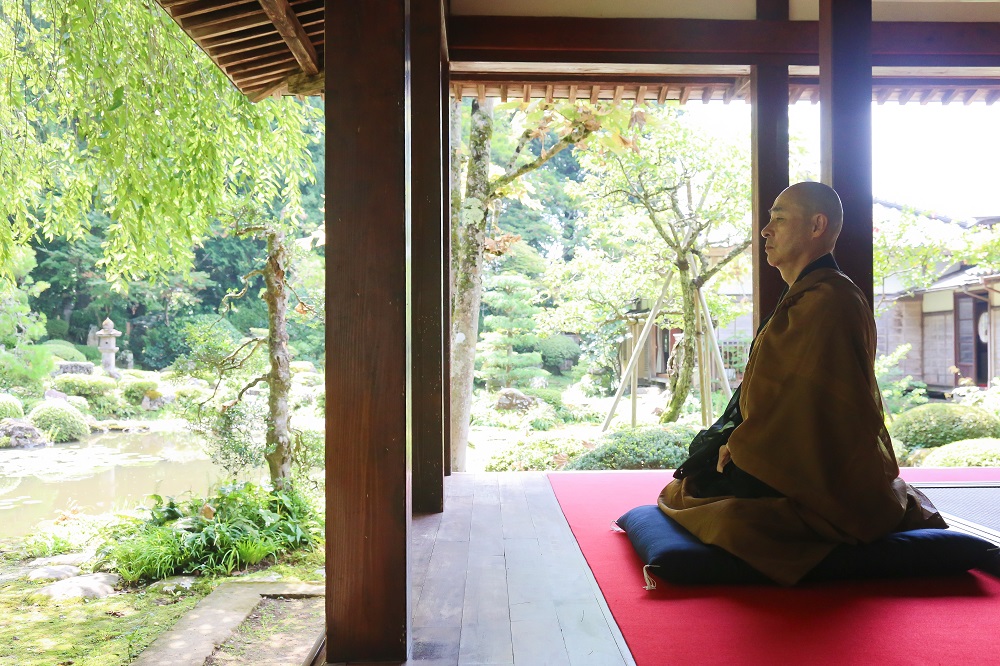
reference:https://trip-catalog.shonai-airport.co.jp/introduce/article27/
Within the grounds of Gyokusen-ji Temple, the power of healing and relaxation lies not in “doing nothing” but in “doing something.”
The concepts of “well-being” and “mindfulness,” which are gaining popularity especially among the elderly, emphasize “keeping your awareness in the here and now” rather than action. Choosing to immerse yourself in the scenery rather than packing your schedule when traveling brings tranquility to the mind of modern people.
In particular, time spent in idleness, which is close to the Buddhist concept of “emptiness,” is deeply connected to spiritual fulfillment.
At Gyokusen-ji Temple, you can sit on the long veranda that runs along the shoin study. The cedar floorboards are warmed by the sun, and the warmth of the wood when you lean back gently embraces your heart, chilled by the hustle and bustle of the city. There are no tourists around; the only sounds you can hear are the wind blowing through the garden, the rustling of leaves on the moss, and the birdsong in the distance.
A strolling garden with a pond spreads out before you, and the sky and green trees reflected in the pond slowly mark the passage of time.
It is this “time to do nothing” that brings the deepest healing.
Time spent within the grounds of Gyokusen-ji Temple is not an experience of “filling time” but of “surrendering yourself to time.” Forget your plans, put your smartphone down, and simply become one with the silence – it is the ultimate luxury for calming the mind.
3-1.My husband and I silently gaze at the garden scenery

reference:https://cradle-plus.com/article/info/fumu08/
Even without words, spending time gazing at the same scenery can become a deep, quiet “dialogue” for a couple.
When traveling as a couple, an increasing number of people feel that “time spent sharing the same atmosphere” is more important than conversation.
According to data from the Ministry of Land, Infrastructure, Transport and Tourism’s Japan Tourism Agency, travelers aged 60 and over value “quiet time spent together” the most, and tend to prioritize “heart-to-heart communication” over experiences.
The veranda at Gyokusen-ji Temple is large enough for two people to sit side by side. Sitting there, without a word, the couple simply gazes out at the pond in front of them, a testament to the slow passage of time.
The carp swimming leisurely in the pond and the leaves swaying in the breeze soothe the soul like ripples. Even couples who don’t usually talk much find themselves smiling in this environment.
“Communicating without speaking” — that kind of moment can be found here.
Gyokusen-ji Temple is a place where hearts can connect without conversation. Quietly gazing at the same scenery together as a couple will become the most profound “travel memory.”
3-2.The light streaming in from the study suddenly brings tears to my eyes

reference:https://mokkedano.net/spot/30271
A quiet moment enveloped in light can gently awaken forgotten emotions deep within.
As we age, emotions and memories can build up inside us, remaining unspoken.
In the midst of busy lives, these emotions tend to go unnoticed and be pushed deep into the unconscious. However, when we find ourselves in a quiet place and are exposed to natural elements like light and breeze, repressed emotions can suddenly spill out. This is known as “emotional release,” and has recently attracted attention in psychotherapy.
As I sat in the Shoin study at Gyokusenji Temple, soft sunlight filtering through the shoji screens and gently illuminating the tatami mats. Enveloped in the warmth of that light and silence, one woman reportedly burst into tears. “I don’t know what I was crying about, but I felt like I had finally returned to myself.” Perhaps this was evidence that blocked emotions had been released.
Whether you visit alone or with someone, the light of the Shoin gently illuminates your heart.
Everyone needs a place to encounter quiet light. The Shoin at Gyokusenji Temple is a special space where you can encounter your true self, which you cannot encounter in your daily life.間です。
3-3.The moment I felt an indescribable “mental peace”

reference:https://4travel.jp/dm_shisetsu/10019279
The “mental peace” you can experience at Tamagawa-ji Temple is a sensory healing that transcends words and logic, and is an experience most needed by modern people.
Amidst our busy daily lives and the information overload provided by social media, modern people tend to pursue only “meaningful time.” However, Buddhism teaches that “truth lies in meaninglessness.” While the act of zazen or “simply gazing” at a garden may seem meaningless on the surface, it is actually a time that touches deep within.
A woman who sat on the veranda and quietly gazed at the garden for over 30 minutes said this as she left: “I don’t remember what I was looking at, but by the time I left, my heart felt lighter.” This state can only be described as “mental peace.”
This experience transcends the bounds of emotion and logic. Like zazen, copying sutras, and forest bathing, time at Tamagawa-ji Temple offers “awareness that can only be gained through experience.”
Tamagawa-ji Temple is a place that provides a state of peace that is beyond words. There is a feeling that you can’t explain, but it’s like you’ve “taken a deep breath.” That is the very reason you should visit.
4.Access and Stopover Spots – For Those Who Want a “Quiet, Slow” Journey
Tamagawa-ji Temple is easily accessible by car, making it the perfect location for a quiet, stress-free drive. For those looking to relax, even during their travels, we highly recommend visiting by car.
Tsuruoka City, Yamagata Prefecture, is an area with minimal public transportation, yet its well-maintained roads offer great freedom of movement by car. For middle-aged and older travelers, the benefits of using a car are particularly significant, including the ability to make detours whenever you like, less luggage to worry about, and the ability to avoid stairs and long walks. These advantages make it a perfect match for a quiet suburban spot like Tamagawa-ji Temple.
■ Access by Car
[Address] 35 Tamagawa, Haguro-cho, Tsuruoka City, Yamagata Prefecture 997-0334
[Approximate Distance from Major Interchanges]
- Approximately 20 minutes by car from Tsuruoka Interchange on the Yamagata Expressway (via Prefectural Route 47)
- Approximately 30 minutes by car from Shonai Airport
[Parking] Free parking available (for 10 or more cars). The temple grounds are within a one-minute walk.
[Scenery along the way] A peaceful mountain road surrounded by cedar forests and rural scenery. Morning and evening drives are especially beautiful, making the journey itself a relaxing experience.
■ Recommended car navigation settings
Search for “Gyokusenji” or “Gyokusenji” on your car navigation system. If the name doesn’t appear, try using “Tamagawa Post Office (Tamagawa, Haguro-cho, Tsuruoka City, Yamagata Prefecture)” as a landmark.
4-1.Enjoy a relaxing trip and enjoy the quiet stops that are only possible by car
reference:https://trip-yamagata-japan.com/barrier-free/detail/index/267
With your own car, you can easily stop by cultural facilities and natural spots that share the same atmosphere as Gyokusen-ji Temple.
By car, you can make detours and take breaks at your own pace, without the hassle of walking or transferring. Especially for travelers over 60, being able to flexibly change your plans based on your physical condition and mood can be a great relief.
Recommended “quiet spots”:
Chido Museum (approx. 15 minutes by car)
A historical and cultural area featuring documents from the Shonai feudal lords and Western-style Meiji-era architecture. The building, enveloped in a tranquil atmosphere of wooden architecture and greenery, is truly a “soothing intellectual space.”
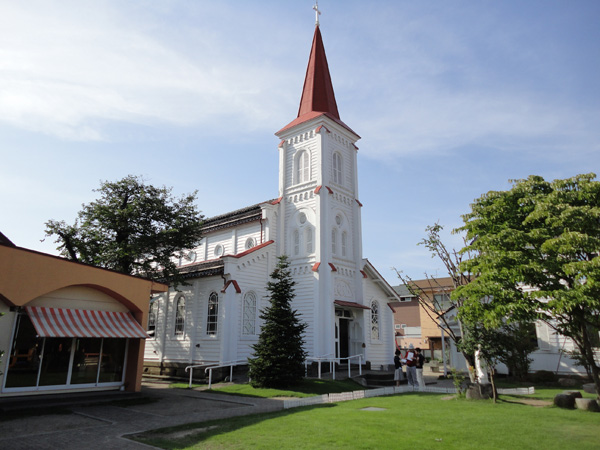
Tsuruoka Catholic Church (approx. 20 minutes)
Stained glass and wooden Gothic architecture create a unique encounter with Western culture, typical of Shonai. Enjoy art in peace and quiet without the crowds.
Yudagawa Onsen (approx. 20 minutes)
A tranquil, small-scale hot spring resort that also offers day-trip bathing. Like Gyokusen-ji Temple, this spot has a “modest beauty.”
By using your own car, even “travel” becomes a time of relaxation. You can plan your trip freely and quietly without having to stare at a map—that’s the great appeal of Gyokusen-ji Temple.
4-2.Don’t worry if you don’t have a car. Rental cars and sightseeing taxis are available as options.

reference:https://www.jrerl.co.jp/eigyo/index?eigyo_cd=02310330
Even if you don’t have a car, Shonai is an area where travel can be relaxing. By renting a car or using a sightseeing taxi, you can enjoy the same level of comfort as traveling by car.
Tsuruoka City has several rental car offices and sightseeing taxi reservations, and you can also pick up from the station or go directly from the airport. The views from the ride are beautiful, making it a stress-free trip for travelers seeking a quieter experience.
[Rent-A-Car]
- Multiple offices, including Toyota Rent-A-Car and Times Car, are located in front of JR Tsuruoka Station.
- A wide selection of compact cars, including the “Relaxed Pack” exclusively for those 60 and over.
- Flexible services include navigation systems, the ability to select non-smoking cars, and the ability to change return locations.
[Tourist Taxi]
- A wide variety of local services, including Shonai Kotsu Tourist Taxi and Tsuruoka Tourist Taxi.
- From Tsuruoka Station to Tamagawa-ji Temple: Approximately 15 minutes / Around 2,000 yen.
- Multiple stops are available if desired (hourly contract plans available).
Even if you don’t own a car, you can still enjoy a trip that’s “crowded, walking-free, and fatigue-free.” Shonai, home to Tamagawa-ji Temple, is an area where you can travel at your own pace, even without a car.
5.Gyokusenji Temple is perfect for people like this

reference:https://shonaihan.co.jp/261/
For anyone wishing to “rediscover themselves in tranquility,” Tamagawa-ji Temple is not the “end of their journey,” but a place for a “spiritual restart.”
There is an increasing trend among travelers, especially middle-aged and older, to “avoid crowds,” “experience quiet,” and “find meaning in their destination.” A survey by the Japan Tourism Agency found that the most important factors for travelers aged 60 and older ranked “natural environment,” “historical culture,” and “low crowds.” At the same time, there is a growing trend toward seeking “extraordinary experiences” and “spiritual healing.”
Tamagawa-ji Temple is a place where gardens, architecture, Zen culture, scenery, moss, and Buddhist philosophy all blend together in harmony. It is a rare place where visitors can experience “mindfulness” regardless of their background. Those who value a “memorable trip” over social media appeal and “meaningful time” over efficiency will appreciate the unique value of this unique journey.
Tamagawa-ji Temple is not just a “tourist destination,” but a “place to visit at a turning point in life.” Below, we introduce three types of people for whom we particularly recommend this place.
5-1.People who want to reward themselves after completing caregiving

reference:https://cradle-plus.com/article/info/fumu08/
For those who have just finished providing long-term care, Tamagawa-ji Temple is a place to find tranquil healing.
Not only does caregiving place a significant burden on the mind and body, it can also lead to people unconsciously putting their own emotions and time on the back burner. According to the Ministry of Health, Labor, and Welfare’s “Survey on the Actual State of Caregiving,” approximately 60% of people experience burnout, a sense of powerlessness, and a void in their hearts after completing caregiving.
In times like these, what’s needed isn’t a flashy, refreshing trip, but quiet time to simply return to yourself, undisturbed.
Visitors to Tamagawa-ji Temple’s garden don’t need to say much. Simply sitting on the veranda, gazing at the leaves swaying in the breeze, and watching the petals flutter onto the moss, is enough to feel the “sound of your heart” returning.
In fact, as one woman in her 60s who finished providing care said, “I feel like I’ve finally reclaimed my time,” Tamagawa-ji Temple truly is an opportunity to embark on the next phase of life.
After devoting time to someone, be sure to take some time for yourself. Gyokusen-ji Temple is a place enveloped in deep tranquility, perfect for starting anew.
5-2.Couples who want to spend some time together quietly admiring the scenery
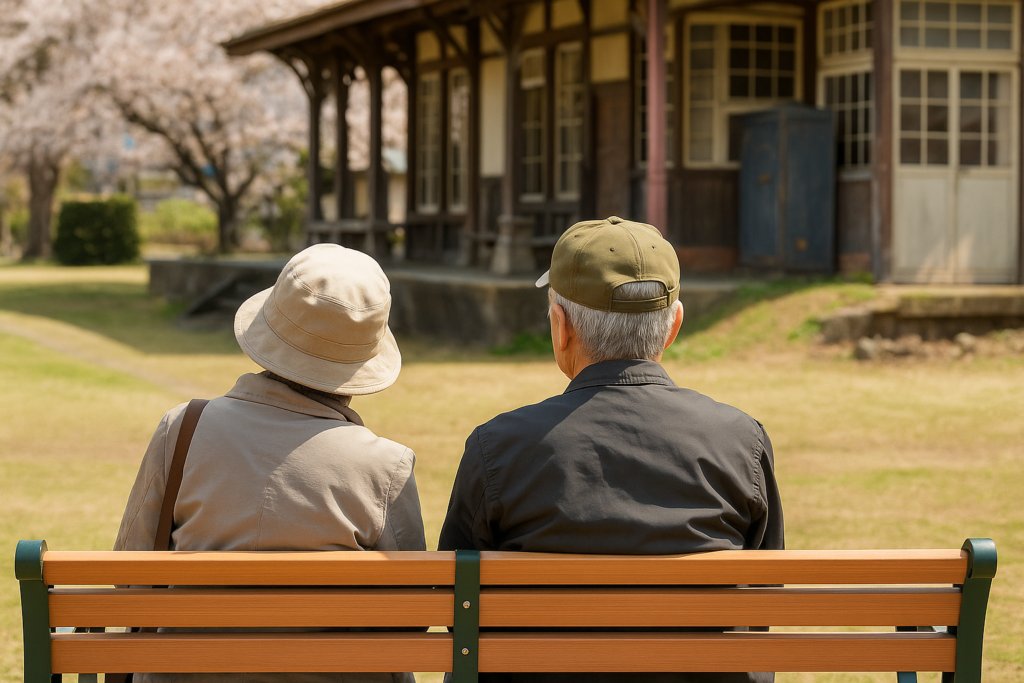
Spending time together admiring the scenery, without relying on words, becomes a “silent conversation” that deepens the bond between couples.
For couples who have been together for many years, it’s not “what they talk about” but “how they spend time together” that becomes important.
In fact, a travel style survey (JTB Research Institute, “Senior Travel Trends 2023”) found that people in their 60s and older have a growing desire to “spend time relaxing together while enjoying nature” and “prefer to share the atmosphere rather than conversation.”
The veranda at Gyokusenji Temple is just the right size for two people to sit side by side.
It’s okay not to talk. Simply gaze out at the garden, breathe the same air, and listen to the sound of the wind.
Here you can enjoy “meaningless but precious time” that is hard to find in everyday life.
Even if you’re not the type to “talk the whole time you’re traveling,” this space, “comfortable even without conversation,” will quietly warm your bond as a couple.
Gyokusenji Temple is the perfect place for couples to spend some time in silence. Spend some time together in harmony, surrounded by the tranquil scenery.
5-3.People who seek “memorable scenery” rather than social media

reference:https://x.gd/kCt8H
For those who want a journey that remains in their heart, rather than a journey to show off to others, Tamagawa-ji Temple is the perfect choice.
In recent years, there has been a lot of talk about fatigue caused by social media-driven travel. Instagram and X (formerly Twitter) create a sense of obligation to take photos at their travel destinations, and many people lose sight of the true joy of traveling.
As a reaction to this, “digital detox trips” and “offline travel” have become popular, and the value of travel that is experienced with one’s five senses is being reevaluated (Reference: Japan Tourism Agency’s “Research Report on the Diversification of Traveler Needs”).
At Tamagawa-ji Temple, the sounds and smells will linger in your memory more than photos.
The damp scent of moss, the sound of the wind blowing through the cedar forest, the movement of flower petals falling in the pond…
These will be etched in your memory more deeply than any high-resolution photo.
In fact, by putting away your smartphone and enjoying the scenery with just your five senses, you’ll be reminded of what traveling was all about.
It may not be photogenic, but it’s unforgettable. Tamagawa-ji Temple is a true “destination for the soul” that we would recommend to anyone looking for such “memorable scenery.”
6.Frequently Asked Questions (FAQs to resolve your concerns)

Tamagawa-ji Temple is a safe place to visit, catering to concerns like “worried about walking,” “concerns about facilities,” and “difficulty planning.”
For middle-aged and older travelers, the availability of barrier-free access and facilities is an important deciding factor when choosing a destination. A 2023 survey conducted by the Japan Tourism Agency also found that “avoiding crowds,” “short walking distances,” and “location of restrooms” have a significant impact on trip satisfaction for travelers aged 60 and older.
Tamagawa-ji Temple has taken great care to alleviate these concerns, allowing even first-time visitors to visit with peace of mind.
Below, we’ll take a closer look at two of the most frequently asked questions.
Looking for a quiet time, but not wanting to push yourself? Tamagawa-ji Temple’s FAQs will provide you with peace of mind beforehand.
6-1.”Are there restrooms?” “Is it okay if I don’t have to walk for a long time?”
Tamagawa-ji Temple has well-equipped restrooms, and the grounds are compact, so you can enjoy the temple’s sights without having to walk for long periods of time.
As you get older, restroom location and walking distance become important considerations when choosing a travel destination. While historically-oriented temples and shrines can sometimes have outdated facilities and be difficult to access, Tamagawa-ji Temple has designed an environment that takes visitors’ comfort into consideration.
・[About Restrooms]
The Tamagawa-ji Temple grounds are equipped with Western-style restrooms next to the main hall, and the temple is barrier-free. There are few steps, and they can be accessed within five minutes from the entrance. Hand-washing stations and disinfectant are also provided, creating a clean and tidy space.
・[About Walking]
The grounds are compact, centered around a strolling garden with a pond, and can be walked around in about 10 minutes. The grounds are paved with flat, gentle stone pavement. Because there are few steps, even those with mobility issues can easily get around using a walking stick or a guide.
Additionally, it’s less than a one-minute walk from the parking lot to the temple grounds. Even the longest walk will take you around 20 minutes round trip, and you can enjoy the whole area.
Gyokusen-ji Temple is a “friendly tourist destination” that caters to those who say, “I don’t want to get tired from walking” or “I’m worried about toilets,” so it’s a place you can incorporate into your plans with peace of mind, as it’s not too strenuous on the body.
6-2.”What are the admission fees and opening hours?” “Are there any accommodations nearby?”
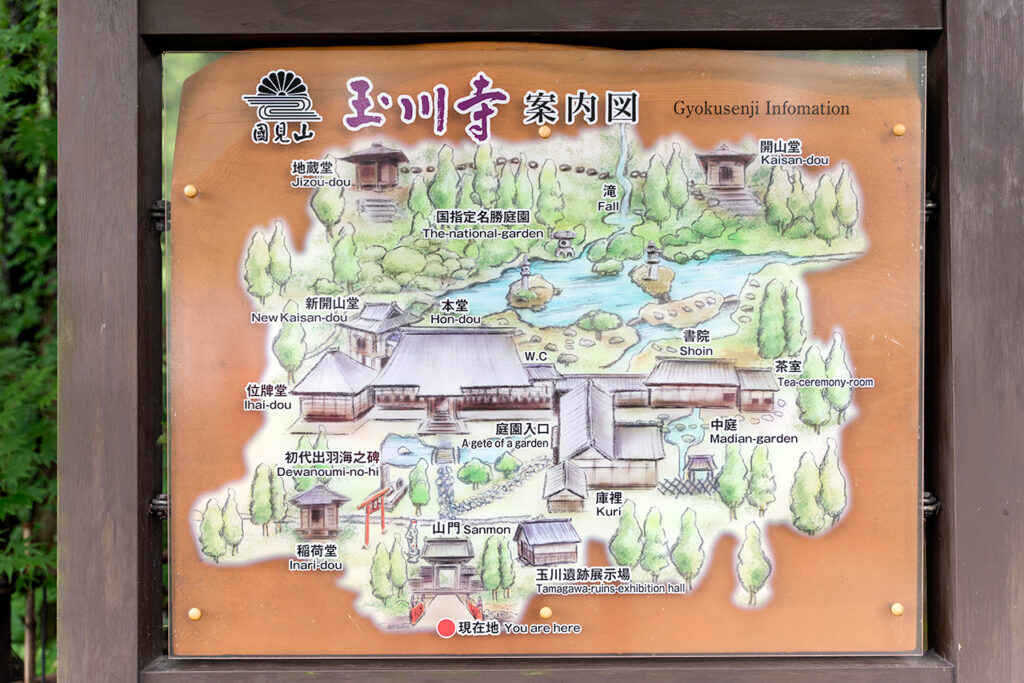
reference:https://garden-guide.jp/spot.php?i=gyokusenji
Admission fees are reasonable and allow ample time for your visit. There are also several quiet accommodations in the surrounding area, making it a great choice for a day trip or overnight stay.
When planning a trip, having a clear sense of costs and a clear schedule is very important. For travelers who don’t want to be rushed, facilities with ample opening hours and no advance reservations are a great source of peace of mind. As for accommodation, there are also many quiet hot spring inns scattered around the area where you can avoid the crowds, making it easy to plan a relaxing trip based around Gyokusen-ji Temple.
・[Admission Fees and Hours] (As of May 2025)
- Admission Fee: ¥300 for adults (free for junior high school students and younger)
- Opening Hours: 9:00 AM – 4:00 PM (Open daily, except during the New Year holidays and snowfall)
- Reservations: Not required (please inquire for group visits only)
- Official Information: Gyokusenji Temple Official Website
・[Nearby Accommodations]
- Yudagawa Onsen “Kyubei Ryokan” (15 minutes by car)
→ A tranquil Japanese-style inn founded in the Meiji era. Highly acclaimed for its tranquility and cuisine, it attracts many repeat visitors in their 60s and older. - Shonai Atsumi Onsen “Tachibanaya” (30 minutes by car)
→ Popular for its large public baths with natural hot spring water and seaside views. The quiet environment and extensive menu are appealing. - Hotel Inn Tsuruoka (City Center)
→ A value-for-money business hotel. There are many tourist attractions within walking distance, making it easy to organize your schedule.
Visiting Gyokusen-ji Temple is easy and smooth. There are also plenty of accommodation options in the surrounding area, making it a great base for your trip, catering to a variety of needs, from day trips to relaxing two-day stays.
Other [Q&A] Frequently asked questions about Gyokusenji Temple
Q. Is Tamagawa-ji Temple open all year round?
A. It is generally open year-round, but access may be restricted during the New Year holidays or during snowfall. Please check with the Tsuruoka City Tourism Federation or other organizations in advance.
Q. Can I visit the temple in a wheelchair?
A. There are few steps and the path from the parking lot to the temple grounds is flat, but there are no barrier-free restrooms, so we recommend bringing a caregiver.
Q. When is the best season to visit Tamagawa-ji Temple?
A. Spring (cherry blossoms and Asian skunk cabbage) and autumn (autumn leaves) are particularly popular, but the beauty of the moss in summer and the snowy scenery in winter are also recommended for those who want to enjoy the tranquility.
Q. Are there any places to stay near Tamagawa-ji Temple?
A. There are many inns and hotels in Yudagawa Onsen (about 20 minutes by car) and within Tsuruoka City, so the Yudagawa area is particularly recommended for those seeking a quieter experience.
[Examples of external links and sources]
- Tamagawa-ji Temple Official Website: https://www.tamagawatera.jp/
- Tsuruoka Tourism Navigator: https://www.tsuruokakanko.com/
- Michelin Guide Official Website: https://guide.michelin.com/
- [Japan Tourism Agency: Tourism White Paper 2023 | https://www.mlit.go.jp/kankocho/]
- [JNTO Official Website | https://www.japan.travel/]
- [Source: Tourism White Paper 2023 | https://www.mlit.go.jp/kankocho/]
- [Reference: Ministry of Land, Infrastructure, Transport and Tourism Barrier-Free Survey Report | https:// www.mlit.go.jp/barrierfree/
- Agency for Cultural Affairs’ “Monument Registration System” (https://www.bunka.go.jp/seisaku/bunkazai/shokai/hozonchosa/)
- Chido Museum (Chido Museum): https://www.chido.jp/
- [Tourism White Paper 2023 Edition | https://www.mlit.go.jp/kankocho/]
- Japan Tourism Agency | Traveler Satisfaction Survey | https://www.mlit.go.jp/kankocho/
- Gyokusenji Temple Official Page (https://www.tsuruokakanko.com/)
このカテゴリの新着記事