


A quiet time enjoying photography and history – A couple in their 50s spends a rewarding trip at the little-known “Sankyo Warehouse” in Sakata, Yamagata
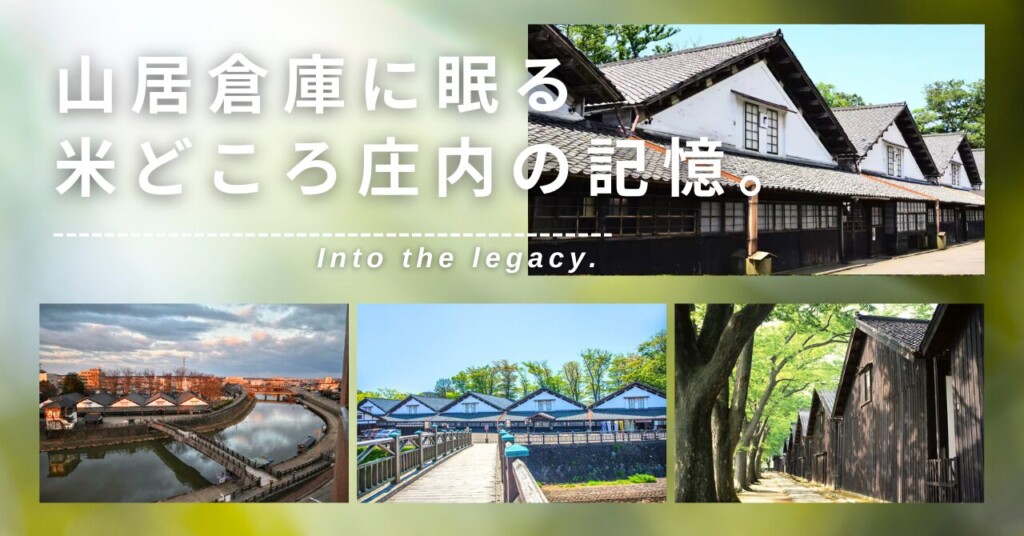
1.What is Sankyo Soko? —A historical heritage that supported Shonai rice

参考:https://bunka.nii.ac.jp/heritages/detail/580936
Sankyo Warehouse, a unique tourist resource and one of Japan’s leading historical assets, is a hallmark of Sakata and Shonai’s rich rice-growing history. Its active use as a warehouse from the Meiji era through to the Reiwa era is a testament to its rich history.
Firstly, Sankyo Warehouse was built in 1893 (Meiji 26) by the Sakai family as an auxiliary warehouse for the Sakata Rice Exchange, and was designed to efficiently collect and store Shonai rice. Furthermore, the building’s advanced architectural techniques are utilized throughout, including the incorporation of zelkova trees surrounding it and a double-roof structure (insulated and ventilated) to protect the rice from the summer heat and humidity. As a result, it continued to operate as an agricultural warehouse for an incredible 129 years, until 2022, and supported the region’s economic activity.
“Zelkova Row”: Over 35 zelkova trees, each over 150 years old, were planted here, providing natural shading from the western sun, wind, and rain.
“Double Roof”: Air spaces are created inside and outside the roof, providing both insulation and ventilation. The design protects the rice from moisture and rising temperatures.
“Earthen storehouse construction”: The white-walled earthen storehouse structure resists high humidity and fire, and nine remain in active use today.
Furthermore, in March 2021, the storehouses were designated as a national historic site (according to the Agency for Cultural Affairs’ Cultural Heritage Database), and preservation and maintenance efforts are underway by Sakata City.
In recognition of these technological innovations and historical value, the Sankyo Storehouses have become more than just a tourist attraction; they are a “living industrial heritage site” that contributes to regional revitalization.。
1-1.The roots of Yamagata and Sakata as a rice town

参考:https://www.ana.co.jp/ana_news/2017/06/13/20170613-1.html
Sakata developed as a distribution center for Shonai rice from the Edo period onwards, thanks to Kitamaebune and Mogami River shipping, and Sankyo Warehouse is its symbolic core facility.
In the 17th century, under the Sakai family of the Shonai domain, a shipping route connecting the Mogami River and the Sea of Japan was developed. In particular, from 1684 onwards, thanks to the Nishimawari shipping route promoted by Kawamura Zuiken, Sakata Port became one of the country’s leading port towns for rice shipments.
Sankyo Warehouse was built on an island in the Arida River, providing ideal geographical conditions for shipping. After the Meiji period, documents still remain showing that it was used as a “rice certificate warehouse” and in the 1910s for the rice futures trading system.
Built on this distribution infrastructure, Sankyo Warehouse is a landmark that supported the region’s agricultural and economic development, and is a valuable asset both historically and culturally.えます。
1-2.The story behind rice storage warehouses established during the Meiji period

参考:https://x.gd/wa7DW
Sankyo Warehouse was designed as an advanced rice warehouse to preserve the quality of Shonai rice and promote its trade in line with the industrial development of the Meiji period.
With the transition to a monetary economy, rice evolved from a simple food source into a commodity and investment target, leading to the establishment of a rice exchange. A facility for the stable storage of high-quality rice was therefore required, and Sankyo Warehouse was constructed in 1893 as an attached warehouse to the Sakata Rice Exchange.
Designed by master carpenter Takahashi Kanekichi, it incorporated a ventilation design with white walls, a double roof, and windows built using earthen storehouse techniques.
The white walls kept out moisture, and the windows allowed heat from the rice bales to escape.
This structure ensured the warehouse had an ideal year-round storage environment with low temperatures and humidity.
The Sankyo Warehouse that was born in this way was more than just a building; it functioned as a base for the rice industry, combining scientific knowledge and artisanal techniques.
1-3.Its role as a warehouse remains active to this day

参考:https://rtrp.jp/articles/116111/
Nine of the Sankyo Warehouses remained in active use as agricultural warehouses until 2022, serving as “living facilities” that tell the story of modern rice distribution.
Since the Meiji period, through the national rice management system and handover to JA Zennoh Yamagata (formerly Shonai Economic Federation), the warehouses have continued to be preserved to the present day, and as a result, some of them have continued to operate for approximately 129 years, from 1993 to 2022.
Although their function as active warehouses ceased in September 2022, they had previously been used by JA for long-term storage and quality control of Shonai rice.
Currently, one building has been converted into the Shonai Rice History Museum, and two have been converted into a tourist and souvenir shop called “Sakata Yume no Kura,” while the other nine buildings have been preserved almost exactly as they were.
In this way, the Sankyo Warehouses are not only a tourist attraction, but also a valuable industrial heritage site that continued to function uninterrupted from the Edo, Meiji, Showa, and Reiwa eras.です。
2. Three experiences you can have at Sankyo Souko
2‑1.A stroll through the historic white-walled warehouses and rows of zelkova trees

参考:https://www.ana.co.jp/ja/jp/japan-travel-planner/yamagata/0000006.html
Walking along the white walls and zelkova trees of Sankyo Warehouse allows you to experience firsthand the history that spans from the Meiji period to the Reiwa era, as well as the atmosphere woven from local wisdom and beautiful scenery.
First, Sankyo Warehouse is a group of white-walled earthen warehouses built in 1893. The zelkova trees were planted as a natural barrier to protect against the strong summer sun and the wind and snow from the Sea of Japan. Just walking along the approximately 200-meter stretch of 35 zelkova trees, each over 150 years old, gives you a strong sense of the depth of history and the changing seasons.
White walls and earthen storehouses: The tiled roofs and thick earthen walls provide insulation and protection to manage humidity and temperature, and the architectural structure was originally designed to preserve the quality of rice.
Zelkova trees: The shade provided by the approximately 150-year-old zelkova trees creates a changing atmosphere throughout the seasons, with fresh greenery in spring, autumn leaves in autumn, and snow-covered scenery in winter.
Cobblestones and scenery: The tree-lined streets are paved with cobblestones, allowing you to stroll leisurely along the picturesque path that was also used as a filming location for the TV drama “Oshin.”
This walk combines history, architecture, and nature, and is perfect for those seeking photography, tranquility, and learning.める人に最適です。
2‑2. Enjoy Shonai gourmet food and choose souvenirs at Sakata Yume no Kura

参考:https://4travel.jp/travelogue/11671357
Sakata Yume no Kura, formerly located within the Sankyo Warehouse, was a valuable spot where visitors could experience local culture by enjoying Shonai rice and other local specialties.
Based on the concept of “All Sakata,” this facility offered a carefully selected selection of regional brands, including Shonai rice, local sake, and crafts. It was also a place where visitors could experience the charm of the region with all five senses through the gourmet food and shopping that only a tourist and souvenir shop could offer.
Kou no Yakata: A wide variety of local ingredients, including Shonai rice, local sake, side dishes, and sweets, delighted both the eyes and the palate.
Hana no Yakata: Exhibiting traditional crafts and festival culture such as Kamekasaboko floats, it served as an opportunity to learn about Sakata’s historical background.
Continuing after relocation: The facility is scheduled to reopen at Irohagura Park in March 2025. It offers evolved experiences such as a local sake tasting corner and soft-serve ice cream sales.
This experience, which allows you to get up close and personal with local culture through gourmet food and souvenirs, is not only a tourist attraction, but also a great way to combine the enjoyment of food with learning.
2‑3.Experience agricultural culture at the Shonai Rice History Museum

参考:https://4travel.jp/dm_shisetsu/10600587
At the Shonai Rice History Museum, you can systematically learn about Shonai rice cultivation, distribution, and the techniques of our ancestors, providing an intellectual experience that will deepen your understanding of your travels.
The museum offers systematic exhibits from historical and social perspectives, including the rice distribution system from the Meiji period onwards, the design philosophy of the Sankyo Warehouse, and the background to how Shonai rice reached Edo and Osaka.
The building, Building 1, was renovated into a museum in 1993 and displays old farm tools, transaction ledgers, photographs, and more.
After a temporary closure in February 2024, related materials will be permanently exhibited in the Hikarioka Bunko Library, which is scheduled to reopen in May 2024.
Abundant explanations using panels and models were provided, allowing visitors to gain a three-dimensional understanding of the significance of Shonai rice from the perspectives of agriculture, architecture, and economic history.
This museum is an ideal place for those seeking in-depth insights while traveling, offering a valuable experience that combines learning with inspiration.
3. Seasonal attractions and photo spots
3-1.The fresh greenery of spring, the cool breeze of summer, the autumn leaves, the silence of winter

参考:https://mokkedano.net/feature/meisui/top
Sankyo Soko is a tourist destination where you can experience the changing seasons firsthand, offering a rich and different feel throughout each season.
Firstly, the rows of zelkova trees, some over 150 years old, change appearance with each season, providing visitors with beautiful scenery and an emotional resonance. The seasonal scenery is perfect for taking photos and for peace of mind.
Spring (fresh greenery): In early May, when new buds sprout, the pale green of the zelkova trees contrasts vividly with the white-walled warehouse. Walking through the “tunnel of fresh greenery” on the walking path will soothe your soul.
Summer (cool breeze): From June to July around the summer solstice, the deep shade of the trees blocks the sunlight, and the cool breeze blowing from behind is comfortable. The stroll is like walking through a natural air conditioner.
Autumn (Autumn Leaves): From late October to early November, the zelkova trees turn red and yellow, and a carpet of fallen leaves spreads across the cobblestone streets, making for atmospheric seasonal photos.
Winter (Silence): From January to February, the snow-covered white-walled warehouse and the silhouette of the zelkova trees create a tranquil, mystical landscape. The snowy scenery allows you to enjoy the wabi-sabi aesthetic unique to snowy regions.
As such, Sankyo Soko displays a variety of different faces throughout the year, so you can discover something new no matter what season you visit, making it a popular spot with repeat visitors.
3-2.Must-see for photography lovers! Best angles and times for shooting

参考:https://en-photo.net/case/04
For photography enthusiasts, we recommend visiting during the “golden time” by carefully calculating the time and angle.
The beauty of the buildings and trees lining the street is accentuated by the angle of light, shadows, and color shading, resulting in even more dramatic photos.
Morning backlighting (approximately 5:00 AM – 7:00 AM): The morning sun shines on the warehouses to the east, allowing for backlit shots with the white walls softly shining. The silhouettes of the zelkova trees also stand out.
Just before sunset (approximately 4:30 PM – 6:00 PM): This is the “magic hour,” when the setting sun filters through the leaves of the zelkova trees lining the street, casting long shadows on the cobblestones. This, combined with the autumn foliage, allows for colorful photos.
Night illumination (sunset – 10:00 PM): The warehouses and trees lining the street are lit up, creating a fantastical atmosphere different from that seen during the day. Long exposures allow for dramatic compositions that make use of light trails.
Taking photos with the time of day in mind影は、風景の印象を大きく変えます。良質な写真を狙うなら、「早朝・夕方・夜間」が狙い目です。
3-3. 3 recommended photo spots for photography enthusiasts

Within Sankyo Warehouse, there are many photo spots with compositions and seasonal themes that photography enthusiasts love. Among them, we’ll introduce three spots in particular where you can capture beautiful shots even on your first visit.
This is because impactful compositions and backgrounds are important elements for photography enthusiasts and tourists looking to post on social media.
Zelkova Tree-Lined Tunnel Composition
The composition of the warehouse lined up in a straight line with the green arch of the trees naturally utilizes a photographic composition technique called a “Leading Line.” *Leading Line: A composition technique that guides the eye into the frame.
Close-up of the White-Walled Warehouse Through the Stone Paving
By capturing the stone paving in a large foreground shot from a low angle and placing the warehouse in the background, the sense of depth and texture are emphasized.
Zelkova Tree Silhouette Through the Night Illumination
A backlit shot with the illuminated warehouse in the background and the zelkova tree silhouette in the foreground creates a fashionable image.
These three spots are perfect for seasonal photography.節や時間を問わず絵になる構図であり、初めてでもSNS映えする写真が撮影できるおすすめポイントです。
4. Ask the locals! How to enjoy Sankyoso and Sakata
4-1.Hidden cafes and famous gourmet restaurants around the warehouse

参考:https://sansyokouji.com/
The area around Sankyo Warehouse is dotted with hidden cafes and famous restaurants that blend in with local ingredients and architectural history, offering ample opportunities to enjoy both food and culture.
After visiting the warehouse, you’ll want to take a break at a cafe that blends in with the local atmosphere. These stores are popular with tourists for their spatial design and commitment to local ingredients, allowing you to combine a stroll with a gourmet meal.
Cafe e Gelato Moire: Popular for its gelato made with seasonal fruit, you can easily enjoy local flavors for around 800 to 1,000 yen.
COFFEE Sansho Koji: Popular for its house-roasted coffee and lunch sets ranging from 500 to 1,500 yen, it offers a relaxing atmosphere in a retro Showa era setting.
Fruit Deli Nishimura: With a wide selection of fruit-based sweets and juices, you can enjoy a light tea time while immersed in the seasonal atmosphere.
These cafes and famous restaurants elevate the tourist experience with the trifecta of “food,” “scenery,” and “culture.”
4-2.Nearby tourist spots such as Hiyoriyama Park and Sanno Club
参考:https://www.andtrip.jp/article/000244.html
The area around Sankyo Warehouse is home to Hiyoriyama Park, where you can sense the town’s history as a port city, and Sanno Club, a nationally registered tangible cultural property, combining history and scenery.
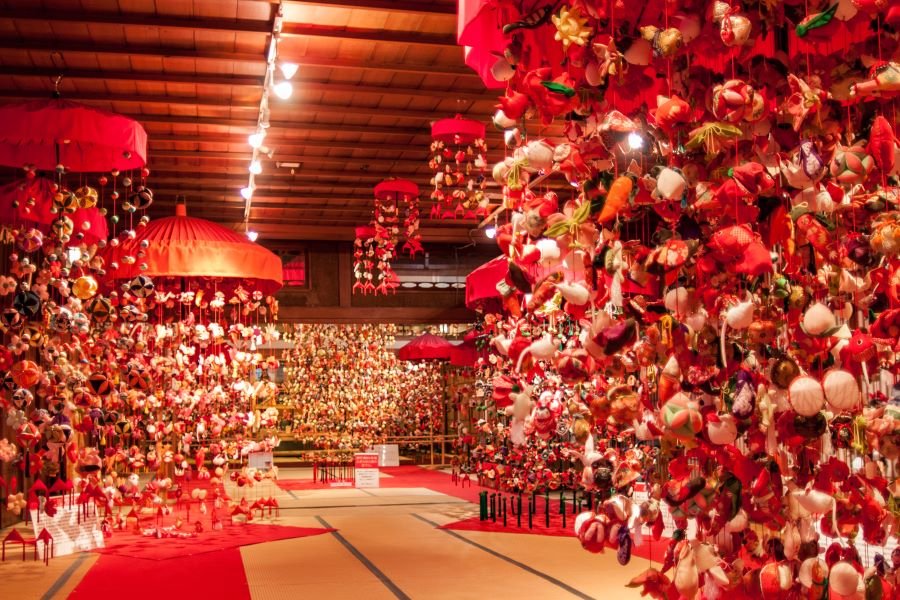
Hiyoriyama Park is a place where people prayed for safe navigation in the past, and cherry blossoms, a lighthouse, and a replica of a senkoku-bune ship adorn the landscape. Meanwhile, Sanno Club is a cultural property built as a traditional Japanese restaurant, where you can experience local crafts such as “kasafuku” (hanging ornaments).
Hiyoriyama Park: The Cherry Blossom Festival is held every year in mid-April, when 400 cherry trees bloom in full bloom. The Edo-period lighthouse and a model senkoku-bune ship add a historical dimension to the scenery.
Sanno Club: Built in a traditional Japanese restaurant building in 1895, this park displays kasafuku and also offers a workshop where you can make your own. Admission is usually 410 yen, but 800 yen during special exhibitions.
Kasafuku are one of Japan’s three major hanging ornaments, and are crafts hung in hopes of bringing happiness and health to the home.
Combining these spots will give you a truly satisfying trip, combining scenery, culture, and experiences.
4-3.A local photographer talks about the appeal of Sankyo Soko

参考:https://www.kitamura.jp/shasha/sony/landscape-9-20230119/
According to a local photographer, Sankyo Soko is a fusion of “light and shadow” and “history and nature,” and capturing these contrasts can result in a breathtaking photo.
The photographer says that by focusing on the layered composition (white-walled warehouses x rows of zelkova trees x cobblestones) and natural light, the architectural beauty of the subject and the sense of the seasons are accentuated. This is because the contrast between the form and light gives the space depth.
Compositional tips: Keeping the “Leading Line” in mind and creating a composition where the rows of zelkova trees invite the viewer into the distance will enhance the visual impact.
How to make the most of light: In the early morning, backlighting emphasizes the silhouette, while in the evening, the setting sun casts soft shadows on the brick and white walls, beautifully bringing out the green of the zelkova leaves.
Relationship between seasons and light: In spring, fresh green leaves and soft morning light harmonize, while in autumn, the autumn leaves and golden sunset create a deeper atmosphere.
By incorporating a photographer’s perspective, it becomes possible to capture dramatic moments that would go unnoticed on a normal stroll, greatly increasing the satisfaction of visitors.
5. Complete guide to access, parking, and travel times
5-1.Access by train, car, and bus
Sankyo Warehouse is easily accessible by train, car, or bus, with optimal routes for each mode of transportation.
The nearby train station and highway entrance are well-connected, making it easy to get there by public transportation or private car.
Train + Bus: Using the “Runrun Bus” or Shonai Kotsu Bus, it takes approximately 18-20 minutes from Sakata Station to Sankyo Warehouse, costing 200-260 yen. A bus location system has also been introduced, allowing you to check bus schedules in real time.
Car: Approximately 10-15 minutes from Sakata IC on the Nihonkai-Tohoku Expressway. There is space for 27 standard-sized cars and 3 large vehicles in front of the warehouse. Parking is free, making car travel worry-free.
With easy access to all modes of transportation, you can choose a route that suits your travel style and the number of people traveling with you.
5-2.Required time, estimated stay, and recommended itinerary

参考:https://reventa-z.co.jp/blog/42987/
A trip centered around Sankyo Warehouse takes about half a day, with a 60-minute tour and a tour of the surrounding area, allowing for a fulfilling sightseeing experience.
By spending about an hour to visit the warehouse itself and then touring the surrounding cafes, parks, and cultural assets, your trip will be compact yet highly satisfying.
Warehouse Tour: Stroll around the exterior and visit the museum in about 60 minutes.
Sample Itinerary (4-Hour Plan):
9:00-10:00: Visit Sankyo Warehouse
10:00-10:30: Cafe break (eGelato, etc.)
10:30-11:10: Stroll around Hiyoriyama Park
11:10-11:50: Visit Sanno Club or Kaikoji Temple
12:00-12:30: Return to Sakata Station for lunch
Suggested Time: Ideally, you’ll want about an hour to visit Sankyo Warehouse alone, and about 3-4 hours to explore the surrounding area.
This model itinerary combines a tour of the warehouse with a tour of nearby attractions, making for a half-day trip that strikes a good balance between efficiency and satisfaction.
5-3.Tips for avoiding crowds and the best time to visit

参考:https://blog.navitime.co.jp/drive/2016/04/20160427-02.html
If you want to avoid the crowds, the best times to visit are immediately after opening in the morning (9:00-10:00) or in the evening (4:00 PM to before sunset).
Peak tourist numbers are between 10:00 AM and 3:00 PM during the day, when buses and group tours arrive and the area tends to get crowded. Visiting at quieter times will significantly improve your experience.
First thing in the morning (9:00 AM to 10:00 AM): There is ample parking, you can leisurely stroll along the tree-lined streets, and the soft morning light is perfect for taking photos.
Evening (4:00 PM to sunset): There are fewer buses, and the shadows of the warehouses stand out beautifully until the lights come on (until 10:00 PM all year round).
Important note on choosing the day: Weekends and holidays tend to be crowded, so visiting on a weekday is especially recommended.
If you want to avoid the crowds and enjoy a peaceful stroll, consider visiting first thing in the morning, in the evening, or on a weekday.」の組み合わせがベストです。
6. Q&A | Frequently asked questions about “Sankyo Soko”

参考:https://rtrp.jp/articles/124028/
Q1. How much is the admission fee to Sankyo Warehouse?
A. Walking around the area is free. However, some facilities, such as the Shonai Rice History Museum (currently closed) and Sanno Club, require a fee (for example, starting from 410 yen).
Q2. Is there parking at Sankyo Warehouse?
A. Yes, there is free parking. It can accommodate up to 27 standard-sized cars and 3 large vehicles, and tour buses are also accepted.
Q3. How long does it take to visit Sankyo Warehouse?
A. If you only want to explore the exterior of the warehouse complex, it takes about 30 to 60 minutes. Including visiting the surrounding facilities (museum, Hiyoriyama Park, Sanno Club, etc.), the estimated time is about 2 to 4 hours.
Q4. Can I enjoy the area on a rainy day?
A. The walking path is lined with trees, so you can walk with an umbrella, but cloudy or rainy days are not suitable for photography. However, if you combine it with a visit to the cafe or museum, you can still enjoy your visit even in the rain.
Q5. What’s the most convenient way to access Sankyo Warehouse?
A. Driving is the easiest way to get there, but there are also buses available from JR Sakata Station. The “Runrun Bus” or “Shonai Kotsu Bus” takes about 20 minutes. For timetables and routes, please refer to the official website below.
Q6. Are there restrooms or rest areas?
A. Public restrooms are available on the Sankyo Warehouse grounds, and you can take a break at nearby cafes and the Irohagura Park souvenir shop.
Q7. Can I take photos freely?
A. You are free to take photos of the walking paths and exterior. Please check with the facility manager if you are using professional equipment or for commercial purposes.
Q8. Do you have any recommendations for different seasons?
A. Spring (fresh greenery), autumn (fall foliage), and winter (snowscapes) are particularly popular. The contrast between the rows of zelkova trees and the white-walled warehouses changes dramatically depending on the season.
Q9. Is the area barrier-free?
A. There are some cobblestone paths and steps, so wheelchair users may need assistance. However, the museum and cafe are relatively barrier-free.
Q10. Are there any accommodations nearby?
A. There are several business hotels around Sakata Station (Hotel Inn Sakata, Hotel Route Inn Sakata, etc.). Yunohama Onsen and Yutagawa Onsen are also within a 30-minute drive.
7. Summary | A tranquil journey through history and photography at Sankyo Soko
7-1.A hidden tourist spot where you can bask in the afterglow of your trip

参考:https://ppap.kinto-jp.com/spot/943
Sankyo Soko is more than just an “old warehouse”—it’s a tranquil, unforgettable tourist destination where photography, history, nature, and culture intersect.
This is because it’s a place where you can discover the history of Shonai, a rice-producing region dating back to the Edo and Meiji periods, through its white-walled storehouses, rows of zelkova trees, cultural museum, and the lives of local people. Another attraction is its easy access and lack of crowds.
The storehouses, built with a double roof and natural ventilation, are based on Meiji-era design concepts and are popular not only as cultural assets but also among architecture enthusiasts.
The tree-lined path, lined with over 35 zelkova trees, each over 100 years old, creates different landscapes throughout the year, making it a popular photography spot.
The surrounding area is dotted with gourmet restaurants and cultural facilities using local ingredients, offering a diverse experience even in just a few hours. This peaceful, tranquil location, far from the hustle and bustle, is the perfect place for a “journey to enjoy tranquility.”
“Social media-worthy,” “history learning,” and “soul-soothing scenery” – all of these can be enjoyed at Sankyo Soko, a hidden gem known only to those in the know, perfect for intellectual tourism for adults.名所です。
7-2.Who would you like to go with next? ——What makes it a place you want to visit again?

参考:https://www.shoan-umine.com/stay_family/?id=sec1
Sankyo Soko is a place that people who have visited once will want to return. That’s because it’s a tourist destination worth revisiting, with a completely different impression depending on the season and who you’re traveling with.
For example, the warehouse’s appearance and rows of zelkova trees take on a different look each time, with fresh greenery in spring, autumn leaves in autumn, and snow-covered scenery in winter. The quiet walking paths, cafe, and history museum make it a great place for families, solo travelers, and dates.
Last time, I visited alone, camera in hand, but next time I’d like to come with my spouse to see the Kasafuku exhibit at the Sanno Club.
One woman commented, “It’s a completely different experience from when I visited with my grandparents as an elementary school student. Next time, I’d like to visit with a photography-loving friend.”
It’s also easy to incorporate into a Shonai itinerary that bases you in Sakata and includes visits to Yunohama Onsen and Kamo Aquarium in Tsuruoka City, making it the perfect place for a two-day, one-night trip.
Sankyo Soko offers different views and emotions with every visit, making it a destination that has the potential to inspire repeat visits. It’s a place where the question, “Who should I go with next?” naturally arises.
References/Sources
Sankyo Soko Access & Parking Information: Sakata Tourism Website: navitime.co.jp + 3 ekitan.com + 3 city.sakata.lg.jp + 3
Bus Routes, Fares, & Travel Times: Shonai Kotsu, NAVITIME, etc.: ekitan.com + 3 navitime.co.jp + 3 navitime.co.jp + 3
Travel Time Data for Nearby Facilities: Ministry of Land, Infrastructure, Transport and Tourism, Tohoku Cruise Promotion Coordination Council pa.thr.mlit.go.jp
Cafe Information (eGelato Moire, COFFEE Sansho Koji, Fruit Deli) Nishimura) shonaigurashi.com jalan.net + 4 retty.me + 4 s.tabelog.com + 4
Hiyoriyama Park, Cherry Blossom Festival, Sengokubune Boat, and Lighthouse Information (Visityamagata) visitamagata.jp + 1 ameblo.jp + 1
Sanno Club, Kasafuku, Designated Tangible Cultural Property, Admission Fees, etc. (Terashii Note, Sample Course) 4travel.jp + 6 note.com + 6 4travel.jp + 6
Seasonal Changes and Zelkova Information at Sankyo-gura (Sakata City Tourism Site)
Analysis of the Zelkova Tree Age, Characteristics, and Tree-Lined Landscape (Iroha-gura Park) sakata-kankou.com + 2 iroha-gura-park.com + 2 yamagatakanko.com + 2
Silent Winter Landscape Report (Personal Travel Journal)
Sankyo-gura (Nationally Designated Historic Site/Introduction to Tree-Lined and Structure): Sakata City Tourism Site en.wikipe dia.org+11sakata-kankou.com+11city.sakata.lg.jp+11
Shonai Rice History Museum (Closed, Relocated to Hikarigaoka Bunko): Sakata City Official Page sakata-kankou.com
Sakata Yume no Kura Relocation Information: “Irohagura Park” Opening Announcement sakata-cci.or.jp+13city.sakata.lg.jp+13sakata-kankou.com+13
Sakata City Tourism Association “Yamai Warehouse” Page: sakata-kankou.com shonai-yamagata.com+6sakata-kankou.com+6en.wikipedia.org+6
Agency for Cultural Affairs “Cultural Heritage Database (Nationally Designated Historic Sites)” visityamagata.jp+2bunka.nii.ac.jp+2sakata-kankou.com+2
このカテゴリの新着記事