


Soothed by the Scent of Autumn Roses — Quiet Hours at Higashizawa Rose Park
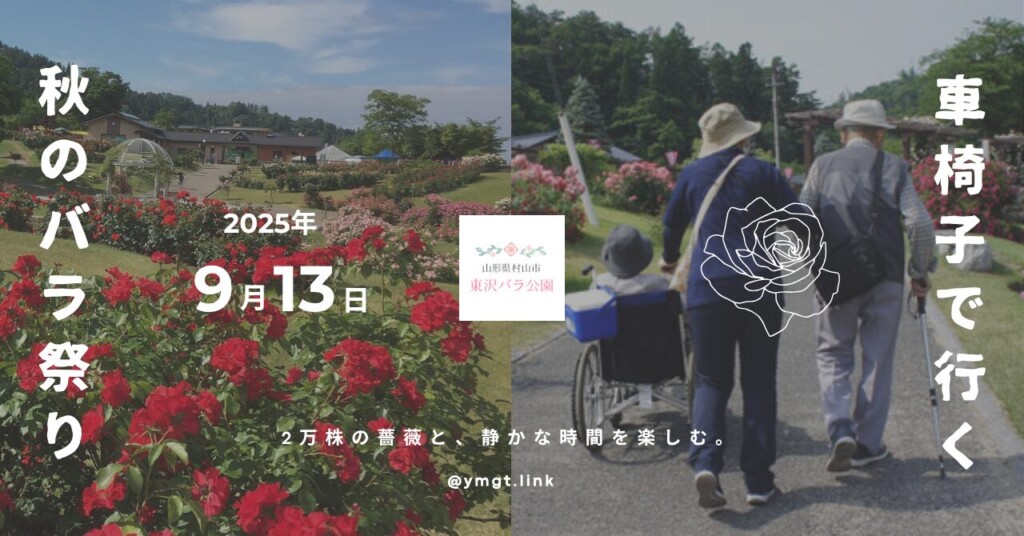
1.Higashizawa Rose Park: A Must-Visit in Autumn
参考:https://yamagatakanko.com/attractions/detail_4108.html
Higashizawa Rose Park is one of Japan’s largest rose gardens, and autumn is the season when its true charm can be fully appreciated. Unlike the vibrant colors of spring, the rich rose fragrance and tranquil atmosphere that wafts with the arrival of autumn are truly soothing to the soul.
Higashizawa Rose Park in autumn offers three special charms.
Autumn roses, with their deeper color and fragrance.
The tranquility and scenery blend seamlessly with the lakeside.
Autumn is a time when the crowds are reduced, allowing you to enjoy the park at your leisure.
As temperatures drop, the roses’ colors deepen and their fragrance intensifies, allowing you to enjoy the distinctive aroma of “autumn roses.” Furthermore, Murayama City’s highland climate and the humid air of the lakeside are ideal for growing roses, resulting in a rich variety of expressions.
Finally, September, after the peak of spring tourism, is over, and the crowds slow down, making it the perfect time to enjoy the roses in a tranquil setting.
Many visitors have commented, “The fragrance is deeper in autumn than in spring, and I lost track of time while I stayed,” and “There were fewer people, so I was able to concentrate on taking photos.” Higashizawa Rose Park is equipped with plenty of rest facilities, including benches and gazebos, making it an extremely comfortable space for seniors and those looking for a leisurely stroll.
The park also features a “Fragrant Walkway,” featuring a variety of roses with fragrant notes, including damask, tea rose, and fruit. For example, autumn roses such as “Blue Moon” and “Double Delight” become more fragrant as the temperature drops, deeply stimulating visitors’ senses.
Visiting Higashizawa Rose Park in autumn is not just about appreciating the flowers; it’s a place for a “journey of the heart” where you can experience the silence, fragrance, and changing seasons. Not only is it a well-known tourist destination, but we can confidently recommend it as a “garden worth visiting at least once.”
1-1.20,000 roses blooming along the lakeside

参考:https://www.seichi.net/sanctuary/post-1090/
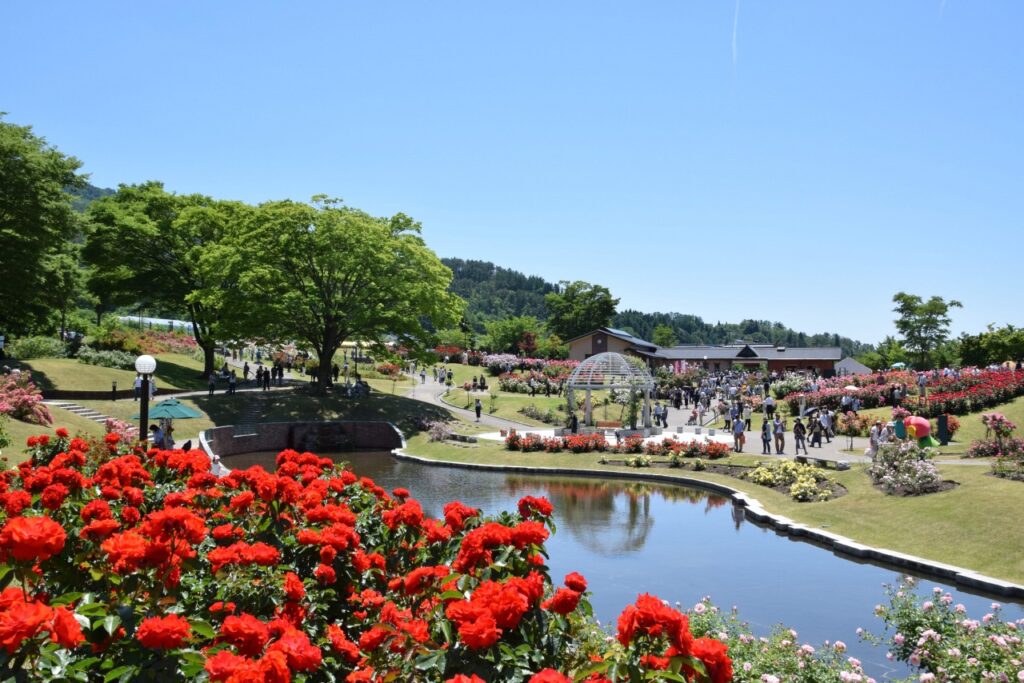
The most distinctive feature of Higashizawa Rose Park is its 20,000 rose bushes and 750 varieties, spread across its unique lakeside location. The visual and emotional impact of the combination of water and flowers sets it apart from other urban rose gardens.
While typical rose gardens are often located on flat land or in the corner of a park, Higashizawa Rose Park is designed to surround a natural lake called Tozawa Tameike. Originally created for agricultural use, the abundant water, moderate humidity, and Yamagata’s cool climate provide the perfect environment for roses to grow.
The lake’s surface reflects sunlight, providing the roses with a soft glow, and the uninterrupted wind flow reduces the risk of pests and diseases, allowing you to enjoy healthy, blooming roses. Furthermore, the combination of the lake and roses makes for excellent photos, making the park a secret favorite among photography enthusiasts as “Yamagata’s most spectacular rose spot.”
The rose varieties range from English roses, hybrid teas, floribundas (cluster-flowering), and groundcovers, each with its own unique blooming patterns, fragrances, and colors.
The garden also provides a variety guide map, and each zone is designed with a theme, so even those who aren’t familiar with roses can enjoy themselves.
Popular photo spots along the lakeside include the White Arch and Rose Tunnel, perfect for taking commemorative photos and posting on social media.
The 20,000 roses blooming along the lakeside are a spectacular sight that could be described as the “beauty of symbiosis” between nature and man. In addition to the appeal of the roses themselves, the addition of the lake as a stage creates a garden experience that truly engages all five senses.
1-2.The beauty of autumn roses, which is different from spring roses

参考:https://link-murayama.jp/rosefestival2023autumn/
Compared to their spring blooming season, autumn roses are characterized by their deeper color and richer fragrance, making each individual rose stand out. At Higashizawa Rose Park in September, you can fully appreciate the profound charm of autumn roses.
Many rose varieties are perennial, typically blooming more than twice a year. The second and third blooms in autumn have shorter daylight hours, which concentrates the pigments (anthocyanins) in their petals, resulting in muted colors such as deeper reds, rich pinks, and chic oranges.
In addition, the difference in temperature between morning and evening causes aromatic components (monoterpenes and sesquiterpenes) to evaporate more easily, making the scent more noticeable than in spring.
Some have said, “The fragrance of Blue Moon in autumn was three times stronger than in spring,” and aromatic varieties such as “Damask Rose” and “Abracan,” which are also used as ingredients in perfumes, really shine in autumn.
Higashizawa Rose Park in particular has a “Fragrance Corridor” zone that brings together fragrant varieties, offering a stroll that appeals to both the eyes and the sense of smell. In autumn, the flowers last longer and each flower can be enjoyed for a longer period, allowing you to enjoy the flowers at a leisurely pace.
Compared to the brightness and freshness of spring, autumn roses have a mellow, subdued “adult beauty.” September at Higashizawa Rose Park is truly the best season to experience the charm of autumn roses to the fullest.
1-3.Access and basic information (parking and admission fees)
Higashizawa Rose Park is easily accessible by car or public transportation, with reasonable admission fees and free parking, making it a highly convenient tourist spot.
Murayama City is located in the center of Yamagata Prefecture, and is easily accessible from the Tokyo metropolitan area and Sendai, being just a five-minute taxi ride or approximately 25-minute walk from Murayama Station on the Yamagata Shinkansen. If you’re traveling by car, it’s also approximately 30 minutes from Higashine Interchange or Sagae Interchange on the Tohoku Chuo Expressway.
Address: 1-25 Tateoka Higashizawa, Murayama City, Yamagata Prefecture
Access: 25-minute walk from Murayama Station / 5-minute taxi ride
Parking: Approximately 300 spaces for standard cars / Large buses allowed / Free
Admission Fee: Free during normal times / Fee applies during the Rose Festival (June): ¥600 for adults, ¥300 for elementary school students (2024 figures)
Opening Hours: 9:00 AM – 6:00 PM (Illumination hours extended during the Rose Festival)
Restrooms: Western-style toilets and multi-purpose toilets available
Notes: The park is barrier-free / Wheelchair rentals available (please confirm)
Higashizawa Rose Park is a tourist destination that combines accessibility, convenience, and barrier-free access. Whether you’re traveling by tour bus or on your own, it’s a comfortable place for everyone.えます。
2.Why is Higashizawa Rose Park in September recommended for seniors?

参考:https://trip-yamagata-japan.com/barrier-free/detail/index/199
Higashizawa Rose Park is a particularly suitable tourist spot for seniors in September. Not only is it a time to avoid crowds, but the cool weather, mellow rose fragrance, and barrier-free access make for a visit that’s both physically and mentally beneficial.
Key factors seniors look for in a travel destination include fewer crowds, easier walking, and a more relaxing atmosphere. Higashizawa Rose Park perfectly meets these criteria in September. The summer heat is mitigated, and the park’s abundant shady areas and benches, along with well-maintained paths designed to minimize strain on the legs and back, make for a physically less demanding sightseeing experience. Furthermore, after the peak spring tourist season, the park’s visitor numbers drop in September, allowing visitors to enjoy the flowers and nature without worrying about their surroundings.
For example, a woman in her 70s who visited in September wrote in her review, “There weren’t many people, so I was able to stroll leisurely, enjoying the scent,” and “My husband and I sat on a bench and enjoyed the quiet autumn air.” The park also features multiple accessible restrooms, ramps, and gazebos for resting, making it a convenient location for those using mobility aids. This provides a time to escape the “walking fatigue” and “crowd stress” that are common in tourist destinations.
Combining tranquility, comfort, and a sense of security, Higashizawa Rose Park in September is an ideal “rejuvenating travel destination” for seniors. With a favorable climate and park environment, we can confidently recommend it as a place where you can relax and enjoy yourself in peace.
2-1.Enjoy quiet time away from the crowds

参考:https://murayama-ouendan.jp/spot/2029/
Higashizawa Rose Park in September is a hidden gem for those looking to avoid the crowds and relax. Unlike spring or event periods, the park is enveloped in a quiet and tranquil atmosphere.
Typically, Higashizawa Rose Park sees its highest number of visitors during the Rose Festival in June, followed by a temporary drop-off during the summer heat. September is the season when autumn roses bloom again, but because it’s less appealing as a tourist destination, crowds are less frequent and you’ll encounter significantly fewer people in the park. This makes it easier to find quiet time.
According to the Murayama City Tourism and Products Association, September sees approximately 10-15% of the park’s total annual visitor numbers, and benches and photo spots are often available without waiting.
The park is particularly quiet during weekday mornings and early evenings, when visitors can be seen reading or sketching while taking in the scent of the roses.
For those who want to avoid the hustle and bustle and enjoy the roses in peace and quiet, September is Higashizawa Rose Park’s “hidden best season.” The space, enveloped only in the sounds of nature and the scent of flowers, is a precious experience that cannot be had in city life.
2-2.Relax in the cool weather and smell of roses

参考:https://plaza.rakuten.co.jp/kabegamimura/diary/201107010000/
At Higashizawa Rose Park in September, you can fully enjoy the relaxing atmosphere created by the cool temperatures and fragrant autumn roses.
The strength of a rose’s fragrance is easily affected by the seasons, and as temperatures drop in September, the aromatic compounds evaporate more slowly, making the scent more noticeable for longer and longer. Furthermore, Murayama City, Yamagata Prefecture, experiences large temperature differences between morning and evening, often reaching a comfortable 20-23°C in autumn, creating the perfect environment for an outdoor stroll.
Higashizawa Rose Park’s “Fragrance Garden” is an area dedicated to fragrance, featuring strongly scented rose varieties such as “Mr. Lincoln,” “Double Delight,” and “Rose de Mai.” For seniors in particular, the scent is expected to have a “relaxing effect through olfactory stimulation,” which stimulates memories and emotions. It is even used as part of natural therapy (aromatherapy).
Higashizawa Rose Park in September, where you can enjoy the pleasant weather and the natural fragrance of the flowers, is a “natural prescription” that is gentle on both body and mind. Spending time in the air that makes you want to take a deep breath offers value that cannot be replaced by any expensive relaxation facility.
2-3. Barrier-free design and rest areas within the park

参考:https://x.gd/4GUHM
Higashizawa Rose Park is equipped with barrier-free facilities and rest areas to ensure a comfortable visit for seniors and those with physical disabilities.
The park’s main pathways are paved, with few steps and ramps and handrails installed at key locations. The park also features accessible restrooms and a wheelchair-friendly flow design, alleviating the physical concerns often associated with tourist destinations.
- Paved Garden Path: The approximately 1.2 km main path is paved with asphalt, making it wheelchair and walker accessible.
- Accessible Restrooms: Located near the entrance and in the gazebo zone. Handrails and ostomate access are available.
- Wheelchair Rental: Available with advance reservations, even outside the Rose Festival period (Murayama City Hall Tourism and Products Division: 0237-55-2111).
- Benches and gazebos: Over 50 benches and gazebos are installed. Designed for comfort, even for those seeking shelter from the sun.
In addition, the garden has a rest area called “Rose House” where snacks and drinks are sold. There are also several vending machines, which are convenient for quick hydration or to beat the heat.
With safe walking paths and rest spots scattered throughout, the garden is designed so that anyone can enjoy the roses, regardless of age or physical ability. Higashizawa Rose Park is more than just a place to view the roses; it can also be described as a “gentle garden.”
3.How to enjoy the area and recommended itineraries (1-2 hours)

参考:https://4travel.jp/travelogue/10691379
At Higashizawa Rose Park, you can design a course that’s satisfying even for a one- to two-hour visit. Enjoy a leisurely stroll while enjoying the lakeside scenery, then stroll through the fragrant zones and finally take a break—a truly enjoyable experience.
The park is home to 20,000 rose bushes and 750 varieties planted across an area of approximately seven hectares, offering plenty to see. However, by knowing the route and stop-off points in advance, you can efficiently explore the park based on your time. The park’s relatively gentle terrain also offers courses that are enjoyable even for those with limited physical strength.
This time, we recommend the following three themed courses for visitors staying one to two hours:
The “Relaxing Lakeside Course” allows you to enjoy the spectacular lakeside views and commemorative photos.
The “Rose Scent Course” allows you to indulge in olfactory pleasure.
The “Rest Spots Enjoyment Course” emphasizes conversation and relaxation.
By combining these courses, you can create a stay that meets the diverse needs of tourists, couples, friends, seniors, and more.
Our recommended course has been designed from the three perspectives of “seeing, smelling, and resting,” and we can confidently recommend it as a “typical way to spend time at Higashizawa Rose Park” that will leave you feeling deeply satisfied even in a short amount of time.
3-1.Relaxed Lakeside Course

参考:https://yamagatakanko.com/attractions/detail_4442.html
The “Relaxed Lakeside Course” is an ideal route for leisurely enjoying the beautiful roses and waterside scenery in a tranquil setting where you can become one with nature. It’s especially recommended for seniors, as it offers plenty of photo spots and rest areas.
Higashizawa Rose Park’s garden paths wrap around the shore of Higashizawa Reservoir, creating an overwhelmingly beautiful landscape of roses interwoven with the water’s surface. Dotted along the path are rose arches, white gazebos, benches, and fountain plazas, along with other photogenic structures. Furthermore, the paved pathways are easily accessible for wheelchair users and those using canes.
This course is recommended for those who head clockwise from the park entrance, walking along Rose Road along the lakeside. The following three are particularly popular photo spots.
Pink floribunda roses blooming beneath a white wooden arch
A path where roses are reflected on the lake’s surface
A gazebo just before the Rose Tunnel (with the lake and sky in the background)
The walk is approximately 800 meters, and takes about 30 minutes at a leisurely pace. There are benches along the way, and rest areas under the wisteria trellis offer a relaxing break while enjoying the lake breeze.
The “Relaxed Lakeside Course” offers a triple-whammy of fun: taking photos, sitting, and feeling the scenery. It offers a relaxing time where you can connect with nature and stimulate your senses.。
3-2.Rose scent course (strong rose scent zone)

参考:https://odecafe.tohoku-epco.co.jp/article/119
The “Rose Scent Course” is a stroll through the garden focused on scents, allowing visitors to enjoy the sense of smell. By touring areas centered around fragrant rose varieties, visitors can experience each flower’s unique aroma.
Rose scents vary by variety, generally falling into five categories: damask, tea, myrrh, fruit, and spice (Source: Japan Fragrance Association). At Higashizawa Rose Park, these varieties are zoned along “fragrance paths,” creating an aromatherapy-like experience in nature.
The course begins in the “Fragrance Corridor” zone in the center of the garden. Enjoy the changing scents as you walk through the following varieties:
Damask: “Blue Moon” and “Just Joey”—sweet and rich fragrance
Tea: “Maria Callas” and “Peace”—refreshing, like black tea
Fruit: “Papa Meihan” and “Double Delight”—citrus and apple aromas
Comparing the different scents allows visitors to appreciate the profound depth of the rose flower. Fragrances are particularly pronounced in September, making it an effective way to form memories through the sense of smell.
The “Rose Scent Course” is a new type of flower garden experience that fully utilizes all five senses, including sight and scent. Even in a short space of time, this route offers a soothing experience that will move your emotions.
3-3. A rest spot to enjoy with your spouse or friends
Higashizawa Rose Park is dotted with “resting spots” where you can relax and enjoy conversation, making it an ideal spot for seniors or couples.
The park is equipped with over 50 benches, a wisteria trellis with shade, and a shady gazebo, making it a natural place to stop and chat during your stroll. The “Rose House,” surrounded by roses, also serves light meals and coffee, creating a space where you can deepen your connection through sight, taste, and touch.
We recommend three resting spots:
Terrace seats near the Rose Cafe: Enjoy soft-serve ice cream and coffee while gazing at the lake.
“Rose Terrace” gazebo: A space surrounded by flowers, without worrying about being seen.
Benches in front of the Fountain Square: Enjoy conversation while surrounded by the soothing sounds of nature, thanks to the soothing sound of the fountain.
The park also offers drinks made with local specialties, such as “Murayama Rose Tea,” which makes a popular souvenir. Rest areas are scattered throughout the park, making it easy to stop by when you get tired of walking.
The existence of such resting spots is essential to realizing the true joy of traveling – “seeing, walking, and talking.” Higashizawa Rose Park is designed to balance human interaction with harmony with nature, welcoming people of all ages.
4.Information on nearby places to stop and stay

参考:https://x.gd/yDNn2
When visiting Higashizawa Rose Park, you can significantly enhance the quality of your trip by also enjoying the surrounding tourist attractions, hot springs, and accommodation options. Murayama City, in particular, offers a compact collection of attractive stops—flowers, culture, and hot springs—that appeal to seniors and leisurely travelers.
While a visit to the park alone may only take an hour or two, combining the surrounding spots can elevate it into a “day or overnight trip that soothes the mind and body.” Its easy access and reasonable itinerary make it ideal for senior travelers.
In this article, we’ll introduce recommended spots in the area from three perspectives: “healing hot springs,” “local flavors and culture,” and “model itineraries that include accommodation.” All of these spots are located within Murayama City or the surrounding area, minimizing travel burden and allowing for a comfortable itinerary.
To enhance your trip to Higashizawa Rose Park, it’s extremely effective to suggest trips that allow for ample time by combining stops and accommodations. This is the perfect trip for those who want to fully immerse themselves in nature and culture without being pressed for time.たちをご提案します。
4-1.Soothe your fatigue at Goten Onsen

参考:https://www.yukoyuko.net/onsen/1301
Whether you’re looking for a quick bath or an overnight stay, this relaxing spot is the perfect way to end your flower trip.
Goten Onsen is a quiet hot spring resort located along the Mogami River valley, and its sodium chloride spring waters are said to be effective for muscle pain, sensitivity to the cold, and nerve pain, making it popular as a gentle hot spring suitable for seniors as well. Furthermore, the open-air baths offer spectacular views of the Mogami River, providing a time to truly relax and unwind.
Representative facilities include Goten Onsen Kurhaus Goten and Yuttarikakan, both of which are open for day trips. For example, Yuttarikakan is equipped with a large public bath, open-air bath, and rest area, and the bathing fee is a reasonable 500 yen. There is also ample free parking, making it an ideal place to stop by while sightseeing.
[Location] 1034-7 Goten, Murayama City, Yamagata Prefecture
[Access] Approximately 10 minutes by car from Higashizawa Rose Park
[Bathing Hours] 10:00 AM – 8:00 PM (varies by facility)
[Reference Link] Murayama City Tourism and Products Association
https://www.murayama-kanzume.jp/
Goten Onsen is a place where you can unwind from your travels and enjoy a truly special moment surrounded by nature and tranquility. “Admire the flowers and soothe your senses in the hot springs”—this is the ultimate itinerary for touring Higashizawa Rose Park.
4-2. Murayama Roadside Station / Murayama City Museum of Art
Along with Higashizawa Rose Park, we also recommend visiting Murayama Roadside Station and Murayama City Museum of Art. Both are great stops for a quick visit, allowing you to experience local culture, food, and art up close.
The fact that they combine sightseeing, dining, and resting spots with minimal travel burden is a major benefit for seniors. Murayama Roadside Station in particular is a convenient facility that combines shopping and rest, stocking locally grown vegetables and fruits (such as cherries and La France pears), souvenirs, and snacks.
Murayama City Museum of Art is a small-scale art museum of a quality rare for a regional city. It hosts permanent exhibitions of local artists and seasonal special exhibitions, providing a lingering intellectual experience and a relaxing space.
Murayama Roadside Station
- Farm produce market available / Popular snack corner featuring local dishes like simmered sweet potatoes and soba noodles
- Rest area available / Free parking (large vehicle compatible)
- Approximately 8 minutes by car from Higashizawa Rose Park
Murayama City Museum of Art
- Address: 1-8-1 Tateoka-shinmachi, Murayama City
- Opening Hours: 9:00 AM – 5:00 PM / Closed Mondays
- Admission Fee: ¥300 (General Admission)
- Barrier-free access throughout the building
“Murayama Roadside Station” and “Murayama City Museum of Art” are excellent supporting actors that add the essence of “food and culture” to a flower trip. Even a short stay will be highly satisfying, and they will add depth to your trip.在です。
4-3.Example of a relaxing plan for one night
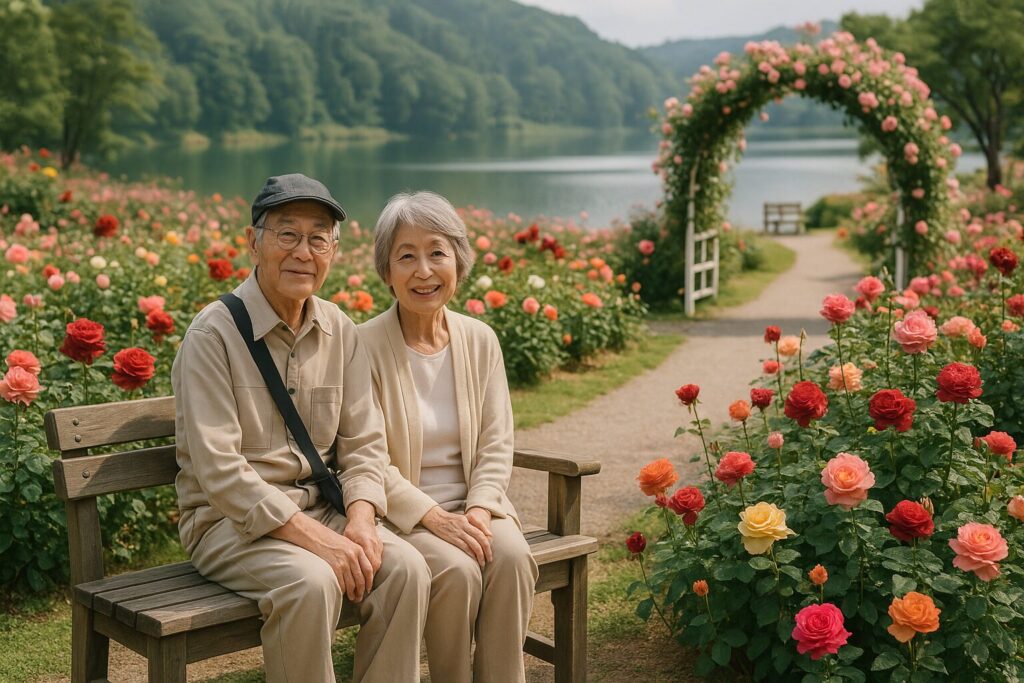
By organizing a two-day, one-night plan centered around Higashizawa Rose Park and including an overnight stay, you can enjoy a luxurious flower trip that allows you to fully experience Murayama’s nature, culture, and hot springs.
Higashizawa Rose Park can be enjoyed on a day trip, but to get a balanced experience of roses, hot springs, food, and culture, an itinerary with a generous one-night stay is ideal. Seniors and couples traveling together will appreciate a plan that minimizes travel and allows them to feel the passage of time soothing to both body and mind.
2-Day, 1-Night Itinerary
[Day 1]
10:30 AM Arrive at JR Murayama Station → Take a taxi to the Rose Park
11:00 AM Stroll through Higashizawa Rose Park (Scented Course + Lakeside Course)
1:00 PM Lunch and shopping in the garden or at the roadside station
2:30 PM Appreciate art at Murayama City Museum of Art
4:00 PM Travel to Goten Onsen and check in
5:00 PM Hot spring bath, dinner, and overnight stay
[Day 2]
8:00 AM Breakfast at the inn and leisurely depart
10:00 AM Shopping and produce checkout at Murayama Roadside Station
11:30 AM Return home from JR Murayama Station (or extend your stay)
Accommodations include the Goten Onsen Yuttorikan and Hotel Symphony Honkan, both of which offer relaxing rooms with their own hot spring baths. The Japanese breakfast and dinner meals feature an abundance of local seasonal ingredients, ensuring a truly satisfying stay in the area.
Adding an overnight stay will give you more time and peace of mind. This is a luxurious option for enjoying the beauty of Higashizawa Rose Park without rushing or feeling rushed.程は非常におすすめです。
5.Interview with local residents: “September is a hidden gem”

参考:https://fullpokko.com/yamagata-asobi-susume/higasizawabarakouen2023-ziz/
Higashizawa Rose Park in September is a hidden gem known only to those in the know. We’ll highlight its charm and true value through the voices of local guides, gardening staff, and Murayama residents.
While it doesn’t receive as much media coverage as the Spring Rose Festival (June), September is widely agreed upon among those involved that it offers the best overall balance of rose condition, climate, and crowd levels. The “true highlights” experienced through close local connections will provide valuable travel tips not found in tourist brochures.
Through our interviews, we gained valuable insights based on on-site experience, including the differences in the color and fragrance of autumn roses, viewing etiquette, and the best photo spots for each season. A staff member’s words, “Because there are fewer tourists, we have time to ‘talk’ to the roses,” encapsulate the charm that can only be found in September.
Higashizawa Rose Park in September offers “local value” that can’t be fully captured in guidebooks or review sites. These testimonials will enrich your trip.
5-1.Local guides and gardening staff introduce the charms of autumn roses

参考:https://www.japan47go.travel/ja/detail/0b636109-e5e4-4a23-9b09-1d2b4c41c54f
The horticultural staff and local guides who support Higashizawa Rose Park are “storytellers” who know the charm of autumn roses better than anyone. Their words reveal aspects of the flowers that are not visible in spring.
Roses are plants that change appearance dramatically depending on climatic conditions, and the “flower color,” “petal density,” and “fragrance intensity” all differ between spring and autumn. These differences are well-understood by the staff who manage the roses on a daily basis and explain them to visitors. They are also well-versed in the relationship between the local climate and soil characteristics and the growth of roses, and can be said to have both a botanical perspective and the sensibilities of everyday people.
In the fall of 2024, I spoke with a local woman (in her 60s) who has been a guide at Higashizawa Rose Park for many years, and she said the following, which made a lasting impression:
“Autumn roses are moist. Their colors are deep, and their fragrance seems to cling to you. They have an inner beauty that’s different from the splendor of spring.”
Also, one of the gardening staff (in her 30s, from Murayama City) said:
“I especially recommend autumn roses in the morning. The temperature drops, so the fragrance evaporates more slowly, allowing you to enjoy the scent at your leisure.”
These comments make it clear that the value of visiting in September goes beyond “just seeing the flowers in bloom.”
If you visit Higashizawa Rose Park, be sure to listen to the local staff. The stories that can only be told in autumn will surely add depth to your travel memories.す。
5-2.”The scent is stronger than in spring, so I recommend it.”
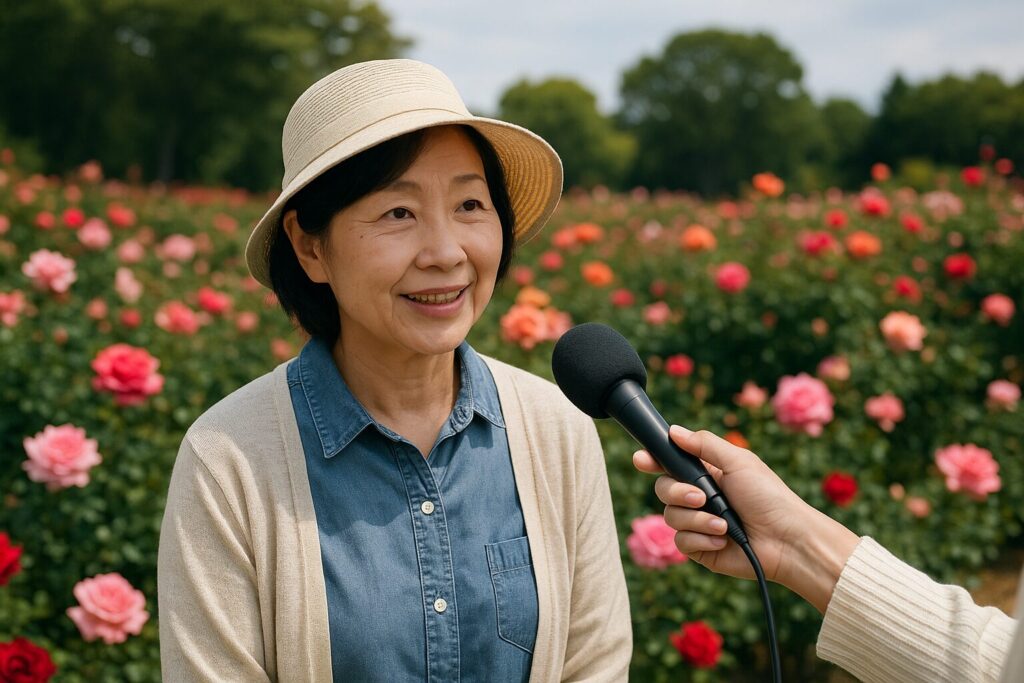
“I love how the rose scent is stronger in autumn,” “There were fewer people, so I could relax,” – comments like these from locals and repeat visitors speak to the true value of Higashizawa Rose Park in autumn.
The scent of roses is strongly influenced by environmental factors such as temperature, humidity, and hours of sunlight. Generally, volatile aromatic compounds are more stable and the scent is more pronounced during cooler periods, around 20°C. Murayama City in September is close to these conditions, and the chilly mornings and evenings also contribute to the strength of the scent.
The following comments can be found in surveys at the park and on social media:
“The June crowds were unbelievable, and I was able to focus on the rose scent.”
“Each rose was more dignified and had a deeper fragrance. It was almost like perfume.”
“This was my first time here with my husband, and it was a quiet, perfect place to chat.”
Furthermore, in terms of scent classification, some people said that damask-like notes (a component of rose otto perfume) and tea-like notes (similar to black tea) stand out in autumn.
If you’re looking for the scents, September is the best time to visit rather than June. The “fragrant journey” that you can experience with all five senses is a special experience that can only be had in autumn.
5-3.Introducing recommended photo spots and popular varieties
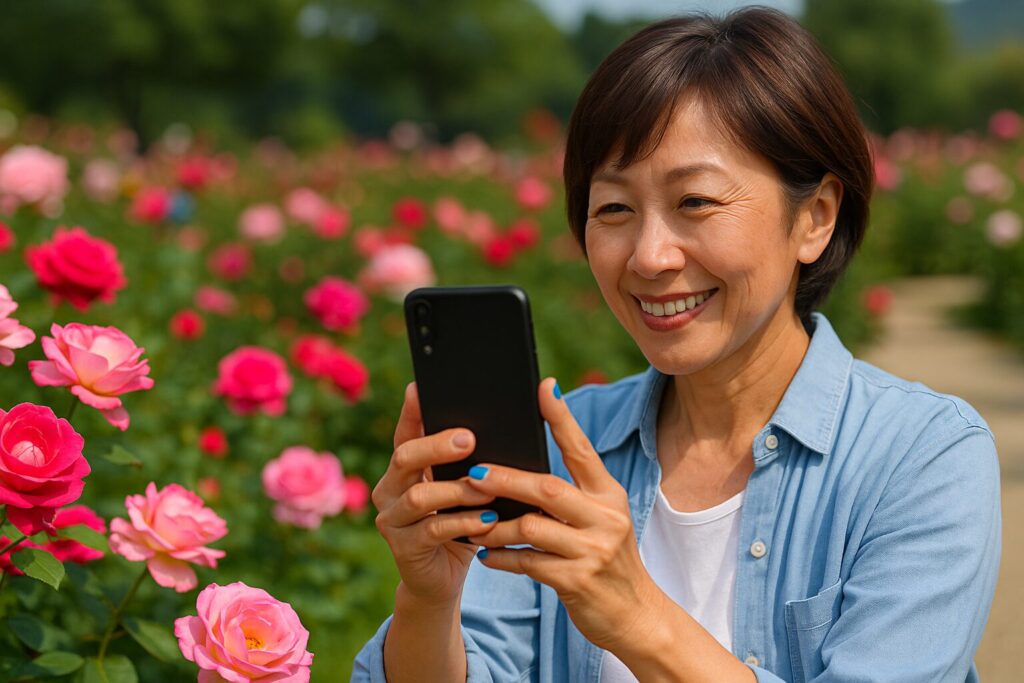
Higashizawa Rose Park in September offers uniquely autumnal photo spots and flower varieties, perfect for photography enthusiasts and those who enjoy posting on social media. The subdued light and colors beautifully accentuate the flowers’ expressions.
Autumn is a season ideal for photography, with soft sunlight shining at a low angle, making the roses’ three-dimensionality and shadows stand out. Also, with fewer tourists than in spring, there are fewer people getting in the way of your shots, allowing you to take your time to work on your angle and composition. Each variety has its own distinctive shape and color, and some look best in autumn.
▼ Recommended Photo Spots (September):
Lakeside Rose Arch: Taking advantage of the backlighting, the silhouettes are fantastic.
With the “Rose Tunnel” and Higashizawa Reservoir in the background: The contrast between the water’s reflection and the blue sky is spectacular.
Side bench in the Fragrance Corridor: Creates a natural composition of people and roses.
▼ Popular Rose Varieties in Full Bloom in September:
Peace: A tea-like rose with a cream yellow and pink gradation and a strong fragrance.
Blue Moon: Pale purple hues stand out in the soft autumn light. A fragrant damask-like rose.
Maria Callas: Large, gorgeous flowers, but a subdued rose pink color perfect for autumn.
Note that the light is soft between 8:00 AM and 10:00 AM, or after 4:00 PM, making these the “golden times” for taking photogenic photos.
With its combination of tranquility, light, color, and fragrance, Higashizawa Rose Park in September is truly the “ideal space for photography.” You can capture photos on your smartphone.も一眼レフでも、美しさを引き出せる季節だからこそ、旅の記録を写真でも豊かに残せます。
6.Frequently Asked Questions (FAQ) [Strengthening long-tail keywords]
■ Q1: When is the best time to see the roses at Higashizawa Rose Park in September?
A1: The autumn roses are usually in full bloom from early to mid-September. This may vary slightly depending on the weather, so we recommend checking the official Murayama City Tourism and Products Association website (https://www.murayama-kanzume.jp/) for the latest information.
■ Q2: Is there an admission fee to Higashizawa Rose Park in September?
A2: Generally, admission is free. The only time an admission fee is charged is during the Rose Festival in June. September is the time when you can freely stroll around the park.
■ Q3: Is parking at Higashizawa Rose Park free? Is it crowded?
A3: Yes, there is free parking with space for approximately 300 standard-sized cars. Since there are relatively few tourists in September, the parking lot is less crowded, making it a safe and pleasant place to visit.
■ Q4: Is wheelchair access available at Higashizawa Rose Park?
A4: The park is barrier-free and wheelchair accessible. Paved paths, multi-purpose toilets, and benches allow for a comfortable stroll.
■ Q5: How do I get to Higashizawa Rose Park from the nearest station?
A5: JR Murayama Station is the nearest station, and it’s approximately a 25-minute walk or a 5-minute taxi ride to Higashizawa Rose Park. The walking route is a bit long, so we recommend taking a taxi for elderly people or those with a lot of luggage.
■ Q6: Can I bring pets to Higashizawa Rose Park?
A6: As a general rule, pets are not allowed in the park. However, guide dogs and assistance dogs are allowed as an exception. Please contact Murayama City Hall or the park management office for details.
■ Q7: What kinds of roses are in bloom at Higashizawa Rose Park in September?
A7: Autumn roses are primarily dark-colored and strongly fragrant, with fragrant varieties such as “Blue Moon,” “Peace,” “Double Delight,” and “Maria Callas” reaching their peak. The Fragrance Corridor Zone is especially recommended.
■ Q8: Are there any shops or cafes at Higashizawa Rose Park?
A8: The park has a “Rose House” where you can enjoy light snacks and drinks, as well as a shop selling soft-serve ice cream, coffee, and local specialties. It’s a great place to stop by for a break.
■ Q9: Is Higashizawa Rose Park crowded in September?
A9: Compared to the Rose Festival in June, there are fewer visitors in September, making it a relatively quiet and tranquil time. It’s the perfect time for those who want to relax and take photos and enjoy the fragrance.
■ Q10: Are there any accommodations nearby if I’m going to Higashizawa Rose Park?
A10: Yes, there are accommodations nearby, such as Goten Onsen. There are hot spring inns and tourist hotels with open-air baths, so you can enjoy a relaxing two-day trip that includes a visit to the rose garden.ができます。
(参考)
村山市観光物産協会公式サイト:https://www.murayama-kanbutu.com/
村山市公式サイト(観光課):https://www.city.murayama.lg.jp/
日本香料工業会監修 ローズの香り特集:https://www.jffma-jp.org/
村山市立美術館(公式):https://www.city.murayama.lg.jp/kurashi/gakko/bunka/mogamigawa_artmuseum.html
東北「道の駅」公式ポータル:https://www.thr.mlit.go.jp/road/koutsu/michi-no-eki/thk-index.html
公式施設ページ(碁点温泉 ゆったり館):https://kur-goten.jp/onsen
気象庁:村山地点 過去の気温情報(9月):https://www.data.jma.go.jp/stats/etrn/index.php?prec_no=35&block_no=1539&year=&month=6&day=&view=
香りの分類:https://www.perfume.org/rose-fragrance)
参考:香りの成分と分類(日本香料工業会)
https://www.fumi.co.jp/rose/index.html
このカテゴリの新着記事